Thursday, October 09, 2008

What, When, Where this Weekend - Happy-Go-Lucky, Body of Lies, RocknRolla

What, When, Where is a weekly guide to select screenings, discussions and events in the NYC-area of interest to screenwriters.

- More Q&A screenings of Ballast at Film Forum this weekend.

Opening this weekend:

Happy-Go-Lucky, written and directed by Mike Leigh


Premise:
A look at a few chapters in the life of Poppy, a cheery, colorful, North London schoolteacher whose optimism tends to exasperate those around her.

Playing at: Lincoln Plaza, Landmark Sunshine

I've said this before, but I'm a big Mike Leigh fan. Really looking forward to seeing this one.

Postive-ish reviews up at Screenhead and Time Out New York.

There are still tickets available for the screening with Mike Leigh that we posted about earlier.

Body of Lies, adapted by William Monahan, dir. by Ridley Scott


Premise: Based on Washington Post columnist David Ignatius's 2007 novel about a CIA operative, Roger Ferris, who uncovers a lead on a major terrorist leader suspected to be operating out of Jordan.

Playing at: All over the place.

Ol' Ridley has brought us plenty of classics, including Alien, Blade Runner, and Gladiator, but also a few real stinkers. (Cough, cough, Black Hawk Down, cough!) Which one will this fall under? I'm counting on a League review from Onyx to let me know...

RocknRolla, written and directed by Guy Ritchie


Premise: In London, a real-estate scam puts millions of pounds up for grabs, naturally attraction the attention of some of the city's scrappiest tough guys its more established underworld players, and others -- all of whom are looking to get rich quick.

Playing at: Village East Cinemas, AMC Empire 25, Loews Lincoln Square

Mr. Ritchie - will this be the film that finally re-sells me on your work? I need to go back and watch Snatch and Lockstock soon. My memory tells me they were great, but I may have just been thinking that because I was a teenager at the time.

P.S. - Rachel Getting Married was outstanding. Review coming soon.

What're you doing/seeing this weekend?

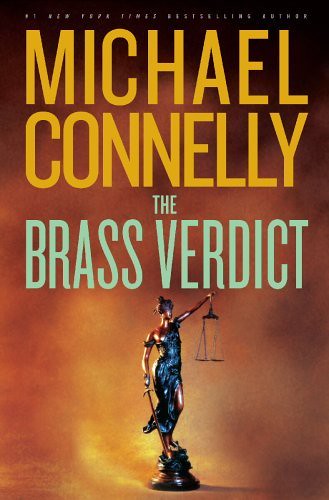
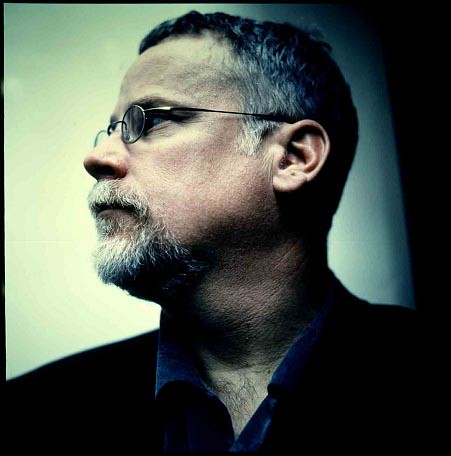
Michael Connelly unveils video teasers for The Brass Verdict


It's no secret that I'm a fan of Michael Connelly. In a few short months, I tore through over a dozen of his Harry Bosch novels and two non-Bosch books. All were good, some were great and none were bad. This Monday, his latest novel, The Brass Verdict hits stores. The story focuses on Mickey Haller, an attorney Connelly has spotlighted before. To my glee, it also features Bosch. Fans of Connelly's work also know there's a definite connection between the two characters, who have never met in Connelly's books before.


To help promote the new book, Connelly has put together three promo videos featuring content complementary to the novel. If you're a fan of the author and plan on getting the book, this is must-see stuff. The videos were directed by noted mystery author Terrill Lee Lankford.

You can check out the video trailers here. And, yes, that is Corbin Bernsen.

Here's one of the videos:


[Via Off The Page]

Free screening of GOOD DICK tonight, writer/director/actress Marianna Palka in attendance

The Fusion Film Festival is an annual series held at NYU to promote female filmmakers. They're always showing great stuff year after year. The festival launches tonight with a screening of Good Dick.

GOOD DICK, written and directed by Marianna Palka


Premise
: A look at the relationship between a lonely introverted girl and a young video store clerk vying for her attention.

Where: Cantor Film Center (8th Street and University), October 9th at 6:00 PM

Good Dick marks the narrative feature debut of writer/director Marianna Palka. The film won the New Directors award at the Edinburgh Film Festival and was an official Sundance selection. It co-stars Jason Ritter, who also produces alongside Palka, Jennifer Dubin, and Cora Olson. It will be released theatrically in Los Angeles on October 10th and New York on October 17th by Present Pictures and Morning Knight.

More info about tonight's screening is available here.

Wednesday, October 08, 2008

Are publishers asking novelists to dumb their work down? Yeesh. Hope not.

The Independent seems to think so:

Margaret Drabble, one of Britain's leading novelists and biographers, believes her publishers are pushing her to "dumb down" her work to appeal to a larger readership.

At a meeting of alumni in her old Cambridge University college, Newnham, Dame Margaret suggested that she felt pressure from Penguin, to "rebrand" her fiction, The Independent has been told. At the discussion, alongside the novelist Sarah Dunant, she said: "I have had a weird feeling that I'm being dumbed down by my publishers and it's interesting there's an agenda of how it should be in the marketplace."

Dame Margaret, 69, who takes over as chair of The Society of Authors, added: "I'm amazed they are even trying it on."

Few would doubt Dame Margaret's position in today's literary firmament. In a career spanning more than 40 years, she has written 17 novels and seven works of non-fiction as well as earning a CBE. Dame Margaret, who turned up to discuss the state of literary culture with Ms Dunant, revealed to Ms Dunant she had had a tense conversation with her publishers: "She [Dame Margaret] ... expressed the view that her publishers wanted to remarket her in some way, that there was some need not to let the work just stand on its own.

"My impression... was that there was a certain amount of trepidation in putting this to her (from her publishers). She had given them short shrift. She felt that at this moment in [one's] career, who could need to be remarketed or repackaged?" Ms Dunant said. Ms Dunant said Ms Drabble was annoyed that publishing houses to market authors as "semi-celebrities."

It's an interesting question. When does marketing stop helping a book and begin to alter the perception of what the book is? I'm not sure. I think it's case-by-case. Obviously, if an author, like Drabble, has a long and storied career and is doing just fine with a solid base of readers, over-marketing won't do much. It'd be like expecting the new Stephen King or John Grisham book to sell like crazy because of a different way of pitching the authors. These guys are known commodities.

Now, when it comes to a new author, I think the initial marketing plan is key. How do you position this writer? Do you expect them to be the kind of author that will need two or three books before they really cement themselves and build a readership? Or is the first book such a homerun that you should go all out the moment you step out of the gate? Again, it depends a lot on the author and, more importantly, the material. I'm not 100 percent sold that this article is on the money, since there are so many variables. What do you think? How does marketing affect what you buy at the bookstore?

[Via Bookninja]

Kyle's Mom's a #$%*&: Writing South Park


New episodes of South Park FINALLY start back up tonight, and at least this Leaguer is excited. How many non-talk shows manage to stay as topical as this one? I'm always amazed at how it even remains half as edgy as it does after 12 seasons. (12 seasons?! Do you feel as old as I do?) In honor of the occasion, here's a great old AV Club interview with Trey Parker and Matt Stone with a few interesting bits about the writing process for the long-running animated series:

AVC: What would you say are the hardest episodes to write?

MS: Sometimes they're the ones where we start with a point and then we try to shoehorn a story around a point, and it doesn't come out of the story organically. Those just kill us. Or when we try to put two ideas into one episode. You'd be surprised—"Oh, it's about this." "Oh, wait, what's it really about?" "It's about that and that." "Okay, it needs to be about one thing." We've learned that the hard way over the years. I don't know about the easiest, but the best episodes come from "This is a great story with actual emotion in it." And then all of the sudden, when you have a real good story with a real emotional center to it, it actually makes its point. And the point may be what you started out wanting to make, or different, but it will make sense, and it'll be cool. Whereas the ones where we go, "Oh, we want to do a show that rips on this." "How do we do that?" "Okay, how about Kyle gets a letter—" And you just start talking—they always suck that way. They're so hard. We don't make that mistake as much any more, but we do every once in a while.

AVC: What's the time ratio between sitting around and talking it out vs. somebody actually sitting down and banging out the words on paper?

MS: Oh, minutes! Trey really writes most of the dialogue on the first pass, just because we need it so fast. We'll be in the writer's meeting and be like "Oh great, we want to put this in it, we want to do this and this—but what is the scene?" We kind of come up with what the scene will be, "Here's the main joke," and literally Trey runs off and writes it and I go deal with other shit. Sometimes he comes back in and says "Well, that didn't work." But it's minutes. We start an episode on Thursday, and it's on the air in six days, so the writing is done concurrently with the animation.

You can read the whole interview here.

Can a bad review kill your career? Short version: Yes

At least Murderati thinks so:

There's one time in particular when an author is particularly vulnerable to the effects of a devastating review, and that's when you are a debut author. An editor who takes on a first-time novelist is taking a risk on someone who's untried in the marketplace. The editor hopes, of course, that the debut novel will be wildly successful, or at a minimum, earn back its advance And to increase the chances of its success, this editor will talk up the book to the sales force. As the pub date approaches, she hopes that in-house enthusiasm for the book builds, because that enthusiasm gets transferred to booksellers, who will be convinced to increase their orders. Hefty orders mean more exposure, better displays, and of course better sales. Imagine you are that debut author, and your novel "FIRST TIME OUT" has been bought with a generous advance. Imagine that the publishing house is telling you this is going to be an important book. Imagine that they have decided to give it a big push, with major ads and an author tour.

Then imagine that your first review appears in Publishers Weekly, and they pronounce it a disaster. They call your publisher a house of idiots for buying it.

Now your editor looks like a dope. The enthusiasm at your publishing house suddenly deflates like a popped balloon. Everyone there feels a bit embarrassed, not just for you, but for themselves. The big bookstore orders don't come in. Costco and Walmart take a pass on it. Even before your book goes on sale, it already feels like a big failure and an expensive mistake.

Those promised ads never materialize. And even though they do send you on book tour, every time you meet a bookseller, you just know they're looking at you and thinking, "oh, so you're the author whom PW called illiterate." And you feel like such a loser.

I have to agree here. If you're established, your reputation and career can withstand a few middling and out-and-out bad reviews -- look at some of the stalwarts of modern crime fiction like Lehane, Pelecanos and Price. Not all their books were critical darlings. Heck, EW gave Pelecanos' latest a pretty negative write-up (not that EW is the ba-all-end-all in literary circles, mind you, but I digress) and not many people liked Lehane's Shutter Island. But at both points in each author's career, these guys were/are already established. Had Pelecanos gotten ripped when A Firing Offense came out, he might not be writing today. At least, it'd be harder for him to get published.

Especially if your editor has gone out on a limb for you and really pushed to get you published, an initial wave of negative reviews will, as the post says, make the editor doubt themselves and also weaken their arguments internally to get the book some support. And, let's face it. Without marketing support, a first-time author is going to have trouble laying claim to any of the marketplace. I know that sounds number-crunchy and corporate, but it's the truth.

This post is particularly relevant to me because SILENT CITY is my first novel, and if it does find a home where an editor decides it's worth publishing, it really needs reviewer support to make any kind of dent with readers. Crime fiction readers are pretty insular, so you really need to court the key literary publications and also the crime fiction tastemakers. A bad review from a key person in the field and, while you may not be sunk fully, you'll definitely be behind the eightball.

As a reader, though, how strong an influence do reviews have on your buying habits? Where do you find the best reviews?

Tuesday, October 07, 2008

What's in a name? A lot, actually

What are some of the worst novel titles ever? The New York Times Paper Cuts blog asks, citing Neal Stephenson's latest work as an example of a not-so-great one:

The title of Neal Stephenson’s latest work of speculative fiction, “Anathem,” struck me as an unfortunate one, at least on first (and second) glance, for three reasons: it looks like a typo for “Anthem”; we can’t be entirely sure how to pronounce it; and most of us have no idea what it means. Still, it’s better than “Religulous” or “A Bold Fresh Piece of Humanity.”

Stephenson’s novel (which we will be reviewing in a future issue) takes place in a world much like our own. Before reaching the contents page, the “note to the reader” and the chronology, we get this dictionary definition:

Anathem: (1) In Proto-Orth, a poetic or musical invocation of Our Mother Hylaea, which since the time of Adrakhones has been the climax of the daily liturgy (hence the Fluccish word Anthem meaning a song of great emotional resonance, esp. one that inspires listeners to sing along). Note: this sense is archaic, and used only in a ritual context where it is unlikely to be confused with the much more commonly used sense 2. (2) In New Orth, an aut by which an incorrigible fraa or suur is ejected from the math and his or her work sequestered (hence the Fluccish word Anathema meaning intolerable statements or ideas). See “Throwback.”

Titles are tricky. You have to on one hand say something about what your book is, well, about, but also have something that will resonate with both the casual reader scanning the shelf and the literati crowd some/most of us are trying to appeal to.

With SILENT CITY, I was trying to strike a noir-ish note while still having the title in some way connect to the story (a plot point I'm still trying to flesh out to some degree -- why is Miami, of all cities "silent"? Read on, read on...). It's something I'd imagine most writers mull over and pull hairs out in frustration.

I've found that the best titles are directly from the page -- either an offhand remark or a descriptive line or two. That usually works for me, even with poetry or songs. But it's still a challenge.

Do you, as a writer, have a process for coming up with a title? Do you wait until the end, or have some kind of method? What are some of the worst book/movie/album titles ever? Discuss.