
Well, Tuesday morning, close to 2am.
What happened? I finished my draft of SILENT CITY. It was a bit of a surprise. I was working on it in my room -- had been for a few hours -- when I realized I was entering the final, climactic scene. I figured I'd finish the scene and go to bed. But once I closed out the main chunk of the story, the next thing I knew I was writing the epilogue I'd planned to add to the end. No spoilers here. By 2, I was done, and it was weird, exciting, nerve-wracking and pretty damn cool.
Now, this doesn't mean I'm done, DONE. Far from it. This draft needs revisions -- lots of 'em. But I always saw the first draft as really a hyper-detailed outline. A solid framework and road map that I could then add some colors and detail to. And I think that's what I have. The characters and scenery need more compelling detail and description of the world they live in, but overall, I'm pleased with the structure and pacing.
Does that mean the plot is without error? Far from it. There are a few scenes I'm on the fence about. But, as with the initial outline that became the novel, there's enough room to tinker with that I'm confident that with proper revision, I may reach my goal.
I always envisioned SILENT CITY as a fun, compact little detective novel, very much like Pelecanos' A FIRING OFFENSE, Lippman's THE SUGAR HOUSE or Lehane's A DRINK BEFORE THE WAR. Not overly pretentious or trying to be something it isn't. A solid read you could get through in a few days and possibly leave you wanting more from these characters.
Still, that doesn't mean I went in with no literary aspirations. One of the things I feel like the draft is missing -- and I'd like to remedy and beef up on revision -- is the setting. Miami is such a unique and vibrant town, and while you get snippets of that in reading the first draft, I'd love to paint a stronger picture of the place I called home for most of my life.
But, again, I'm not concerned about this. Novel writing is a lot like building a house. You need a strong foundation and framework first, then you can talk about what drapes to put in the guest room, you know?
So, my plan for the next few weeks is just that: to kick the walls a bit, test the doors and tighten the screws. Once I feel happy with the first draft -- well, happy enough to let someone else read it -- I'll pass it on to the League and see what they think. After those revisions are made, I have a short list of talented friends that I'll past the draft on to. Some are published authors or journalists, some are just really smart and well-read. All of them will bring valuable input to the process. After all that is done -- and pinch me when it is -- this irregular feature will become more about query letters and contacting agencies than the actual writing. But that's exciting, too, in its own way. Fingers crossed.
Showing posts with label dennis lehane. Show all posts
Showing posts with label dennis lehane. Show all posts
Thursday, January 14, 2010


Monday, November 10, 2008
The Writing Wire for 11/10: The new Lehane, Jolie, Girl Talk and more...
Bring the noise.
• PoeWar on building a sustainable writing career. Two words: Emergency fund.
• This is great news: Dennis Lehane's next book may be another Kenzie and Gennaro mystery, according to Sarah Weinman.
• Vulture discusses the trailer to Pixar's 'Up.'
• The Miami Herald's Glenn Garvin on Michael Crichton.
• Film School Rejects on why actors shouldn't be casting directors.
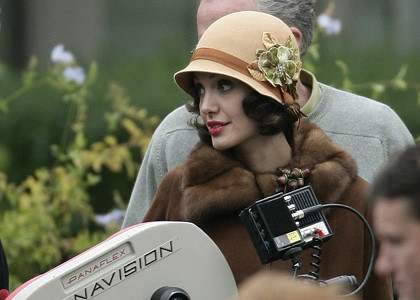
Cinematical has the the real story behind 'Changeling.
• Idolator ponders the question: Does Girl Talk's music fall under fair use? I don't think so.
• The New Yorker is serializing some new fiction by Jonathan Lethem.
• PopMatters on the state of rock concert posters.
Wednesday, October 08, 2008
Can a bad review kill your career? Short version: Yes
At least Murderati thinks so:
Especially if your editor has gone out on a limb for you and really pushed to get you published, an initial wave of negative reviews will, as the post says, make the editor doubt themselves and also weaken their arguments internally to get the book some support. And, let's face it. Without marketing support, a first-time author is going to have trouble laying claim to any of the marketplace. I know that sounds number-crunchy and corporate, but it's the truth.
This post is particularly relevant to me because SILENT CITY is my first novel, and if it does find a home where an editor decides it's worth publishing, it really needs reviewer support to make any kind of dent with readers. Crime fiction readers are pretty insular, so you really need to court the key literary publications and also the crime fiction tastemakers. A bad review from a key person in the field and, while you may not be sunk fully, you'll definitely be behind the eightball.
As a reader, though, how strong an influence do reviews have on your buying habits? Where do you find the best reviews?
I have to agree here. If you're established, your reputation and career can withstand a few middling and out-and-out bad reviews -- look at some of the stalwarts of modern crime fiction like Lehane, Pelecanos and Price. Not all their books were critical darlings. Heck, EW gave Pelecanos' latest a pretty negative write-up (not that EW is the ba-all-end-all in literary circles, mind you, but I digress) and not many people liked Lehane's Shutter Island. But at both points in each author's career, these guys were/are already established. Had Pelecanos gotten ripped when A Firing Offense came out, he might not be writing today. At least, it'd be harder for him to get published.There's one time in particular when an author is particularly vulnerable to the effects of a devastating review, and that's when you are a debut author. An editor who takes on a first-time novelist is taking a risk on someone who's untried in the marketplace. The editor hopes, of course, that the debut novel will be wildly successful, or at a minimum, earn back its advance And to increase the chances of its success, this editor will talk up the book to the sales force. As the pub date approaches, she hopes that in-house enthusiasm for the book builds, because that enthusiasm gets transferred to booksellers, who will be convinced to increase their orders. Hefty orders mean more exposure, better displays, and of course better sales. Imagine you are that debut author, and your novel "FIRST TIME OUT" has been bought with a generous advance. Imagine that the publishing house is telling you this is going to be an important book. Imagine that they have decided to give it a big push, with major ads and an author tour.
Then imagine that your first review appears in Publishers Weekly, and they pronounce it a disaster. They call your publisher a house of idiots for buying it.
Now your editor looks like a dope. The enthusiasm at your publishing house suddenly deflates like a popped balloon. Everyone there feels a bit embarrassed, not just for you, but for themselves. The big bookstore orders don't come in. Costco and Walmart take a pass on it. Even before your book goes on sale, it already feels like a big failure and an expensive mistake.
Those promised ads never materialize. And even though they do send you on book tour, every time you meet a bookseller, you just know they're looking at you and thinking, "oh, so you're the author whom PW called illiterate." And you feel like such a loser.
Especially if your editor has gone out on a limb for you and really pushed to get you published, an initial wave of negative reviews will, as the post says, make the editor doubt themselves and also weaken their arguments internally to get the book some support. And, let's face it. Without marketing support, a first-time author is going to have trouble laying claim to any of the marketplace. I know that sounds number-crunchy and corporate, but it's the truth.
This post is particularly relevant to me because SILENT CITY is my first novel, and if it does find a home where an editor decides it's worth publishing, it really needs reviewer support to make any kind of dent with readers. Crime fiction readers are pretty insular, so you really need to court the key literary publications and also the crime fiction tastemakers. A bad review from a key person in the field and, while you may not be sunk fully, you'll definitely be behind the eightball.
As a reader, though, how strong an influence do reviews have on your buying habits? Where do you find the best reviews?
Saturday, September 20, 2008
What makes a crime novel a crime novel? The continued genre vs. literary debate
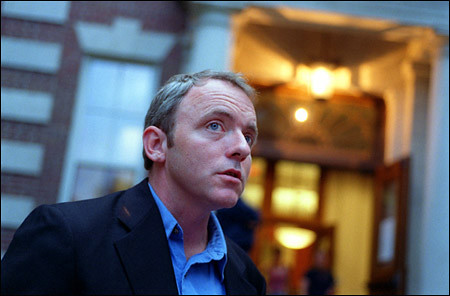
The New York Times has a glowing review of Dennis Lehane's latest, The Given Day, which takes place in the early 20th century, during the historic Boston police strike.
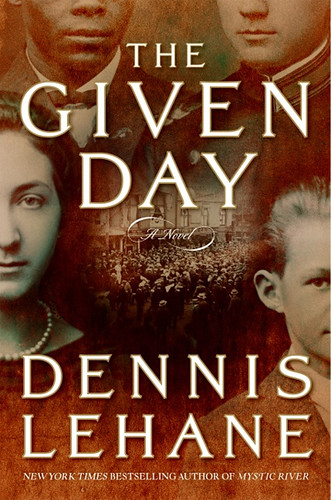
Now, I want to preface this post by explaining that I'm a huge Lehane fan. Specifically, I love his Kenzie/Gennaro detective novels, which kicked off his writing career. His later work, especially Mystic River, was still of high quality, but to me lacked the same verve and energy of his first six novels. But my beef isn't with Lehane -- he's probably written a great book. I plan on reading it and expect to like it. He's one of my favorite contemporary authors. My issue is with this bit from the review:
No more thinking of Mr. Lehane as an author of detective novels that make good movies (“Gone, Baby, Gone”) and tell devastatingly bleak Boston stories (“Mystic River”). He has written a majestic, fiery epic that moves him far beyond the confines of the crime genre.
Shades of Doctorow and Dreiser surround Mr. Lehane’s choice of 1919 as the time for this expansive story. It is not simply the relatively unexplored eventfulness of that year that makes “The Given Day” so far reaching; it’s the relentless fierce-terrible nature of the turmoil on parade.
Now, just what irks me about this review? I can't say it fully struck me until I read David Montomery's post over at Crime Fiction Dossier, so I'll let him speak up first:
One line leapt out of me from the review and stuck with me: "He has written a majestic, fiery epic that moves him far beyond the confines of the crime genre."
I haven't read The Given Day, either. I don't know if it's any good, or about any of the specific plot points in the book. But, I do know that there is some level of crime in the book. Doesn't that make it, to some degree, a crime novel? Why is this, and not, say, Mystic River or Coronado or Darkness, Take My Hand, a "literary" work, and therefore better than Lehane's earlier work? More importantly, why should there even be that distinction? Why can't a book just be good, whether it's a crime novel or not?I've been thinking about that statement since I read it, wondering exactly what the confines of the crime genre are. And near as I can come up with, a crime novel has to have a crime (either past or future) play an important part in the plot, or else it somehow has to deal with crime or the aftermath of crime in a significant way. Other than that, I think anything is fair game.
As I indicated, I haven't read The Given Day. But judging by the description and the reviews I've read, the book involves the lives of police officers, a terrorist attack, spying, bomb-throwing anarchists, suspense, corruption, anti-union violence...Well, damn, that sounds a lot like a crime novel to me.
It's almost like Ms. Maslin (and I wouldn't be surprised if other critics wrote something similar) is embarrased to admit that she really liked and admired a book of significant literary achievement -- that just happened to be a crime novel.
We saw some of this reaction earlier this year with Richard Price's superb Lush Life, another novel of literary prowess that, oh yeah, was a crime novel.
I'd argue that Lehane is finally stepping into a world that has already been populated by the previously mentioned Richard Price and, more importantly, George Pelecanos, whose last few novels have only peripherally dealt with a crime but instead spent more time painting a picture for the reader of a city or society in decay. Are Pelecanos' works less "literary" because they're still set in the modern day and involve drug deals and stick-ups as a way of showing how our world is melting down? If he'd set his books in the 1800s, would he gain more literary praise? My guess is probably. And that, to me, is really annoying. And, to push the joke a bit, more criminal.
Just because a work of prose, or a screenplay, involves a crime or deals with crime shouldn't lessen the literary or artistic value. The idea that suddenly, Lehane, who has been writing solid novels since he first got published, is a more important author because he's no longer writing a straight-up detective piece is silly, and insulting to those of us that spend time reading crime fiction not just because we find the genre interesting, but because the books in the genre we choose to read are, well, pretty damn good.
I didn't fully intend for this post to become a rant against the literary vs. genre bias -- I brought that up already. But, here we are. What do you think about the literary hierarchy? Does it hold water?
Subscribe to:
Posts (Atom)


