A friend and I caught Up in the Air on Saturday afternoon. I went in with mid-level expectations. I really enjoyed Jason Reitman's Juno, but was lukewarm about Thank You For Smoking. Still, the cast seemed strong and Reitman's pedigree was mostly good.
The movie tells the story of Ryan Bingham (George Clooney), a man who travels the US doing the dirty work for major corporations -- mainly, firing people. Ryan has become so good -- and fond -- of his life in the air that he's disconnected from any semblance of a life back home in Nebraska, or with his family. Then he meets Alex (Vera Farmiga), a sexy corporate traveler who has almost as many hotel and airline discount cards as he does. After hooking up, the pair swap schedules and continue to meet on their respective travels when said calendars overlap geographically.
Clouds start to appear in the form of Anna Kendrick, who plays a youthful, recent college grad at Bingham's company. She's come up with a firing method that doesn't require personal contact -- just a T1 connection and two monitors. Bingham, of course, want nothing to do with settling down or this new method. He takes Kendrick on the road with him to teach her "the ropes."
Up in the Air was a very pleasant surprise. It avoided trite plot twists and overt melodrama and instead focused on its three main characters and how they play off each other. There were a few moments I preemptively cringed while watching, half-expecting Reitman to take the tried and true route and wrap the plot up in a nice bow. Instead, we get a realistic and modern look at life in the 21st century. Where relationships sustain themselves on Blackberry Messenger conversations and getting fired via video conference is a potential reality.
Clooney and Farmiga are kinetic together, less so in the few scenes they have apart. Farmiga is so charming in her role that you end up surprised near the end of the film when you realize you've fallen for her, too, which then plays right into the film's third and best act.
Kendrick comes off as a bit of a nuisance at first, both as a character and as an actress. But after a while she smartly steps back and lets the leads do the heavy lifting, making her performance passable and solid if not spectacular.
Overall, Up in the Air was a great way to kick off the cinematic year. Though painfully depressing at times on a number of levels -- romantically, socially, etc. -- it only strays into cliche and predictable territory a handful of times, which is fairly forgivable. Worth a look.
I know, I know, I know. Where the hell have I been? I wish I had an interesting answer for that, but I don't, so best to move on and talk movies. Well, and television.
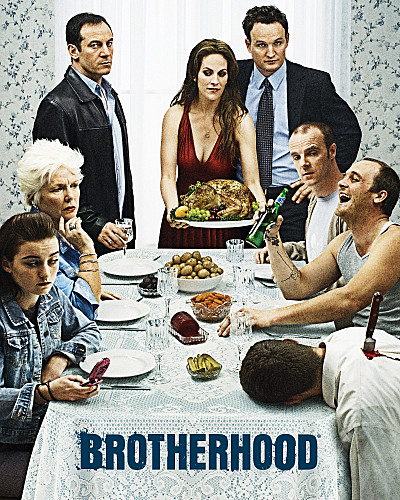
In my eyes, Brotherhood is arguably one of the best shows on television now. If you're a fan of The Wire, Homicide or anything in that vein, you'll find Brotherhood serves you well. Now in the early stages of its third season, Brotherhood -- set in the fictional Rhode Island town known as "The Hill" -- tells the tale of two brothers: thug-with-a-heart Michael Caffee and his younger sibling Tommy, who's a local representative and slowly inching closer and closer to corruption. The series poses interesting questions about morality, family and friendship, and the inherent responsibilities that come with each. Is a mobster bad if he does some nice things? Is a politician good even though he skims from the top?
I recently re-watched the show's second season in anticipation of the new episodes, so I'll focus on those. Reviewing an entire show is a bit trickier than a movie, as you have hours upon hours of viewing to disseminate and digest, but I'll give it a try.
Brotherhood builds upon a relatively predictable concept ("They're brothers! And they're not totally good people!!") by injecting a collection of conflicted and complicated characters -- from Tommy's adulterous but doting wife, to the prickly and conspiratorial matriarch Rose, Brotherhood has nary a boring person onscreen, and the episodes and scenes rarely scream of filler or space-fillers. As I watched episode upon episode, though, I found myself gravitating more toward gangster brother Michael, who while a murderer and all-around "bad" guy, was the most consistent and likable of the bunch.
The main plot threads that carry season two are fairly basic, but engrossing enough. Tommy continues his bid for more power in the state House, while dealing with a crumbling marriage and temptations outside of it. Michael is recovering from a brutal beating suffered at the close of season one and is dealing with the side effects, both medical and career-wise. As Tommy amps up his political clout for a reelection campaign, Michael plays his friends and the cops investigating his criminal organization against each other in an effort to not only weed out those responsible for his injuries, but also to eliminate resident crime boss Freddie Cork, who Michael suspects is in some way connected to the assault that has left him dealing with blackouts and random memory loss.
The two plot threads converge on multiple levels, as we learn toward the end of the season that Tommy could have helped his criminal brother avoid being viciously attacked and his dalliances with a fringe politico get him into trouble with his family.
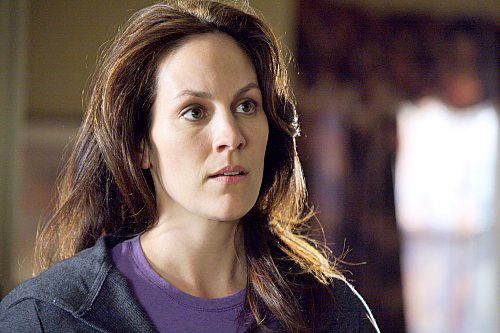
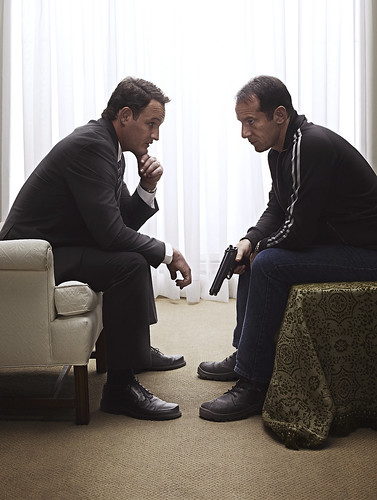
Jason Isaacs and Jason Clarke, playing Michael and Tommy, respectively, give nuanced and powerful performances as the siblings. There are no clear-cut "good guys" or "bad guys" on the show, merely people dealing with complicated issues and equally complicated friends and family members. Special props should go to Annabeth Gish, for her strong portrayal of Tommy's wife Eileen, who while repenting for her own marital transgressions discovers an inner strength and motivation that went unseen during the first season. While at times painfully annoying in the way only mothers can be, Fiona C. Erickson does a fine job of portraying an aging mother losing her grasp on her children, friends and, inevitably, her own youth. Former teen star Ethan Embry is also surprising as Declan, a talented cop driven to alcoholism and self-destruction when his marriage also begins to fall apart -- among other things I'm hesitant to spoil in this space.
Brotherhood is the kind of show fans of seriously serialized and thoughtful television can sink their teeth into. Yes, you have to watch the previous episode to understand what's going on. Yes, there are more grays than black and whites. Yes, not everything is explained right away. But that's a good thing. Brotherhood carries the torch previously lifted by the classic shows I mention above, and it's only getting better. A
You can catch season three of Brotherhood on Showtime, Sunday nights at 8pm EST.
A few other shows you might want to consider, if you're looking to fill up your TiVo season pass list:
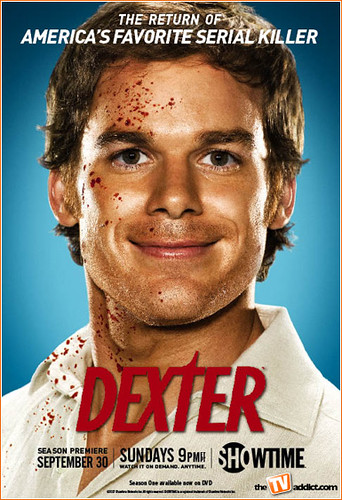
Dexter: I'm not totally sold on Dexter, I have to say. Everything seems to be there -- crime investigation, serial killers, Miami, mystery -- but the pieces don't really add up to a compelling whole. I'm still not sure why I'm supposed to like Dexter, who rarely even acts human during most scenes and then is suddenly a poster boy for psychosis in others. I mean, I get the big picture -- he's a serial killer that kills the really bad people. But, uh, still. Doesn't work for me. And, being a Miami native makes watching the show a bit painful, since it looks nothing like Miami and the scene dressing used to make interiors and restaurants seem "authentic" just comes off as cheesy and poorly researched. Ditto on Lt. La Guerta's "Cuban" accent. Plus, Dexter's sister, apparently a detective in the same police department Dex works at, is annoying and not very interesting. Same goes for grating characters like pudgy sergeant Angel, who has arguably the worst dialogue on the show. Still, I keep watching, thinking it'll go from mediocre to decent. Fingers crossed. C+
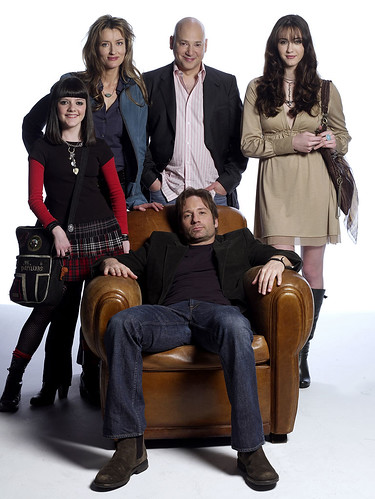
Californication: This is a fun show, on a number of levels. David Duchovny plays Hank Moody, a one-time lauded novelist who's hit the dumps since he moved to L.A. to embrace the big life: His longtime lover and child left him, he can't write and despite the constant presence of beautiful women everywhere, Hank can't seem to find happiness at the bottom of the bottle. Duchovny does a great job of playing the lovable asshole -- sleeping around, drinking himself into oblivion, but still longing for that one, true love he let slip through his fingers. Madeleine Martin is great as Hank's tween kid Becca, who serves as the show's voice of reason and comic relief. While at times I find Hank's antics to be a bit much and bordering on the unforgivable, his strong and very real dynamic with Karen makes for good viewing, and keeps me coming back. A-
We're on a nice little streak here in SuckerFlix land, what with Before the Devil Knows You're Dead last week and the mini-trifecta I'll be talking about shortly.
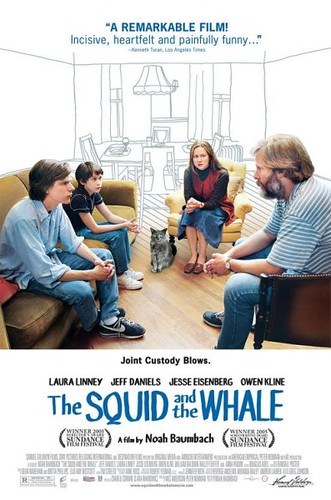
I'll devote the bulk of this space to The Squid and the Whale, which was excellent in every way except timing -- which is on me. Don't watch this movie first thing in the morning. Well, not if you plan on interacting with other human beings at some point that day. I made the mistake of putting it on while I sipped my morning coffee and tweaked the SILENT CITY outline and ended up in a morose, pensive and almost cranky mood. A testament to the strength of the film.
Squid starts quietly enough. Jeff Daniels and Laura Linney star as a couple stumbling toward a messy divorce, with two adolescent boys caught in the crossfire. The film does a great job of painting a picture of a fragmented family, where nothing is really black and white (despite the kids' repeated efforts in the story to make things so) and there are few villains but even fewer heroes. Linney is her usual, top-notch self, bringing a touching and very real vulnerability to her character without losing herself in bawling cliches or overwrought melodrama. Being a product of a divorced home myself, I found the film's portrayal of a once tight family's dissolution rang true. The movie never sinks into soap opera, nor does it dovetail toward a convenient resolution. These are real people in real life, and like real life, nothing is really all that tidy or neat. There are mostly grays as opposed to swaths of black and white.
I have to say I was pleasantly surprised by Jeff Daniels' performance as the egocentric and detached father, who struggles with his fading reputation as Linney's character's profile rises in the literati circles both dwell in. My experience with Daniels is, sad to say, really limited to his comedic work and the mediocre Blood Work, so it was great to see him really nail a part and show his chops. It really presented him in a totally different light.
Anna Paquin is serviceable as Daniels' sexy student, but her scenes are by far the most predictable and least interesting. It's no surprise that the eldest son falls for her, or that (spoiler!) Daniels does too, so I really just found myself hoping she would become less central to the plot and the story would spend more time with Linney, who really steals the show without even trying. The most touching and funny scene can be found in the last quarter of the film, where a despondent Daniels admits to Linney he'd like to give their union another try, which leads Linney to burst out laughing. It's a scene that is almost clouded by its own simplicity. Linney makes the laughter seem so easy and natural that you forget you're watching a movie, instead you're in a friend's living room at an awkward moment.
I'd be remiss if I didn't mention the two boys, played ably by Jesse Eisenberg and Owen Kline. Both really act above and beyond their ages, and bring a believable sense of quiet pain and confusion to their characters, which they each reveal and express differently. While Daniels and Linney carry the film, it's the kids that make it a joy to watch.
The Squid and the Whale is a conflicted, messy and real story of a family in disarray and a marriage at its end. Like the best kind of fiction, it reels you in and plops you into the world the writer and director have created, sometimes with jarring results. Just don't watch it in the morning. Trust me.
SuckerFlix Grade: A Next Week: The Limey
Bonus feature! A few mini-reviews, since I managed to watch a ton of movies in the last week.
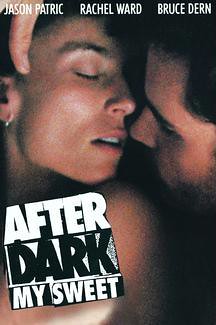
After Dark, My Sweet: Not nearly as gritty or compelling as the Jim Thompson novel it's based on, Sweet feels forced from the beginning. Jason Patric gives a stilted, confusing performance as a nomad ex-boxer duped into a child kidnapping scheme. Rachel Ward is functional as the boozy love interest, but the plot meanders and dawdles in a way the book never does. The bright lighting and art deco fashions and decorations don't help, either. A passable film overall, but inexcusable for its mismanaging of strong and compelling source material. C+
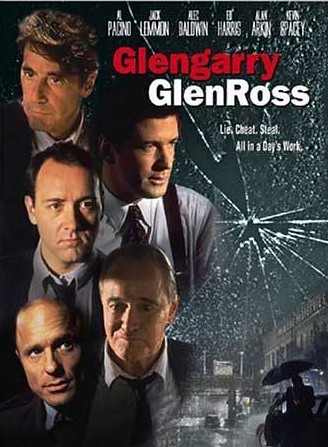
Glengarry Glenn Ross: I'm not going to waste much space here. Not because the movie doesn't deserve it -- it does, in spades. But what can I really say about a film classic? The cast, featuring Pacino, Ed Harris, Jack Lemmon, Kevin Spacey an Alec Baldwin is top-notch, and they deliver. If you haven't seen this movie, go out and rent it now. This review will be here when you get back. A+
In the meantime, I'll share Baldwin's riveting opening scene.
Last time, I decided to plop in front of my television and watch my latest NetFlix delivery: Street Kings, starring our pal, Keanu Reeves. The movie was middling at best.
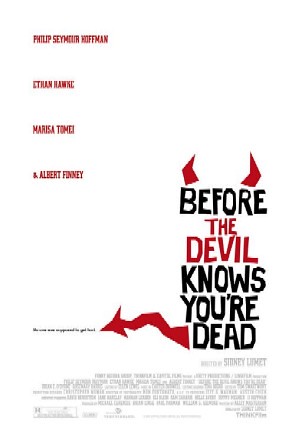
Before the Devil Knows You're Dead, on the other hand, is a great movie. The kind of movie I know I'll watch again just because I enjoyed it so much and to catch the nuances that pervade almost every aspect of the film: the dialogue, the camera angles, the acting (!) -- pretty much every aspect.
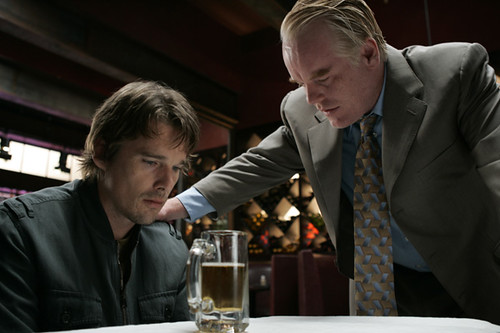
The movie tells the tale of two brothers, Hank (Ethan Hawke) and Andy (the amazing Philip Seymour Hoffman). Andy's in deep shit at work for doctoring the numbers to feed a growing heroin addiction. Hank is painfully behind on his child-support payments to his daughter Danielle and his crabby ex (played with aplomb by The Wire and Gone, Baby Gone vet Amy Ryan). Then Andy hatches a plan to knock off their parents' suburban jewelry store. Sounds simple enough, right? The brothers fence the goods, the parents are protected by their insurance. But in the first few scenes, things go horribly wrong.
But Devil is more than a mere heist flick. It's less about the actual robbery and more about the players and those surrounding them. Two desperate men, hoping that a quick infusion of cash will fix not only their monetary problems, but absolve their faults -- addiction, infidelity and a fractured family.
Hoffman is his usual amazing self. Much like his character in The Savages, Hoffman brings a controlled and quiet desperation to Andy, who seems to have everything together on the surface, but is clearly about to burst from the stress. Hawke is admirable as Hank, the younger, bumbling brother who can't seem to stop his life from spiraling into disarray. The two play off each other well, and it's in those scenes where Hawke elevates his work, perhaps to meet the challenge of Hoffman.
I have to give some credit to Marisa Tomei here. She plays Andy's wife with an air of shaky desperation and sex appeal that the role demands. And while she doesn't have much screen time (or clothed time, come to think of it), she manages to make the best of her moments, especially toward the end of the film, as the plot careens toward its tragic climax. Thumbs up go to Albert Finney as well, who plays father to the troubled siblings. All in all, every actor is cast sharply, with very little of the celebrity disconnect that seems to litter a lot of movies these days. "Oh, Tom Cruise is in this!"
The script is tight and moves crisply, benefiting from it's non-linear structure. Had the story been presented chronologically, it may have ended up as a serviceable drama. Toward the end, it does settle into a more traditional format. But the finished version really generates more momentum with the choppy, out-of-order scene rollout. Even the slight overlapping bits of character interaction add to the overall feel of the film, one of lost control and frantic reactions.
Lumet's work is stellar. Beyond the structure, the camera angles, movement and lighting add a gritty, realistic feel to the work, but not in a ham-fisted, "this is important, so you must watch!" way. Everything seems real enough, and that's the point. The characters react in realistic ways to realistic problems. Once their reactions lead them down a dark path, they deal with those consequences in an equally real way. It's a heart-wrenching and frightening movie, but not in the ways you'd first think. This is a tale of two people at the end of their rope and the family and loved ones they drag down with them.
SuckerFlix Grade: A Next Week: After Dark, My Sweet
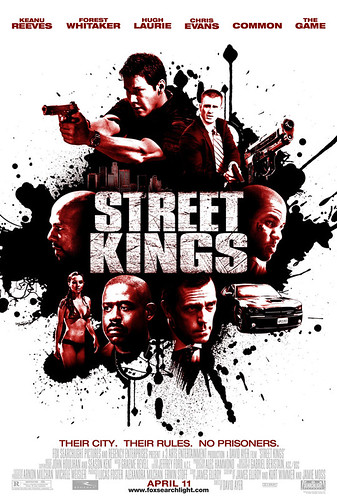
In addition to reading a ton, I try to watch a lot of movies, too. Not remarkably unique, I know. But I figured it'd be fun to irregularly review those films I do see (thanks, NetFlix!) here on this blog. First up is Street Kings, starring Mr. Monotone himself, Keanu Reeves.
OK, the first thing you're probably asking is "Why the hell did you even put this on your NetFlix queue?" One reason: The screenplay was written by crime fiction legend James Ellroy. One of my personal favorites. His cinematic track record is a bit spotty, both as far as the adaptations of his novels go and his own, albeit limited forays into writing for the screen himself. Still, it was enough of a reason to check it out. I'm also a big fan of Forest Whitaker and find Keanu to be generally tolerable. He's not the best actor by any means, but I have to respect him for at least being eclectic when it comes to selecting roles.
Street Kings is the story of LA vice detective Tom Ludlow, an alcoholic widower who shoots first and fills out reports later. As his boss gets lauded and promoted, Ludlow discovers that his old partner, who is also under investigation by Internal Affairs, might be ratting him out. When his ex-partner turns up dead under mysterious circumstances, Ludlow is the target of the investigation -- but also the only person able to find the real killers.
The movie is fairly paint-by-numbers. Reeves' character is borderline cliche and he does little to add to the role that would make him stand out. Whitaker, who is usually pretty magnetic on screen, comes off flat and hammy. Every time his corrupt sergeant is on, the scenery-chewing doubles.
Not surprisingly, Reeves/Ludlow stumbles upon some details that lead him to (gasp) suspect his own people of orchestrating the death of his partner, and it inevitably points back to the LAPD. I guess I should put up a spoiler warning, but the details in the first few scenes of the film point to this so loudly it's no surprise when the plot actually meanders toward the revelation. None of the secondary characters are memorable, and if anything, some are grating, like Jay Mohr's irrelevant and smarmy corrupt detective. The highlight of the film is Hugh Laurie, who has made a name for himself on FOX's House. I've never watched the show, so I was impressed at how magnetic he was on camera, and found myself wishing he was the lead instead of the fairly wooden Reeves.
Still, the movie rolls along at a brisk pace. While painfully predictable and unremarkable, Street Kings falls into the "I'm just laying around the house on a Saturday morning and want to watch something" category. Not bad by any means, but not something you'd ever make a point of watching.
Ellroy peppers the script with many of the things that stand out in his early novels: corruption in the LAPD, racial tensions and a bleak, fatalistic look at modern society. Sadly, director David Ayer chooses to focus more on the MTV aspect, with cameos from rap stars Common and The Game thrown in to make the film more palatable to the hip hop crowd, and video game-style violence that while "cool" in the moment really detracts from the plot. I found myself wondering midway through the film how Ludlow has even managed to stay alive this long. The action becomes unrealistic and distracting. The camera work is also jerky and inconsistent, as if the viewer can't decipher which scenes are supposed to be violent, so the director has to scream to let them know.
Not surprisingly, Ayer also directed Training Day, which this movie echoes in many ways. I only realized this after checking the director's credits online, but saw many similarities while watching Kings. The newer film, though, really only comes off as a watered down version of Training Day, which was still riddled with flaws but had more momentum than this. If you're a fan of cops and robbers movies and don't find Reeves too brutal to watch, then there are worse ways to spend a few hours. Otherwise, I'd pass.
SuckerFlix Grade: C+ What's next: Sidney Lumet's Before The Devil Knows You're Dead
The Screenwriters League is a collective of NYC-based writers sharing their experiences as they build their careers from the ground up, and hoping to impart any knowledge they gain along the way.