Showing posts with label what are you reading?. Show all posts

Friday, December 12, 2008

What Are You Reading Week 8: Finishing up the "L.A. Quartet"


I know, I know. Where the hell have I been? No concrete excuses here, faithful reader. One thing I can say about my time away, though, I have been reading. Reading Ellroy. Can't you tell, from my stop-start sentence structure and use of words like "shitbird" and "feature this"? No? Fine.

Last time we chatted, I was midway through James Ellroy's "L.A. Quartet," a loosely-connected series of novels set in -- you guessed it! -- Los Angeles, starting around the time of WWII and ending at the dawn of the 1960s.

Specifically, I was about a third of the way through L.A. Confidential, which tells the tale of three cops: up-and-coming brown-noser Ed Exley, lovable bruiser Wendell "Bud" White and smooth operator Jack Vincennes. Most of you, I'm sure, are familiar with the film version, starring Russell Crowe and Guy Pearce. While the movie is fairly faithful to the source material, if we've learned anything about Ellroy thusfar, it's that he packs his novels with so much information and so many characters, that oftentimes, you find yourself flipping backwards just to re-learn who some of these people are. Confidential, seemingly the longest of the four novels, is honestly, sometimes pretty hard to follow. Ellroy mixes in a slew of characters, newspaper-style vignettes and three different viewpoints. While it takes at least half the novel (or, it did for me, at least) to get into the groove Ellroy is belting out, once you start to feel it, you really become immersed in the world the author's created. Meticulously researched, from the historical facts surrounding the story (The "Bloody Christmas" and veiled Walt Disney parody) to the word choice and lingo of the characters from that time period, you close the book feeling like you just spent a month or two in Los Angeles, circa 1954.
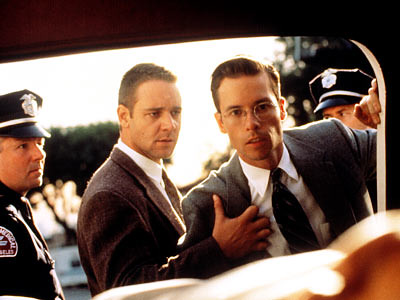


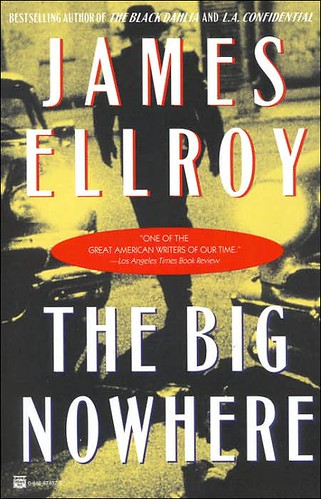
Unlike The Big Nowhere, which seemed to be more of a mish-mash of viewpoints and facts swirling together with a Communist witch hunt and a serial killer backdrop, L.A. Confidential takes the three-character formula and synthesizes it into something more cohesive. Whereas Nowhere started with three characters, seemingly unrelated, working on their own cases/problems and then eventually gravitating toward each other, L.A. Confidential starts with the three main characters already close together and slightly overlapping and with a much stronger conflict -- specifically with the straight arrow Exley and the devil-with-a-heart White.

There were points while reading Nowhere that I pondered giving up, before hitting the final act which kicked the entire book into high gear. L.A. Confidential is smooth from the get-go, with a few slower chapters but overall a consistent and engaging pace. You begin to sympathize with all three of Ellroy's stars -- the duty-bound Exley, the brutish but loyal White and the slimeball with a soul, Vincennes. Whereas with Nowhere, you could argue that Mal Considine was really the only relatable character. The closeted Detective Upshaw and scurrilous Meeks were a little too far gone for this reader to really root for or appreciate. But I'll get to that a bit more later on, when we enter the final chapter of the Quartet, in Ellroy's White Jazz.

Plot-wise, like most of Ellroy's latter-day work, L.A. Confidential is ultra-detailed and at times confusing. But the style raises the substance more often than not, making the book an experience not to be missed, even if you're not really sure what just happened, exactly. Still, it's a literary work, and it elevates the crime genre beyond the staid trappings of private eye stories and serial killer adventures. While I have a soft-spot for the more linear and emotional stuff produced by Pelecanos and once produced by Lehane, Ellroy's a totally different -- and disturbing -- flavor that's worth trying.
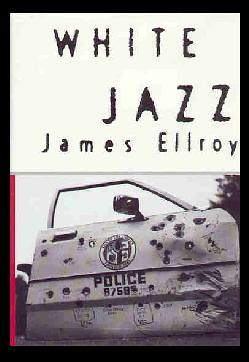


White Jazz, which closes out the four-piece masterwork, goes back to Ellroy's roots. Specifically, the first-person narration of The Black Dahlia. This time, though, the viewpoint character is not nearly as likeable as young Bucky Bleichert was. Instead, we're handed Dave Klein, a corrupt cop who's part slumlord, part bagman and all rotten. Set a few months after the end of L.A. Confidential, we find Klein heading up the LA Administrative Vice division -- well, when he's not killing people for the mob or having strange, incestuous fantasies involving his younger sister. Yeah. Klein is not your typical lead.

Just as Klein takes on a side job trailing a wannabe movie starlet for mogul Howard Hughes, his world begins to crumble. The State's Attorney has begun a deep probe into corruption in the LAPD, former mob head honcho Mickey Cohen is becoming a parody of himself and Kein's been assigned to solve a home invasion that seems admittedly creepy but irrelevant, on the surface. I won't spoil the specifics here, but Jazz does resolve plot threads and character arcs from the last novel, in a much clearer and effective way than Confidential did for Nowhere (strangely enough, the movie version of L.A. Confidential finds a way to integrate Buzz Meeks into the main plot much more cohesively than Ellroy did, with a slapshod prologue). If you closed the book on L.A. Confidential wondering what happened to X and Y, White Jazz answers those questions for you.

But beyond just closing down plot threads and concluding stories for previously introduced characters, Jazz is a riveting and disturbing look at a totally corrupt and despicable individual. I found it hard to get few the first chapters of the book because I found Klein impossible to like. He was a liar, a cheat, a scumbag and a murderer. But once you keep reading you realize he's one of many, and, as was pointed out to me earlier today, why do you have to like the main character to like a book anyway? Maybe I just grew into the habit. After a while, I figured out what Ellroy was striving for, or, what I thought he was going for. He wants you to hate Klein. He wants you to find him to be a disturbing creature you'd never want to cross in real life. That's what makes his story so interesting -- this is a cop tale from the other side of the coin, where the "hero" isn't a stalwart white knight but a black knight in sheep's clothing. That's the crux of White Jazz, and everything else that injects Ellroy's fiction starting with his literary rebirth in the pages of The Black Dahlia. Even the way the sentences and thoughts are structured give the reader a glimpse into the frenzied, fractured mind of Klein.
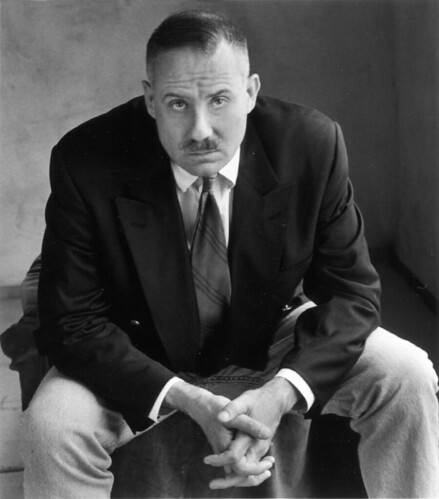


There's an unconfirmed rumor that Ellroy turned in a 900-page first draft for Jazz. When his publisher balked, Ellroy cut the book down to size by excising most of the verbs, articles, adjectives and unnecessary words, pruning it down to a more manageable 350-or-so pages. Crazy, huh?

The final product is a benzadrine fueled sprint through the creepy underbelly of Los Angeles in the late 50s, before the dawn of Camelot, doused in piles of murder, greed, corruption, double-crosses and lies. And there's more.

"Well, fine. But do I have to read the entire four-novel series to enjoy the experience?"

Not really. I think each novel stands (and falls) on its own merits and failures. Do you get a better, more organic and overall complete story by reading all four? Yes. The perfect example is when you read L.A. Confidential and realize two of the most important characters in the book are left dangling after the main plot is resolved. Or, when you finish The Big Nowhere and you're not really sure what's going to happen to Buzz Meeks. If, like myself, you're already inherently inclined to enjoy serialized fiction, you'll want to read all four. There's also the geeky payoff, which Ellroy uses carefully, that comes when you see a character from an earlier book showing up later in the series, like The Black Dahlia's Russ Millard taking a more central role in L.A. Confidential.

While not perfect by any means, Ellroy's "L.A. Quartet" offers up a layered, organic and exhilarating picture of a city in different stages of evolution with real history as a backdrop you can sense and see, instead of just having it inserted to suit the needs of story. These characters could have easily existed in the times they've been placed, and the ones that did sound perfectly in tune with their real life doppelgangers. Highly reccommended.

What's next for me? More Ellroy. Specifically, part one of Ellroy's "American Underworld" trilogy, American Tabloid.

But enough of that. What are you reading?

Tuesday, November 11, 2008

What are you reading? Week 7: On the road to Nowhere


Last week, I gushed and gushed about James Ellroy's The Black Dahlia, praising the neo-noir tale's slimy portrait of post-WWII Los Angeles and its denizens. Needless to say, I was pretty excited to move on to the next part of Ellroy's "L.A. Quartet," The Big Nowhere.

I'm not really sure how I feel about it yet. I'm about 170 pages in and I'm still waiting for that great moment where you have to keep reading and can't put the book down. I was talking to Zombie about this last week, thinking I'd reached that moment with the book. But then I hit a few slower, less interesting chapters and I found myself not as motivated to pick up the book. Still, I remain optimistic, and Ellroy is far from an "easy" writer. You have to really dedicate yourself to the material. He doesn't mince words or ramble on, so you know every word, character and scene counts. Did I mention it's not easy?

The Big Nowhere kicks off by slowly introducing us to its three protagonists: Sheriff's Deputy Danny Upshaw, a young up-and-comer with promise and a textbook approach to detective work; Mal Considine, a divorced cop trying to keep custody of his immigrant stepson and Buzz Meeks, a corrupt ex-cop who's on the dole for Howard Hughes and local mob boss Mickey Cohen. Set during the red scare of the early fifties, the novel finds the three characters inching closer together amid a backdrop of labor disputes, Communist witch hunts and a series of grisly murders.


At first, the three characters seem distant and unrelated, but as the novel progresses, all three become involved with the same problem: weeding out Communists from the UAES, an actors' organization on strike and costing Hollywood bags of money. I'm not sure how much that interests me, to be honest, but there's also the case of the potential serial killer, which is Upshaw's thread as the story begins. And sometimes, after reading a great book by a great author, you allow the author some modicum of faith when reading a later, more complex work. That's what's going on here. I imagine that after a few more chapters the story will kick in and I won't be able to put it down. Until then, I'll push through and wait for that moment.

Wednesday, October 29, 2008

What are you reading? Week 6: Dancing with the Dahlia


Last week, we entered the world of Ross MacDonald and Lew Archer, and took a tentative step toward James Ellroy's visceral vision of 1940s Los Angeles. Specifically, the author's terrific neo-noir and fictionalized examination of the death of Elizabeth Short, otherwise known as the Black Dahlia.

In the book -- aptly titled The Black Dahlia, natch -- Ellroy introduces the readers to Dwight "Bucky" Bleichert and Lee Blanchard, two up-and-coming cops on the L.A. police force. When the two cops -- who also both boxed before they joined the force -- face off in the ring to help promote a voting proposition to increase funding for the department, a bond is formed. Soon, the two become partners for the department's elite "Warrants" division, and Bucky finds himself immersed in his partner's day-to-day life, which includes his ravishing live-in girlfriend, Kay Lake. The three become irrevocably linked, and a strange co-dependent bond is forged. Lee supports Kay, Kay is falling for Dwight and Dwight is torn by his loyalties to his partner and his growing lust for his partner's pseudo-wife.


The dynamic is blown to bits on January 15, when while on a routine investigation Bucky and Lee stumble upon Elizabeth Short's dead and gruesomely dismembered body. Soon, the scene becomes a flashpoint for media and cops, and the story of "The Black Dahlia" murder is the talk of the town. Why was this pretty New England girl so brutally murdered? And, more importantly, why are both Bucky and Lee inexorably driven to find her killer?

What follows is a slow and thoughtful dip into the seedier realms of the human psyche, echoed by Ellroy's perverse vision of Los Angeles right after the second World War. Initially, the Dahlia murder serves as a uniting force for the Bucky/Lee team, but it soon becomes a growing crack in their equally flawed trinity with Kay. Lee, haunted by memories of his younger sister -- who was killed in a similar fashion to the Dahlia -- becomes obsessed with the case. Fueled by uppers and a twisted desire to put his dead sister's ghost to rest, Lee abandons his home and eventually his city on a quest to solve the murder.

Bucky, meanwhile, is at first reticent and dismayed at his reassignment from Warrants to the Dahlia case. But upon meeting the mysterious and sexy Madeleine Sprague on a canvass of a few LA dive bars, Bucky finds himself in a passionate and disturbing romance with the Dahlia's clown face-scarred visage and her sad demise. Madeleine's uncanny resemblance to the deceased Ms. Short, along with her own slowly-revealed machinations send the young cop into a tailspin that will eventually ruin his career, romantic prospects and obliterate his self-respect.

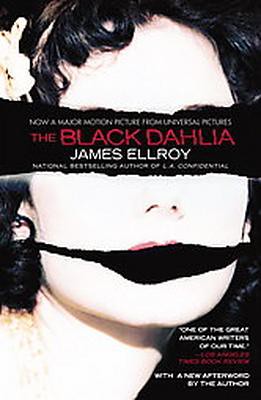
The Black Dahlia is a tour de force and Ellroy at his finest. It's the kind of book that not only paints a believable picture of a time long past, but also makes you long to be a part of that world, no matter how dirge-like and frightening it may seem. Ellroy's characters jump to life, whether it's through their actions or their tight, believable dialogue and mannerisms. Ellroy's L.A. is a bloody, infected scratch of a town, littered with floozies, two-faces and sad, wretched people clinging to their very existence with a slurred and medicated desperation. You may not like any of the characters in the book, you may not like any of their actions and you may be scared and shocked by what you read, but you won't be able to put it down. This book cuts to the core of human nature, and it isn't a pretty picture.

The Black Dahlia is a tale of extreme, deadly obsession and sharply focused longings and desires, with a sinful metropolis as its dangerous and malignant backdrop.

I'd end my writing here, but there are a few more notes I want to touch on. Not nearly as exciting as the book itself, though.


As some of you might know, The Black Dahlia is the first part of what Ellroy later dubbed "The L.A. Quartet," which also includes The Big Nowhere, L.A. Confidential and White Jazz. Needless to say, I'll be picking up The Big Nowhere the next time I step into a bookstore (*cough*today*cough*), and proceeding from there.


Additionally, the novel was adapted by director Brian De Palma into a piss poor movie, starring doe-eyed Josh Hartnett and a stuffy Aaron Eckhart as Bucky and Lee, respectively. With the painfully numb and monotone Scarlett Johannsen dumbing down and neutering the Kay Lake role. The only highlight was Hillary Swank, who veered a little bit off her usual path of asexual tough girls by playing the vampy and over-sexed Madeleine. But Swank couldn't save the film, which ham-fistedly delivered the novel's more nuanced messaging and truncated the novel's thoughtful and effective ending to create something overwrought and lumbering at best, laughable at worst. I considered for a moment re-casting the film and making a blog post out of it, but in the end, it's best not to think of this adaptation at all, if one can help it.

One final note, this one a tad selfish -- I first went into reading Dahlia thinking it would offer little guidance in regards to my own work -- specifically Silent City -- thinking I'd mined the crime genre enough with Pelecanos' A Firing Offense and a few other books. But it really helped me determine a huge aspect of the book that had often bothered me -- why would Pete pursue Kathy's killer so diligently? What drives him? Needless to say, reading this book helped me figure that out for myself. An added bonus to an already great reading experience.

But, as usual, enough about me. What are you reading?

Friday, October 24, 2008

What are you reading? Week 5: Back on the crime fiction beat

Last week, we bid adieu to our friends Nick and Norah and took a tentative step back into crime fiction with the "comedic crime" of Carl Hiaasen. Specifically, his newspaper caper book, Basket Case.

I have to admit, while Basket Case was enjoyable, it lost a little steam toward the end. As I noted last time, the plot of the book appealed to me because the book was set in South Florida and also because the lead character was a journalist. Hiaasen did a great job of painting a newspaper scene, and I really learned a lot from reading the book in that regard. Unfortunately, while his scene-setting when it came to SoFla was decent, it didn't really make me feel like I was back home (I'm from FL, FYI), and a lot of the names used seemed fake and/or forced, which is exactly the opposite of what I'm trying to do with my book. Overall, the plot resolved itself too easily and neatly. I won't spoil the final plot twist, but it left me wanting. Additionally, the "unexpected" romance between protagonist Jack Tagger and his editor Emma came off as unnatural and predictable. Emma's initially painted as a nervous, antsy and neurotic shrew -- so why is the rebellious and cantankerous Jack suddenly drawn to her? Why does she kiss him randomly? It didn't feel right. Understandably, building a functional romantic dynamic is hard, especially when the characters start off as opposing forces. But there didn't seem to be enough time spent on the "Moonlighting"-style moments, where the two opposing characters are at each other's throats but still flirting somewhat. Overall, the book is what it set out to be: a breezy read for someone looking for something entertaining and slight between serious books.

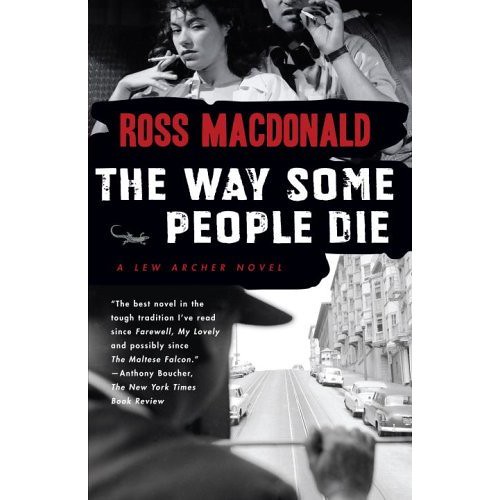
Once I finished Basket Case, though, I was a little desperate. My to-read pile had dwindled to a stack of Ellroy books (more on that later) and Ross MacDonald's The Way Some People Die. The latter was given to me by a friend that works in publishing, but I'd read very little about MacDonald or any of his work. Well, I was pleasantly surprised.


I've gone on and on about my favorite contemporary crime authors -- Pelecanos, Lehane, Connelly, etc. But I've said little about my favorite old school, first generation crime writers. Obviously, Raymond Chandler is atop that list. For a long time after reading his entire output (gold stars next to Farewell, My Lovely, The Big Sleep and The Long Goodbye), I was left wondering if there was a true and proper heir to the colorful, stylized and just plain cool detective novels Chandler created, starring the archetypal gumshoe, Philip Marlowe. For a time, I thought Michael Connelly was the guy, but after a few Bosch books (great as they were), I realized that Connelly was more about a tight, forceful plot and less about the atmospheric and literary strengths that Chandler reveals in his work. Well, Ross MacDonald is it.

Like Chandler, MacDonald chronicles the adventures of a sharp, do-right PI. In MacDonald's case, the guy's name is Lew Archer. Like Marlowe, Archer is a strong believer in right and wrong and finds himself in sticky situations that involve subterfuge, mistaken identities and murder. In The Way Some People Die, Archer is for all intents and purposes a Marlowe clone. But that's fine. And based on what little I've read about the series, I know he eventually evolves into something else. But for someone who was craving more Chandler, MacDonald provides the perfect fix.

While Chandler's work is more about painting a scene and colorful language, MacDonald is also equally about plot. So -- in crude terms -- not only does it read like something cool and interesting is going on, but you also can follow the story and understand who the characters are, a flaw I found in most of Chandler's work, but one I was willing to overlook because the ride was so much fun.

The Way Some People Die starts simply enough -- an aging mother begs detective Lew Archer to find her lovely twentysomething daughter Galatea (otherwise known as Galley), who hasn't been in touch for over two months. What follows is a tale of drug-smuggling, prostitution, murder and multiple double-crosses. It reads like a great, old movie, with the requisite femme fatale, gangster villains and surprising turncoats. If you like mysteries, this is a keeper.

Additionally, like most of Chandler's work, The Way Some People Die is a relatively quick read, clocking in at a little over 270 pages (coincidentally, right around where I'd like SILENT CITY to land, when I finish it. I managed to talk my friend to toss a few more MacDonald books my way, so I wouldn't be surprised to see me writing about him a lot more in this here space. Well, unless I go on an Ellroy tear.


Which is highly likely.

I've had an interesting relationship with the works of James Ellroy. I've always been a fan. My Dark Places (nonfiction) and Ellroy's Lloyd Hopkins trilogy of detective novels are books I think of often and remember really enjoying when I read them. But for whatever reason, I could never bring myself to dive into his more lauded work, namely the "L.A. Quartet" of books, which consist of The Black Dahlia, The Big Nowhere, L.A. Confidential and White Jazz. I tried reading Dahlia a few years back and stalled about 20 pages in. I'm a big believer that if you can't get past the first 20-30 pages of a book, if you're not driven to keep reading it, you're better off just putting it down for a while and moving on to something else. The spark might just not be there. Recently, having finished The Way Some People Die and without another MacDonald book, I picked up Dahlia again. Why Dahlia, specifically? Well, I needed the material to be redeemed in some way. The Brian De Palma-directed movie based on the book was horrible, and I needed to wash that taste out of my mouth. Additionally, Dahlia kicks off the previously mentioned Quartet, so it seemed like as good a place as any to dive into Ellroy.

Great decision. Ellroy is in top form with Dahlia, shrugging off the slight awkwardness and stiff pacing of his earlier novels to create a book that is true neo-noir. As most should know, the book is a fictionalized account of the real Black Dahlia murder. I'm barely 100 pages in, but I've already reached that point where you can't put the book down and all you want to do is curl up and read until you're done. And then, ideally, have another book at the ready. I'll have more concrete thoughts on the book in the next installment, I'm sure, but suffice to say, Dahlia is a pleasure to read. I almost want to kick myself for not plowing through it years ago. It also made me want to "fix" the movie, so expect a post later this week which features me re-casting the entire thing. If I find the time, of course.

Enough about me, though. What are you reading?

Wednesday, October 15, 2008

What are you reading? Week 5: Goodbye Nick and Norah, hello Carl Hiaasen


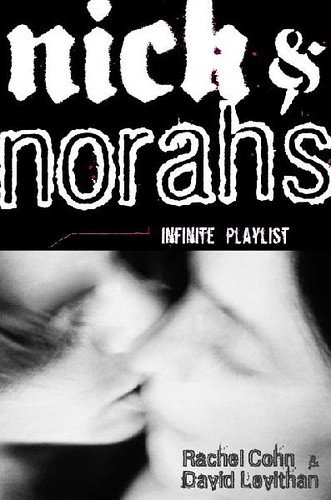
Last week, I promised my final thoughts on Nick and Norah's Infinite Playlist and perhaps some Ellroy. Well, I got my dose of Ellroy when I watched Street Kings on Saturday (I even started re-reading L.A. Confidential, but decided to table that reunion) and decided to try a new author: Carl Hiaasen. More on him later.

Nick and Norah
is a relatively quick read. Since it's a YA novel, it's not a remarkably challenging book to read, either. Still, the authors (who took turns writing chapters, one focusing on Nick the other on Norah, rinse, repeat) manage to make the characters believable and interesting enough for any reader. My impetus to read the book came from seeing the movie, which, in retrospect is a stronger piece of entertainment with the book. If you don't want aspects of the film or book "spoiled," I'd suggest scrolling down past the Hiaasen book cover. Gone? OK.

The book is hampered by its structure. Sure, it's cool that every other chapter focuses on Nick or Norah. It's -- dare I say it -- a novel approach to the writing of a book. But sometimes novelty interferes with quality. Unlike the movie, which is free to roam around and interact with many of the other, sometimes more interesting supporting characters, the book forces the reader to either reside in Nick or Norah's head. One of the funniest characters in the movie is Norah's boozer best friend, who is quickly written off in the book and never seen again, much to my dismay as I reached the last few chapters. Also, the movie moves toward a goal -- the mysterious, secret show of indie rock darlings Where's Fluffy?. In the book, the concert happens early on, and you're left wondering why this band is so cool. In the movie, you're strung along so capably by the characters' excitement that you find yourself almost believing how awesome this band could be. I'll save the movie's ultimate band-related plot twist, but needless to say, the film deals with the mythic nature of the band in a much more creative and pleasing way.

Now, I understand -- the book came first, so of course the film is able to talk the novel as a first draft and therefore improve upon it. I get it. Maybe if I'd read the book first, I would have had more qualms with the film. Somehow I doubt it, though. Also worth noting is that Norah is not nearly as sweet in the book as she is in the movie, where she's portrayed as awkward and shy. Which is an improvement. While I ended up liking Norah's character in the movie, I found the book's version to be more realistic and charming. She was more flawed and confused -- like a real teenager.

Would I have read the book had I not seen the movie? I don't think so. Do I regret reading the book? No way. It was well-written and, I think, an effective story for the kind of genre it's looking to be filed under. Strong dialogue, good scene-setting and two interesting leads make for a quality piece of work. But I liked the movie better. So sue me. At least I didn't title this post "A little more-a Nick and Norah."


Now, I'm about a third of the way done with Carl Hiaasen's Basket Case. Being a former journalist from Florida like the author, I've always felt an affinity toward Hiaasen, and he's been on my shortlist of writers that I want to check out. Now, I buy books in bulk. I bought Basket Case last December, thinking that I'd need a lot of reading material to survive being holed up in my mother's house for almost a week on vacation. I never got around to the book, but after finishing N&N on Saturday, I knew I wanted something crime-ish, but not as dour or deadly as an Ellroy, Connelly or Pelecanos book. Enter Hiaasen.

Two other, more clear reasons why Hiaseen is a good person for me to read now: he writes about South Florida. The protagonist of this book is a journalist. If you know anything about SILENT CITY, you know that a) it's set in Miami and b) stars a jaded journalist. So, like Connelly's Chasing the Dime, which I discussed here, Basket Case is not only a means of entertaining myself through a good story, but a great way to learn a thing or two from an author who's made a career out of writing about SoFla and about crime.

Basket Case's protagonist is Jack Tagger, a former star investigative reporter now relegated to the obituary section of his local daily. When Tagger stumbles upon the death of Johnny Stoma, famous ex-lead singer of punk rock legends The Slut Puppies, Tagger sees his ticket out of the doghouse and onto the front page. But when things start to smell a little fishy and Stoma's death doesn't exactly jibe with the police report screaming "accident," Tagger realizes he's in a little too deep.


If Pelecanos is literary crime fiction and Connelly redefines the procedural, Hiaasen finds a way to inject a believable and, admittedly, enjoyable dose of humor into the genre. Tagger is a cranky, unhappy and almost pathetic lead, but as a reader I don't tire of reading about him and in fact find myself drawn to him as a character. Hiaasen clearly knows the area and the inner workings of the newspaper, making everything he writes seem believable, cutting down on any "Wha? Huh?" moments that would otherwise disconnect the reader from the story.

I'll admit, though, that I find the musical references -- specifically, the band's name and the exaggerated characterizations of the music biz folk that flicker in and out of the book -- a little cringe-worthy, but aside from that, Basket Case has proven to be a breezy, enjoyable and just plain fun read. Too bad I'm not on a beach sipping a margarita. Can't win 'em all. Enough about me. What are you reading?

Tuesday, October 07, 2008

What are you reading? Week 4: King Suckerman's Infinite Book List


Last week, I talked at length about David Carr's memoir, The Night of the Gun. I was still about 100 pages away from finishing, but the remaining chapters lived up to my expectations. The book is a jarring, frightening and at times disgusting look at the dark side of addiction. If the final chapters added anything of note, it was my realization that while Carr seemed at least intellectually aware of his plight as a recovering addict, there still seemed to be a strong disconnect between the man he now is and "That Guy," as he referred to his time as a junkie. There's a big reveal toward the end that crystallized this for me, and while I still found the book to be enormously compelling -- and well worth the read -- I can't say I was totally convinced Carr had really come to terms with his past. Then again, who has?


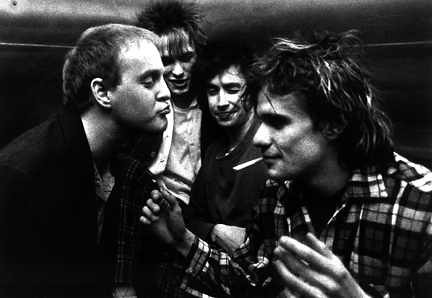
Since then, I continued my brief sabbatical from crime fiction with All Over But the Shouting, an oral history of legendary 80s rock band The Replacements. Now, I'm a huge music nerd, as Zombie can probably attest. The 'Mats are a favorite, but never really climbed the highest reaches for me. A solid B+, whereas bands like Talking Heads, Wilco and a few others were a few notches above. If there's anything I can thank this book for, it's reminding me just how good a band the Replacements were. Reading the history, which, as I'll explain a little further down left me a bit wanting, got me listening to the band again. At an ideal time, really, as Rhino recently reissued their entire catalog. They're an amazing, raw and energetic group, and their songs have more resonance with me today than when I first discovered them in college. In a weird way, they also make for a great SILENT CITY soundtrack. The aching melancholy of songs like "Within Your Reach," or the punch and fervor of the simplistic and almost dance-y "I Will Dare" are perfect complements to the stuff I'm trying to write. Interesting.

Anyway, back to the book itself -- the author, Jim Walsh, is a local Minneapolis journalist and has known the various Replacements both personally and professionally for decades -- or he at least tries to imply that he does. OK, cool. On first read, that would imply some level of access. Unfortunately, Walsh doesn't interview any of the remaining (founding guitarist Bob Stinson died in the mid-90s of natural causes) Replacements, and relies mainly on archival interviews when including comments from the band. Strike one. I hate, hate, hate music bios that don't have any direct, new material from the source. I mean, why else would I read it? I can very easily cobble together a list of great Paul Westerberg interviews, read a Wiki entry about the band and call it a night, right? Walsh tries admirably to gloss over this by talking to basically anyone and everyone that ever interacted with the band (some are stretches and clearly dropped in for name value, like Green Day's Billie Joe Armstrong and Jakob Dylan). The strongest interviews are from, not surprisingly, the people that were most in the trenches with the band -- their former manager, the guitarist that replaced Stinson, etc. And while the book overall provides an interesting look at a band's rise and eventual self-destruction, as a reader I really felt like I was missing something, and found myself thinking "Wow, I'd really love to hear what Paul had to say about this, as opposed to what the former drummer of Babes in Toyland has to say for the umpteenth time." Harsh? Kind of. But I've found that as a rule, music bios are generally mediocre to hack jobs, so I have really high expectations when I actually commit some time to one.


Strike two is a format issue. I'm just not a fan or oral histories. I think they're a lazy way to tell a story, and you lose a lot of the narrative momentum that comes with a straight biography. There's no scene setting, no color and no context between the interview excerpts. It's the different between a Q&A and a feature story. This book really suffers from that, and also commits the cardinal sin of not identifying speakers on first mention, instead expecting the reader to flip to the index in the back of the book each time a new person starts talking about how much they liked Let It Be. Not gonna do it, man. I did, eventually, read the index, and was annoyed to find that I probably would have read some passages more closely had I known that, say, the lead singer of The Hold Steady was one of the people interviewed. The format expects the reader to either already know these people by name or be OK with flipping around a book every two seconds. Annoying.

There's no third strike, and I found that after I got over my initial misgivings, the book was a fairly informative, if at times bumpy read. The timing of the quotes were generally awkward -- you'd have a few quotes about the 'Mats first album and suddenly read something referring to lead singer/guitarist Westerberg's solo career. Again, I'd imagine you can't help these things when you don't have access to the major players, but it makes for a weakened reading experience.

On the plus side, the book does a great job of painting Minneapolis as a real hub of indie and punk music, and also shows what a strong influence the band had on not only music in general, but their local scene in particular. When it's hitting on all cylinders, the book really paints a picture of the band -- a ramshackle group of middle-income drunks who just want to rock and, also, have fun while doing so. I'd pass it on to anyone with a passing interest in the band, as it'll only help to whet their appetite for what matters: the music.


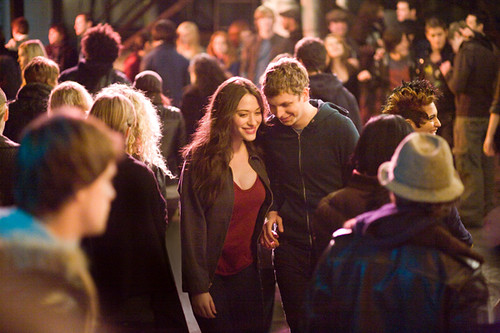
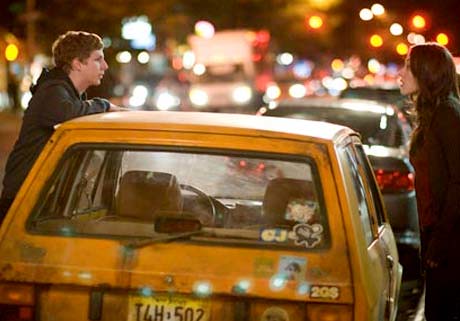
I finished the 'Mats book while on the train home last night, but I'd luckily tucked a "backup" book into my bag (OCD much?) -- the novel, Nick and Norah's Infinite Playlist, which the new movie is based on. I got the chance to see Nick and Norah's Infinite Playlist this weekend, and enjoyed it. Probably more than I expected. If you're a fan of Juno's whimsical, angsty teen dramedy, this is one for you. Michael Cera basically plays the same character, which is welcome, as I really enjoyed him in Juno. The movie isn't your typical teen movie -- there aren't a series of cliche characters, and even the secondary players are written well enough that you get a sense of how they'd act outside the confines of this specific story. The romantic thread is interesting enough, and while you never doubt that the two will eventually get together, there are enough twists to make you at least consider the possibility that things will fall through. Which is enough for me when it comes to movies like this. The film also uses music very well. One of the major plot threads is the quest to see renowned indie group "Where's Fluffy?" performing a secret show. The directors wisely decided not to go with a pre-existing band, and, in fact, never show the band performing (SPOILER ALERT), which I think was a nice touch.

Some of the other Leaguers will probably rag on me for saying I enjoyed the film, but it is what it is. I have a soft spot for these kind of movies, especially when they're done well. Double points for the NYC scenery, which included a lot of my usual haunts.

So, as I finished the Replacements book, I reached for the N&N novel, which is pretty mature and much more adult than the film version -- at least in the first three chapters. Which is kind of a relief, I have to say. Since the book is a YA novel, I'd expected it to be somewhat tame, so I'm glad to know that teens will be able to read stuff above their heads as opposed to what people think teens should be reading. It's still way too early for me to formulate a verdict on the book -- it's fun and quick so far, and since the movie is so fresh in my mind, is making for an interesting reading experience. I don't really have issues with watching movie versions before I read the book or vice versa -- I find that looking out for the differences or embracing the method helps the entire process. The novel, so far, is very much in tune with the film, though, aside from general rating and content issues that the movie glosses over. If you like one, I'd imagine you'll like the other. If you're a hater, then, no.

Next week: More on N&N and possibly James Ellroy.

Tuesday, September 30, 2008

What are you reading? Week 3: Goodbye Harry Bosch, hello ex-junkie journalist bio


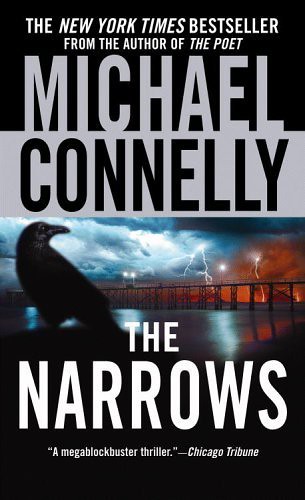
Last week, I was in the midst of finishing off The Narrows, another Michael Connelly Harry Bosch novel that also featured guest appearances by some of his non-Bosch novel characters, most notably FBI Agent Rachel Walling and -- to a degree that I won't reveal because it's spoiler-y -- retired FBI Agent Terry McCaleb. Since then, I've plowed through the rest of The Narrows and finished off Connelly's remaining three Bosch novels, The Closers, Echo Park and The Overlook. I won't go into overly detailed reviews of the three, not because they weren't good, but because I'm more interested in talking about the book I'm reading now.

Of the three, Echo Park was by far the most enjoyable and readable, with the other two serving as functional but not remarkably outstanding Bosch adventures. The Overlook, which was originally published in serialized form in The New York Times Magazine clocked it at barely under 300 pages, which is fairly light for a Connelly book, and read more like it was setting up Bosch's new status quo (new partner, new assignment, old love interest) than really telling an exciting or thrilling adventure. Don't get me wrong -- I enjoyed all three books a great deal. But, if I had to choose which of the three came closest to some of my personal Bosch favorites (Concrete Blonde, Lost Light, A Darkness More Than Night and, to a degree, The Narrows), it'd probably be Echo.

But after finishing The Overlook I found myself without a new Bosch book to read, which allowed me -- for the first time in a few months -- the opportunity to take a detour outside of the crime fiction/detective genre and work out some of the reading muscles that got lazy while I read about forensics and private eyes.

The first book I went to was David Carr's The Night of the Gun. David Carr, as some of you may know, is a columnist for The New York Times. Most importantly, though, Carr is also a recovering crack cocaine addict. The Night of the Gun tells the horrible, gruesome tale of his descent into addiction. The unique part of the memoir, though, is that Carr actually went back and spoke to the people who he interacted with during his time as a junkie failure -- the woman who gave birth to his twin daughters while both of them were daily crack fiends, the well-known comedian who once tried to gouge Carr's eye out because he was nagging the funnyman about a coke debt and the dealer who Carr went to score from while his twin, four-month old daughters waited in the car. In the winter. In Minnesota.


Truly jarring stuff, but Carr doesn't hold anything back in the telling and gives his interview subjects ample room to be critical and brutally honest about the author. And, in the process, you see how Carr himself has changed, but also how he is being changed by the process of re-living his life. Imagine waking up one day and realizing that, no, you're not the nice person you thought you were. Yeah, those two years you don't really remember? Well, you beat up women, drank and drugged to extreme excess, got arrested over a dozen times and failed at five stints in rehab. The story Carr tells, and the journalistic tools he uses to tell them paint a picture of a man who didn't reclaim his life because he's a great person -- although, from what I can tell, he became a better man -- but because of luck, and because he had caring friends and family. I'm only about 200 pages into the book, so I imagine there's more to be revealed. A friend of mine (who lent me the book) said there'll be at least one jaw-dropping moment toward the end. Which is somewhat frightening, because the pages I've already read have left me oftentimes with mouth agape and my eyes wide. I can't recommend this book any more. But enough of that.

What are you reading?

Thursday, September 18, 2008

What are you reading? Week 2: Continuing Connelly

Last week, I touched upon how Michael Connelly's standalone (non-Harry Bosch) novel Chasing the Dime was a helpful guide in the writing of SILENT CITY. Mainly because the protagonist, like my own, starts off not as a detective, but a regular member of society who becomes embroiled in some criminal craziness.

Since then, I've finished Dime and another Connelly book, Lost Light, and am halfway through the next one, The Narrows. Light, like most of the Connelly stuff I've read, stars Harry Bosch, a grizzled (now former) LAPD detective who will do anything in his power to solve his cases and speak for the victims, or, as he says many times, "speaks for the unspoken."

Lost Light is interesting for a number of reasons. Unlike the previous eight Bosch novels, Light is told from Bosch's perspective, as opposed to third person narration. The storytelling reason for this is simple -- Bosch has retired from the LAPD and is now a private investigator. Connelly, an unabashed fan of the work of Raymond Chandler, really infuses the book with the same energy of the Marlowe books while still retaining Bosch's clear and recognizable voice and characteristics. Unlike some other crime writers, most notably George Pelecanos, Connelly isn't really prone to switching around his viewpoints characters, instead choosing to stick with Bosch for the most part. So, the switch to first-person narration isn't really all that jarring to a long-time reader of his books. Still, the switch provides some interesting insight into the character and also echoes Chandler's work.

Lost Light follows Bosch as he investigates one of his old, unsolved or "cold" cases -- the murder of a woman about four years earlier. As the story progresses, the original crime is linked up to Hollywood mayhem, a bank heist and Homeland Security. Sounds implausible, but Connelly makes it work, and the author also manages to bring back a number of supporting characters from past novels without making the introductions or background bumpy. The big reveal at the end also comes out of left field, as any good reveal should.


The Narrows picks up a few months after Lost Light but is interesting because it brings together Bosch and a few other characters from Connelly's earlier, standalone books like The Poet and Blood Work. (The latter was adapted into a mediocre Clint Eastwood film.)

Bosch's story is again told in first person, but Connelly switches back to third-person narration whenever Bosch is off-camera, which seems to work fairly well, but would probably be more jarring in the hands of a less experienced novelist. The Narrows serves as a direct sequel to The Poet, with the killer from that book returning to plague both Bosch (who is not in the first book) and FBI Agent Rachel Walling, who was the viewpoint character in The Poet. The book, as a standalone read is interesting and moves at a brisk pace -- I have to admit, though, that it helps to have read the previous Bosch novels. I'm at a slight disadvantage having not read The Poet, but Connelly is good (so far) at filling in any relevant backstory without slowing the overall plot.

Of most interest to me, since I'd ideally like to see SILENT CITY's Pete continue on in other novels, is seeing how Connelly slightly tweaks Bosch from book to book. The changes, of course, seem natural and organic, which is the goal, and a helpful guide when I reach the point where I'm mapping out a second or third novel. Fingers crossed.

Enough about me, though. What are you reading?
Wednesday, September 10, 2008

What are you reading?


I'm stealing an idea from Connie at The Miami Herald and asking a question via the InterGoogle that I often ask people in person: What are you reading now? And, more importantly, how is it?

I'm still tearing through Michael Connelly's library. I'm on my ninth book of his (which, I realized last night, I've read in little over a month), eight of which have been installments in the Harry Bosch detective series. The one I'm reading now, though, Chasing the Dime, isn't part of the series. It tells the story of chemist Henry Pierce, who discovers that his new phone number used to belong to someone else. That someone else being a high-priced escort named Lilly who has gone missing. Things get weirder from there, and Henry finds himself immersed in the seedy world of prostitution and Internet adult entertainment.

At first, I was a little annoyed at the book. See, it was the third book in a three-book omnibus I'd bought. Two of the books were Bosch novels, so I was really looking forward to continuing the adventures of Harry. So, I was a little irked to find this standalone story grouped with two from the series. But, after muddling through the first few chapter, I realized that not only was this a decent mystery in its own right (and also featured a number of previously seen characters from the Bosch series), but also had a few hints and tips on how I could better execute my own crime novel, which has some parallels to Dime, most visibly the notion of the non-detective becoming the hero/detective against his better judgement and out of a desire to help a friend/person in need.

In that respect, Chasing the Dime has been a helpful guide toward getting a sense of how I could make my book work, and how I could make it different and potentially avoid some of the story mistakes my radar picked up while reading the novel. I wouldn't say it's as entertaining as the Bosch books, but that's fine. That can be chalked up to familiarity with the character and the comfort zone that creates. Still, I'd consider reading another Henry Pierce novel. Assuming he doesn't end up dead -- I still have a few more chapters to go.