I know, I know. Where the hell have I been? No concrete excuses here, faithful reader. One thing I can say about my time away, though, I have been reading. Reading Ellroy. Can't you tell, from my stop-start sentence structure and use of words like "shitbird" and "feature this"? No? Fine.
Last time we chatted, I was midway through James Ellroy's "L.A. Quartet," a loosely-connected series of novels set in -- you guessed it! -- Los Angeles, starting around the time of WWII and ending at the dawn of the 1960s.
Specifically, I was about a third of the way through L.A. Confidential, which tells the tale of three cops: up-and-coming brown-noser Ed Exley, lovable bruiser Wendell "Bud" White and smooth operator Jack Vincennes. Most of you, I'm sure, are familiar with the film version, starring Russell Crowe and Guy Pearce. While the movie is fairly faithful to the source material, if we've learned anything about Ellroy thusfar, it's that he packs his novels with so much information and so many characters, that oftentimes, you find yourself flipping backwards just to re-learn who some of these people are. Confidential, seemingly the longest of the four novels, is honestly, sometimes pretty hard to follow. Ellroy mixes in a slew of characters, newspaper-style vignettes and three different viewpoints. While it takes at least half the novel (or, it did for me, at least) to get into the groove Ellroy is belting out, once you start to feel it, you really become immersed in the world the author's created. Meticulously researched, from the historical facts surrounding the story (The "Bloody Christmas" and veiled Walt Disney parody) to the word choice and lingo of the characters from that time period, you close the book feeling like you just spent a month or two in Los Angeles, circa 1954.
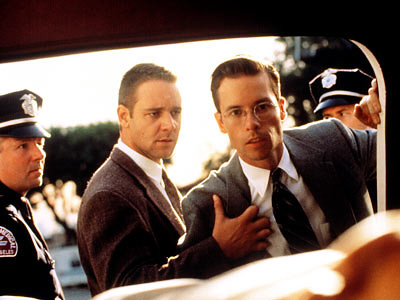
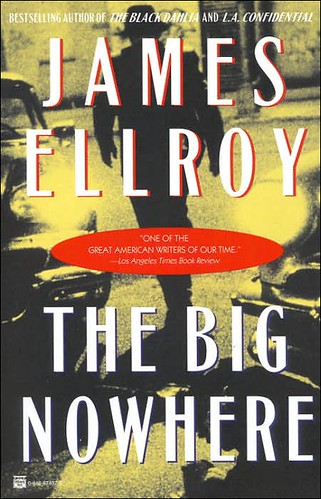
Unlike The Big Nowhere, which seemed to be more of a mish-mash of viewpoints and facts swirling together with a Communist witch hunt and a serial killer backdrop, L.A. Confidential takes the three-character formula and synthesizes it into something more cohesive. Whereas Nowhere started with three characters, seemingly unrelated, working on their own cases/problems and then eventually gravitating toward each other, L.A. Confidential starts with the three main characters already close together and slightly overlapping and with a much stronger conflict -- specifically with the straight arrow Exley and the devil-with-a-heart White.
There were points while reading Nowhere that I pondered giving up, before hitting the final act which kicked the entire book into high gear. L.A. Confidential is smooth from the get-go, with a few slower chapters but overall a consistent and engaging pace. You begin to sympathize with all three of Ellroy's stars -- the duty-bound Exley, the brutish but loyal White and the slimeball with a soul, Vincennes. Whereas with Nowhere, you could argue that Mal Considine was really the only relatable character. The closeted Detective Upshaw and scurrilous Meeks were a little too far gone for this reader to really root for or appreciate. But I'll get to that a bit more later on, when we enter the final chapter of the Quartet, in Ellroy's White Jazz.
Plot-wise, like most of Ellroy's latter-day work, L.A. Confidential is ultra-detailed and at times confusing. But the style raises the substance more often than not, making the book an experience not to be missed, even if you're not really sure what just happened, exactly. Still, it's a literary work, and it elevates the crime genre beyond the staid trappings of private eye stories and serial killer adventures. While I have a soft-spot for the more linear and emotional stuff produced by Pelecanos and once produced by Lehane, Ellroy's a totally different -- and disturbing -- flavor that's worth trying.
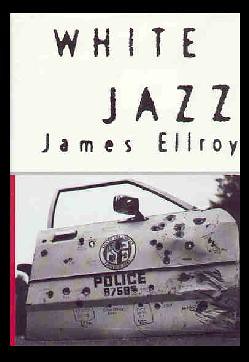
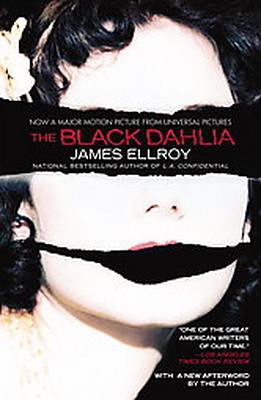
White Jazz, which closes out the four-piece masterwork, goes back to Ellroy's roots. Specifically, the first-person narration of The Black Dahlia. This time, though, the viewpoint character is not nearly as likeable as young Bucky Bleichert was. Instead, we're handed Dave Klein, a corrupt cop who's part slumlord, part bagman and all rotten. Set a few months after the end of L.A. Confidential, we find Klein heading up the LA Administrative Vice division -- well, when he's not killing people for the mob or having strange, incestuous fantasies involving his younger sister. Yeah. Klein is not your typical lead.
Just as Klein takes on a side job trailing a wannabe movie starlet for mogul Howard Hughes, his world begins to crumble. The State's Attorney has begun a deep probe into corruption in the LAPD, former mob head honcho Mickey Cohen is becoming a parody of himself and Kein's been assigned to solve a home invasion that seems admittedly creepy but irrelevant, on the surface. I won't spoil the specifics here, but Jazz does resolve plot threads and character arcs from the last novel, in a much clearer and effective way than Confidential did for Nowhere (strangely enough, the movie version of L.A. Confidential finds a way to integrate Buzz Meeks into the main plot much more cohesively than Ellroy did, with a slapshod prologue). If you closed the book on L.A. Confidential wondering what happened to X and Y, White Jazz answers those questions for you.
But beyond just closing down plot threads and concluding stories for previously introduced characters, Jazz is a riveting and disturbing look at a totally corrupt and despicable individual. I found it hard to get few the first chapters of the book because I found Klein impossible to like. He was a liar, a cheat, a scumbag and a murderer. But once you keep reading you realize he's one of many, and, as was pointed out to me earlier today, why do you have to like the main character to like a book anyway? Maybe I just grew into the habit. After a while, I figured out what Ellroy was striving for, or, what I thought he was going for. He wants you to hate Klein. He wants you to find him to be a disturbing creature you'd never want to cross in real life. That's what makes his story so interesting -- this is a cop tale from the other side of the coin, where the "hero" isn't a stalwart white knight but a black knight in sheep's clothing. That's the crux of White Jazz, and everything else that injects Ellroy's fiction starting with his literary rebirth in the pages of The Black Dahlia. Even the way the sentences and thoughts are structured give the reader a glimpse into the frenzied, fractured mind of Klein.
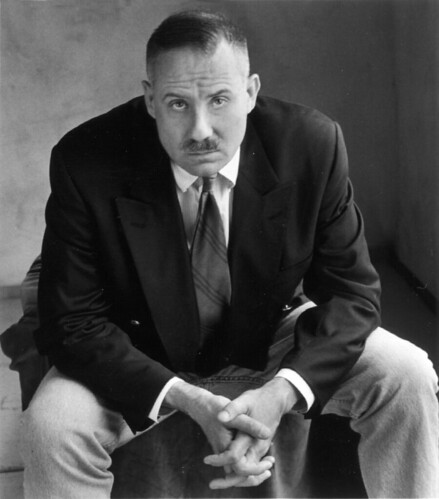
There's an unconfirmed rumor that Ellroy turned in a 900-page first draft for Jazz. When his publisher balked, Ellroy cut the book down to size by excising most of the verbs, articles, adjectives and unnecessary words, pruning it down to a more manageable 350-or-so pages. Crazy, huh?
The final product is a benzadrine fueled sprint through the creepy underbelly of Los Angeles in the late 50s, before the dawn of Camelot, doused in piles of murder, greed, corruption, double-crosses and lies. And there's more.
"Well, fine. But do I have to read the entire four-novel series to enjoy the experience?"
Not really. I think each novel stands (and falls) on its own merits and failures. Do you get a better, more organic and overall complete story by reading all four? Yes. The perfect example is when you read L.A. Confidential and realize two of the most important characters in the book are left dangling after the main plot is resolved. Or, when you finish The Big Nowhere and you're not really sure what's going to happen to Buzz Meeks. If, like myself, you're already inherently inclined to enjoy serialized fiction, you'll want to read all four. There's also the geeky payoff, which Ellroy uses carefully, that comes when you see a character from an earlier book showing up later in the series, like The Black Dahlia's Russ Millard taking a more central role in L.A. Confidential.
While not perfect by any means, Ellroy's "L.A. Quartet" offers up a layered, organic and exhilarating picture of a city in different stages of evolution with real history as a backdrop you can sense and see, instead of just having it inserted to suit the needs of story. These characters could have easily existed in the times they've been placed, and the ones that did sound perfectly in tune with their real life doppelgangers. Highly reccommended.
What's next for me? More Ellroy. Specifically, part one of Ellroy's "American Underworld" trilogy, American Tabloid.
But enough of that. What are you reading?