Showing posts with label michael connelly. Show all posts

Thursday, October 23, 2008

The Writing Wire for 10/23


The latest happenings in the world of books and related topics:

• The L.A. Times Jacket Copy book blog dredges up some more bad writing tips.

• Murderati has a great post discussing the realities of using real people and places in your novel, and just how it works. Worth a look.

• The New York Times is reporting the death of famed literary agent Pat Kavanagh. They also review Eminem's new memoir.

• The L.A. Times (again, via Largehearted Boy) on Mia Kirshner's new book.

• The Onion AV Club on Michael Connelly's latest.

• New York Magazine's VULTURE blog on the confusing publicity for Synecdoche, New York. Also, Javier Bardem is working again.

Thursday, October 09, 2008

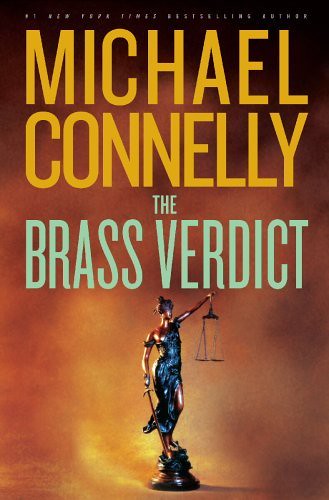
Michael Connelly unveils video teasers for The Brass Verdict


It's no secret that I'm a fan of Michael Connelly. In a few short months, I tore through over a dozen of his Harry Bosch novels and two non-Bosch books. All were good, some were great and none were bad. This Monday, his latest novel, The Brass Verdict hits stores. The story focuses on Mickey Haller, an attorney Connelly has spotlighted before. To my glee, it also features Bosch. Fans of Connelly's work also know there's a definite connection between the two characters, who have never met in Connelly's books before.


To help promote the new book, Connelly has put together three promo videos featuring content complementary to the novel. If you're a fan of the author and plan on getting the book, this is must-see stuff. The videos were directed by noted mystery author Terrill Lee Lankford.

You can check out the video trailers here. And, yes, that is Corbin Bernsen.

Here's one of the videos:


[Via Off The Page]

Tuesday, September 30, 2008

What are you reading? Week 3: Goodbye Harry Bosch, hello ex-junkie journalist bio


Last week, I was in the midst of finishing off The Narrows, another Michael Connelly Harry Bosch novel that also featured guest appearances by some of his non-Bosch novel characters, most notably FBI Agent Rachel Walling and -- to a degree that I won't reveal because it's spoiler-y -- retired FBI Agent Terry McCaleb. Since then, I've plowed through the rest of The Narrows and finished off Connelly's remaining three Bosch novels, The Closers, Echo Park and The Overlook. I won't go into overly detailed reviews of the three, not because they weren't good, but because I'm more interested in talking about the book I'm reading now.

Of the three, Echo Park was by far the most enjoyable and readable, with the other two serving as functional but not remarkably outstanding Bosch adventures. The Overlook, which was originally published in serialized form in The New York Times Magazine clocked it at barely under 300 pages, which is fairly light for a Connelly book, and read more like it was setting up Bosch's new status quo (new partner, new assignment, old love interest) than really telling an exciting or thrilling adventure. Don't get me wrong -- I enjoyed all three books a great deal. But, if I had to choose which of the three came closest to some of my personal Bosch favorites (Concrete Blonde, Lost Light, A Darkness More Than Night and, to a degree, The Narrows), it'd probably be Echo.

But after finishing The Overlook I found myself without a new Bosch book to read, which allowed me -- for the first time in a few months -- the opportunity to take a detour outside of the crime fiction/detective genre and work out some of the reading muscles that got lazy while I read about forensics and private eyes.

The first book I went to was David Carr's The Night of the Gun. David Carr, as some of you may know, is a columnist for The New York Times. Most importantly, though, Carr is also a recovering crack cocaine addict. The Night of the Gun tells the horrible, gruesome tale of his descent into addiction. The unique part of the memoir, though, is that Carr actually went back and spoke to the people who he interacted with during his time as a junkie failure -- the woman who gave birth to his twin daughters while both of them were daily crack fiends, the well-known comedian who once tried to gouge Carr's eye out because he was nagging the funnyman about a coke debt and the dealer who Carr went to score from while his twin, four-month old daughters waited in the car. In the winter. In Minnesota.


Truly jarring stuff, but Carr doesn't hold anything back in the telling and gives his interview subjects ample room to be critical and brutally honest about the author. And, in the process, you see how Carr himself has changed, but also how he is being changed by the process of re-living his life. Imagine waking up one day and realizing that, no, you're not the nice person you thought you were. Yeah, those two years you don't really remember? Well, you beat up women, drank and drugged to extreme excess, got arrested over a dozen times and failed at five stints in rehab. The story Carr tells, and the journalistic tools he uses to tell them paint a picture of a man who didn't reclaim his life because he's a great person -- although, from what I can tell, he became a better man -- but because of luck, and because he had caring friends and family. I'm only about 200 pages into the book, so I imagine there's more to be revealed. A friend of mine (who lent me the book) said there'll be at least one jaw-dropping moment toward the end. Which is somewhat frightening, because the pages I've already read have left me oftentimes with mouth agape and my eyes wide. I can't recommend this book any more. But enough of that.

What are you reading?

Thursday, September 18, 2008

What are you reading? Week 2: Continuing Connelly

Last week, I touched upon how Michael Connelly's standalone (non-Harry Bosch) novel Chasing the Dime was a helpful guide in the writing of SILENT CITY. Mainly because the protagonist, like my own, starts off not as a detective, but a regular member of society who becomes embroiled in some criminal craziness.

Since then, I've finished Dime and another Connelly book, Lost Light, and am halfway through the next one, The Narrows. Light, like most of the Connelly stuff I've read, stars Harry Bosch, a grizzled (now former) LAPD detective who will do anything in his power to solve his cases and speak for the victims, or, as he says many times, "speaks for the unspoken."

Lost Light is interesting for a number of reasons. Unlike the previous eight Bosch novels, Light is told from Bosch's perspective, as opposed to third person narration. The storytelling reason for this is simple -- Bosch has retired from the LAPD and is now a private investigator. Connelly, an unabashed fan of the work of Raymond Chandler, really infuses the book with the same energy of the Marlowe books while still retaining Bosch's clear and recognizable voice and characteristics. Unlike some other crime writers, most notably George Pelecanos, Connelly isn't really prone to switching around his viewpoints characters, instead choosing to stick with Bosch for the most part. So, the switch to first-person narration isn't really all that jarring to a long-time reader of his books. Still, the switch provides some interesting insight into the character and also echoes Chandler's work.

Lost Light follows Bosch as he investigates one of his old, unsolved or "cold" cases -- the murder of a woman about four years earlier. As the story progresses, the original crime is linked up to Hollywood mayhem, a bank heist and Homeland Security. Sounds implausible, but Connelly makes it work, and the author also manages to bring back a number of supporting characters from past novels without making the introductions or background bumpy. The big reveal at the end also comes out of left field, as any good reveal should.
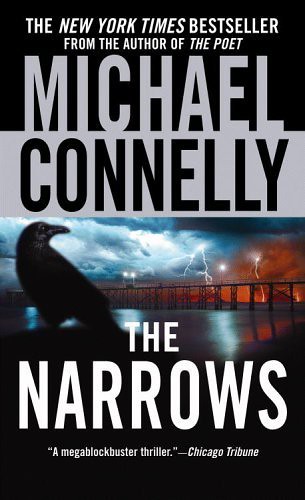


The Narrows picks up a few months after Lost Light but is interesting because it brings together Bosch and a few other characters from Connelly's earlier, standalone books like The Poet and Blood Work. (The latter was adapted into a mediocre Clint Eastwood film.)

Bosch's story is again told in first person, but Connelly switches back to third-person narration whenever Bosch is off-camera, which seems to work fairly well, but would probably be more jarring in the hands of a less experienced novelist. The Narrows serves as a direct sequel to The Poet, with the killer from that book returning to plague both Bosch (who is not in the first book) and FBI Agent Rachel Walling, who was the viewpoint character in The Poet. The book, as a standalone read is interesting and moves at a brisk pace -- I have to admit, though, that it helps to have read the previous Bosch novels. I'm at a slight disadvantage having not read The Poet, but Connelly is good (so far) at filling in any relevant backstory without slowing the overall plot.

Of most interest to me, since I'd ideally like to see SILENT CITY's Pete continue on in other novels, is seeing how Connelly slightly tweaks Bosch from book to book. The changes, of course, seem natural and organic, which is the goal, and a helpful guide when I reach the point where I'm mapping out a second or third novel. Fingers crossed.

Enough about me, though. What are you reading?

Wednesday, September 10, 2008

What are you reading?


I'm stealing an idea from Connie at The Miami Herald and asking a question via the InterGoogle that I often ask people in person: What are you reading now? And, more importantly, how is it?

I'm still tearing through Michael Connelly's library. I'm on my ninth book of his (which, I realized last night, I've read in little over a month), eight of which have been installments in the Harry Bosch detective series. The one I'm reading now, though, Chasing the Dime, isn't part of the series. It tells the story of chemist Henry Pierce, who discovers that his new phone number used to belong to someone else. That someone else being a high-priced escort named Lilly who has gone missing. Things get weirder from there, and Henry finds himself immersed in the seedy world of prostitution and Internet adult entertainment.

At first, I was a little annoyed at the book. See, it was the third book in a three-book omnibus I'd bought. Two of the books were Bosch novels, so I was really looking forward to continuing the adventures of Harry. So, I was a little irked to find this standalone story grouped with two from the series. But, after muddling through the first few chapter, I realized that not only was this a decent mystery in its own right (and also featured a number of previously seen characters from the Bosch series), but also had a few hints and tips on how I could better execute my own crime novel, which has some parallels to Dime, most visibly the notion of the non-detective becoming the hero/detective against his better judgement and out of a desire to help a friend/person in need.

In that respect, Chasing the Dime has been a helpful guide toward getting a sense of how I could make my book work, and how I could make it different and potentially avoid some of the story mistakes my radar picked up while reading the novel. I wouldn't say it's as entertaining as the Bosch books, but that's fine. That can be chalked up to familiarity with the character and the comfort zone that creates. Still, I'd consider reading another Henry Pierce novel. Assuming he doesn't end up dead -- I still have a few more chapters to go.