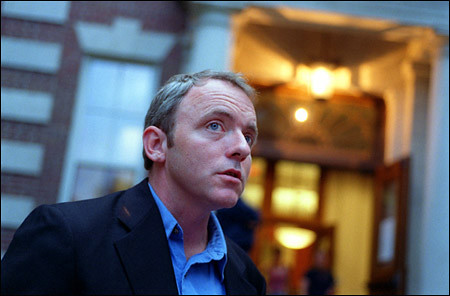
The New York Times has a glowing review of Dennis Lehane's latest, The Given Day, which takes place in the early 20th century, during the historic Boston police strike.
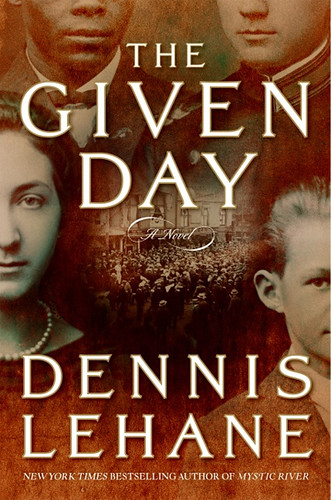
Now, I want to preface this post by explaining that I'm a huge Lehane fan. Specifically, I love his Kenzie/Gennaro detective novels, which kicked off his writing career. His later work, especially Mystic River, was still of high quality, but to me lacked the same verve and energy of his first six novels. But my beef isn't with Lehane -- he's probably written a great book. I plan on reading it and expect to like it. He's one of my favorite contemporary authors. My issue is with this bit from the review:
No more thinking of Mr. Lehane as an author of detective novels that make good movies (“Gone, Baby, Gone”) and tell devastatingly bleak Boston stories (“Mystic River”). He has written a majestic, fiery epic that moves him far beyond the confines of the crime genre.
Shades of Doctorow and Dreiser surround Mr. Lehane’s choice of 1919 as the time for this expansive story. It is not simply the relatively unexplored eventfulness of that year that makes “The Given Day” so far reaching; it’s the relentless fierce-terrible nature of the turmoil on parade.
Now, just what irks me about this review? I can't say it fully struck me until I read David Montomery's post over at Crime Fiction Dossier, so I'll let him speak up first:
One line leapt out of me from the review and stuck with me: "He has written a majestic, fiery epic that moves him far beyond the confines of the crime genre."
I haven't read The Given Day, either. I don't know if it's any good, or about any of the specific plot points in the book. But, I do know that there is some level of crime in the book. Doesn't that make it, to some degree, a crime novel? Why is this, and not, say, Mystic River or Coronado or Darkness, Take My Hand, a "literary" work, and therefore better than Lehane's earlier work? More importantly, why should there even be that distinction? Why can't a book just be good, whether it's a crime novel or not?I've been thinking about that statement since I read it, wondering exactly what the confines of the crime genre are. And near as I can come up with, a crime novel has to have a crime (either past or future) play an important part in the plot, or else it somehow has to deal with crime or the aftermath of crime in a significant way. Other than that, I think anything is fair game.
As I indicated, I haven't read The Given Day. But judging by the description and the reviews I've read, the book involves the lives of police officers, a terrorist attack, spying, bomb-throwing anarchists, suspense, corruption, anti-union violence...Well, damn, that sounds a lot like a crime novel to me.
It's almost like Ms. Maslin (and I wouldn't be surprised if other critics wrote something similar) is embarrased to admit that she really liked and admired a book of significant literary achievement -- that just happened to be a crime novel.
We saw some of this reaction earlier this year with Richard Price's superb Lush Life, another novel of literary prowess that, oh yeah, was a crime novel.
I'd argue that Lehane is finally stepping into a world that has already been populated by the previously mentioned Richard Price and, more importantly, George Pelecanos, whose last few novels have only peripherally dealt with a crime but instead spent more time painting a picture for the reader of a city or society in decay. Are Pelecanos' works less "literary" because they're still set in the modern day and involve drug deals and stick-ups as a way of showing how our world is melting down? If he'd set his books in the 1800s, would he gain more literary praise? My guess is probably. And that, to me, is really annoying. And, to push the joke a bit, more criminal.
Just because a work of prose, or a screenplay, involves a crime or deals with crime shouldn't lessen the literary or artistic value. The idea that suddenly, Lehane, who has been writing solid novels since he first got published, is a more important author because he's no longer writing a straight-up detective piece is silly, and insulting to those of us that spend time reading crime fiction not just because we find the genre interesting, but because the books in the genre we choose to read are, well, pretty damn good.
I didn't fully intend for this post to become a rant against the literary vs. genre bias -- I brought that up already. But, here we are. What do you think about the literary hierarchy? Does it hold water?