Showing posts with label writing. Show all posts

Wednesday, August 05, 2009

We're making a damn movie

We’re making a movie.

It’s hard to pinpoint the exact moment the reality dawned on me, but it's something that's been stewing in my brain for the past year. We’re making a damn movie.

Acceptance is the first step, I guess. You’ve got to admit to yourself that you’re making a movie.

Shooting a feature was always a goal, from my first home movies shot with my schoolyard friends in the back yard to more comple flicks shot and edited on DV with friends from high school. Somewhere around the age of 16, my best friend Bob and I made plans to shoot a feature together one day. We shook on it, then I headed off to screenwriting school and he started on a college path that led to a Master’s Degree in cinematography.

My screenplays, for the most part, have a tendency to be tiny. Not in the sense of page count, and especially not in the sense of concept – but in scope. I like to concentrate on a handful of characters and tighten the focus on the small world they inhabit day to day. In short, I like to write low-budget scripts based around two or three actors.

I applied to NYU’s screenwriting program because I wanted to make movies, but was more interested in creating stories than working a camera. Sometime between starting NYU and the two years post-graduation I spent trying to “break in” to the industry, the filmmaking bug died out in me. I had tunnel-vision on the “typical” (I use quotes because there is no such thing as typical in this industry, it seems) path to becoming a Hollywood screenwriter, where you write spec scripts, score an agent, move to LA, sell your first feature and then wait for the lucrative rewrite assignments to roll in. This is how half the books say it’s done, and by golly, that’s how I was gonna do it.

Plans to make my own movie? Say hello to the backburner.

Once I had a few specs under my belt, I tested the query waters. Nothing wide – just dipping my toes. I liked my scripts (or else I wouldn’t have sent them) but I wasn’t in love with them – at least not as much as much as I was with a script I’d been messing with for over a year. This was the one – this was the script that was truly representative of my potential; an idea that had been brewing in my head and in my heart for several years. This one’s my baby. I’ll wait til I finish that one and hit the ground running with it.

And query I did. The logline generated interest – I received quite a few requests for the script, which led to more than a handful of rejection letters. The notes were all very positive: they liked the story, they really liked the characters, they’d love to see what other scripts I have, but they’re sorry, it’s not the type of script that they’re looking to represent. I even received *two* notes from separate agents saying more or less the same thing: they loved the script, but it was too small for them.

Too small? Bah. You could shoot this script for a few thousand dollars. Isn’t that a good thing? I appreciated the kind words when I received them, but the rejections still felt like defeat after soul-crushing defeat.

After many, many frustrating rounds of querying, I got desperate. I received an E-mail from one of NYC’s wonderful indie theaters regarding a screening followed by a Q&A from one of my favorite contemporary filmmakers. This particular director is known for her small character pieces, centered around one or two characters and spanning only a minimal number of locations. She’s able to make these wonderfully deep films out of so little material, which is what I really love about her work. There are few writers/filmmakers I feel I identify with, but she’s certainly one of them.

This was my chance. Face-time with a director who I thought might share my ideas of what storytelling should be. Yes, it’s probably rude to approach her with a script right after a screening. Yes, it’s probably extremely off-putting. But, how many chances would I get? So off I trekked, 108 neatly-clasped pages of script in my bag.

(The movie was wonderful. Watching it, I grew even more enamored with my fantasy of her working on one of my ideas.)

I waited until the screening let out and she was hanging around in the lobby before I pounced. After the initial flurry of fan-gushing (“I love you.” “Your movie brought me to tears.” “Did I mention I love you?” etc.) I took a deep breath and came clean with my pitch.

She was extremely sweet through the whole spiel, despite how uncomfortable I regret probably having made her. She asked questions and nodded while I breathlessly ran through the story, the characters, the high concept. When I was finished, she remained silent for a moment before hitting me with a suckerpunch of a question:

“If you love the idea so much, why are you trying to give it away?”

I had to pause – the question knocked me backwards. Not what I was expecting at all. Give it away? I just wanted to see it get made. I told her that.

“If you want to make sure this story is actually made, you should shoot it yourself. No one is going to get it right but you.”

I… I’d never thought of it that way. I told her I’d give that some thought and she told me she’d keep an eye out for it at the festivals. I thanked her and let her get on with living the free-wheeling life an indie auteur while I pondered over the implications of her words.

Shoot it myself? A feature? Me? Don’t I remember setting that life goal back when I was a wee lad? I’d better make a phone call to check with someone who might remember. Remember Bob, the DP from the beginning of this post?

“Hey, Bob. It’s Austin. Listen, I had this funny idea that we should shoot one of my scripts…”

This instantly launched Bob into a long rant which more or less boiled down to “I’ve been telling you that for years!”

Okay, Bob. You were right. It’s time for us to make our own damn movie already.

Tuesday, April 07, 2009

What Makes A Good Movie?

Yesterday The Screenwriter’s League got into a bit of an interesting discussion about what it meant to make a good movie. Here’s our convo…

Onyx:
Question. Would you rather people cramming to get inside, eager to see your movie and having a great time. The movie is panned by critics, but makes a ton of money. Or would you rather win an oscar, but hardly anybody goes to the movie and it doesn't stick with viewers. Trying to think of a comparable movie. I guess something like The Reader, even though I've never seen it.

Backer:
I'd rather entertain the audience

DOA:
Same, I think the general crowd liking the movie is more important...not that Oscar winning films AREN'T good, it's just not what people want to pay money to see on a Friday night...the thing is, do you think film companies are more likely to rehire you if your movie did well in the box office, or if the movie got great reviews?

Blades on the Brain:
But would you rather your script mutilated by producers but enjoyed by millions, or a work of art that not everyone 'gets'

Cake Man:
Writers who can either: win a company awards, or make a company a ton of money will get hired.

Backer:
Yeah, no kidding. The writer and director (of Fast and Furious), talented or not, definitely solidified their careers. Every studio in Hollywood is gonna want a piece of their magic.

F&F5 got greenlit BEFORE the opening. It's going to take place in Europe. Lovely.

"Hangover Sequel" the sequel to "Hangover" (opening June 5) has already been picked up. Guess someone's expecting that to do well, too.

Onyx:
I'm still hung up on how we can define a "bad" movie. There's really no argument with something like Battlefield Earth. It was a bad movie and it made no money, one of the companies that backed it went under. It was just bad. But if a movie does it's job and entertains the masses and makes 300 million dollars for the company, can it really be called a bad movie?

Blades on the Brain:
We are a culture that defines a good movie by monetary gain since what is 'good and bad' is subjective. But money is objective! That's super interesting/depressing.

Cake Man:
But I think the question of a "good" movie or not is more simple. A good movie is one that entertains (perhaps) and works, technically. A successful movie entertains (probbaly) and makes a lot of money (or gets awards).

OK, that wasn't so simple. But I think there's a distinction between good and successful.

Baker:
I'm not sure if the question is good vs. successful. I think the question is, does successful mean it's good.


This is where our conversation ended! Alas, it is incomplete. What does everyone else think???

Wednesday, March 18, 2009

Have the Cake and Eat It


This week my boyfriend is out of town for spring break. It is Day 3 in Fort Productive Solitude, and I'm going nuts. There's not enough time. There just isn't. I had made a lofty goal of pounding out 30 pages in 4 days (I'm going out of town for the weekend), and it almost seemed possible, but for the other to-dos that I ALSO vowed to do now that I have time (time! precious little time!). Wash the shower curtain, change sponges, scrub the bathroom, dust the bookshelf, go to the gym. Cook. Clean. Laundry. Why won't dishes go away? Why every time I eat there're more? There must be a better way to appease the sink. Blood sacrifice? Salt and holy water? On Monday I finished the new beginning to the fantasy script I've been working on, then added another page, then cut 2 pages. Tuesday I started the new script I've been plotting. Wrote 3 pages (only! Only 3 pages!!), then woke up at 2 in the morning and wrote 4 more pages before I realize that I'm not in college anymore and need sleep to function at work. And now, Wednesday! Cruel Wednesday marking the half way point of this week. And soon I will sink back into the swamp of blissful, mindless, happy, oblivion of LOW PRODUCTIVITY.

Onyx once compared writing while in a relationship to cheating on your girlfriend. I think I laughed. I now weep in misery. I suck at cheating. I've tried writing around said boyfriend, behind said boyfriend, blatantly in front of said boyfriend. It's useless. I wrote 10 pages at most in the past month. While he also desperately wants to study for his exam, we are like two people who decided to have an open relationship, but only cruise the bars half heartedly. An hour a day is just not enough for me.

I look back at my life 2 years ago, when I was at the height of writing productivity. I didn't work out, I didn't go out, my food were mostly bought or frozen, yet somehow dirty dishes would pile out the sink onto the counter and eventually the floor. I was quite convinced I was going to die alone in the woods with cats. At the absolute highest/lowest point, there were mice in my apartment and all I did was break off the part of food that I found chew marks, and eat the rest. My cowriter at the time saw this and pointed it out to me. I couldn't figure out what the hell was his problem. If he didn't want my food just leave it. I could do 30 pages in a week back then. I don't miss that kind of life. But I do.

How on earth do people eat a healthy balance of vegetable and protein, cuddle, and actually write daily?

Sunday, December 07, 2008

One down...

I sent in my 33 1/3 proposal last night. It's a long shot, but right now I'm proud of myself for getting it all together and turned in. Now if I can finish this second draft of my current spec script before the year's out...

Tuesday, October 14, 2008

Thoughts from a literary agent: Query Letter Don'ts

There are a few things Janet Reid doesn't want to see in your query letter:
1. Theme

I don't care what the theme of your work is. I care what the story is.

2. I love to write

I don't care. I only care about whether you can write well enough to tell a good compelling story.

3. I think my book will make a great movie.

I don't care. I only care whether it will make a good book.

4. It took me x+1 years to write.

I don't care. I only care if it's a good story.

Pretty basic stuff, I think.

Reid's blog is worth bookmarking. Also worth checking out: posts about things that annoy Reid, and her collection of query letter pitfalls.

Tuesday, October 07, 2008

What's in a name? A lot, actually

What are some of the worst novel titles ever? The New York Times Paper Cuts blog asks, citing Neal Stephenson's latest work as an example of a not-so-great one:

The title of Neal Stephenson’s latest work of speculative fiction, “Anathem,” struck me as an unfortunate one, at least on first (and second) glance, for three reasons: it looks like a typo for “Anthem”; we can’t be entirely sure how to pronounce it; and most of us have no idea what it means. Still, it’s better than “Religulous” or “A Bold Fresh Piece of Humanity.”

Stephenson’s novel (which we will be reviewing in a future issue) takes place in a world much like our own. Before reaching the contents page, the “note to the reader” and the chronology, we get this dictionary definition:

Anathem: (1) In Proto-Orth, a poetic or musical invocation of Our Mother Hylaea, which since the time of Adrakhones has been the climax of the daily liturgy (hence the Fluccish word Anthem meaning a song of great emotional resonance, esp. one that inspires listeners to sing along). Note: this sense is archaic, and used only in a ritual context where it is unlikely to be confused with the much more commonly used sense 2. (2) In New Orth, an aut by which an incorrigible fraa or suur is ejected from the math and his or her work sequestered (hence the Fluccish word Anathema meaning intolerable statements or ideas). See “Throwback.”

Titles are tricky. You have to on one hand say something about what your book is, well, about, but also have something that will resonate with both the casual reader scanning the shelf and the literati crowd some/most of us are trying to appeal to.

With SILENT CITY, I was trying to strike a noir-ish note while still having the title in some way connect to the story (a plot point I'm still trying to flesh out to some degree -- why is Miami, of all cities "silent"? Read on, read on...). It's something I'd imagine most writers mull over and pull hairs out in frustration.

I've found that the best titles are directly from the page -- either an offhand remark or a descriptive line or two. That usually works for me, even with poetry or songs. But it's still a challenge.

Do you, as a writer, have a process for coming up with a title? Do you wait until the end, or have some kind of method? What are some of the worst book/movie/album titles ever? Discuss.

Monday, October 06, 2008

How does this stuff get published?

Every year, the Bulwer-Lytton Awards recognize horrible first sentences in novels. Over at io9, the sci-fi blog points out that the winner sounds strangely similar to another, painfully bad first sentence. You decide:

Joe Schulman won the Bulwer-Lytton in science fiction for this stinker:

Timothy Hanson, Commander of the 43rd Space Regiment in the 52nd Battalion on board the USAOPAC (United Space Alliance Of Planets Attack Carrier) and second in command to Admiral L. R. Morris of the USAOP Space Command, awoke early for breakfast.

Meanwhile, David Sherman & Dan Cragg's novel Starfist: Wings of Hell, forthcoming from Del Rey in December, begins with this line:

Captain Lew Conorado, the commander of Company L of the infantry battalion of Thirty-fourth Fleet Initial Strike Team, settled into the chair behind the desk in his office and sighed.
I don't know about you guys, but I'd definitely read something titled Starfist: Wings of Hell. How could you not?

Monday, September 29, 2008

On collaborating with other writers

Over at his blog, prolific novelist Dean Wesley Smith tackles a subject that I'm sure every writer (prose, screen, whatever) has pondered to some degree: collaborating with another writer on a project.

In addition to noting that collaboration can take many forms (on most assignments, Smith doesn't even interact directly with his co-writer), Smith also offers up some words of warning and advice:

Now some words of warning about collaborations Unless you can find a writer at your same level, who complements you perfectly in style and likes and dislikes, there is no logical reason on the planet to collaborate. None. Write the book yourself. It is easier.

And if I can’t stop you, then for heaven’s sake, have a contract between the two of you before either of you write word one. A very good contract that states who is responsible for final drafts, who gets do the work of marketing, who gets to do the work of proofs and copy edits if the book sells, and things like that. And how to split the money exactly. You will thank me later.

Now, how do I keep others out of my work when collaborating? Sometimes it’s easy. Sometimes collaborations such as the book with David that I mentioned are original novels. With Jonathan Frakes, all I had was a cover and wrote a book around the cover. Other times, it’s not possible to keep the other writer out completely, such as the book I am working on now where the other author wrote the entire first half and then had an issue so I stepped in. The key is realizing how much exactly the other author will be involved when you go into a project. And know what you are capable of doing and not capable of doing in writing situations.

Check out the full post, which is fairly lengthy to read about Smith's other writing experiences, including co-writing a number of books with his wife. Pretty interesting stuff.

But, this post begs the question: Have you collaborated with another writer? How did that experience turn out? What ground rules would you suggest?

The Writing Week part 39 - Eat, Sleep, Breathe It


I’ve experienced a dramatic shift in my approach to screenwriting. I can’t quite explain why or what happened. Yet in the past two weeks, and very dramatically this past week, screenwriting has been, by far, the number one thing on my mind. I climb in bed and remain awake for hours thinking about a script I’m working on. I wake up on weekends and spend a solid few hours in my room rewriting my spec and researching industry happenings before I even make breakfast. After breakfast, I hit the computer for another couple of hours. And Zombie, who is unfortunate enough to live with me, can guarantee that he’ll have to listen to at least an hour and a half of screenwriting talk each day.

As I said, I don’t really know what brought about the change. Perhaps it’s the fact that I think my rewrites are going well. There are some changes that the League was hinting at (and outright telling me to do), which I finally saw in the golden light of necessity. It could be that all my recent research into management companies and script sales has lit a fire under me. Maybe I have this newfound (and much appreciated) drive because of the numerous talks we’ve all been having about this blog and our writing projects. Whatever the case may be, I actually stressed so much about a scene the other night that not only did I keep myself awake, I started to feel physically sick. (And you know what, I was happy when I woke up and that scene was the first thing on my mind again.)

Ok, that probably sounds a bit masochistic. The point is, though, that I think the desire to write and to make it as a screenwriter comes not only from writing. (The following is one of those really obvious facts that everyone tells you but you have to experience for yourself to really learn.) In order to really make it and break into the industry, you have to want it so badly that you’ll work 24/7 at it. I told Zombie that I’ve been spending much more time concentrating on screenwriting than work or anything else lately. In fact, I probably put in close to 10 hours a day – especially this weekend –writing, reading material, following sales and box office info, writing, researching, posting here, and writing.

I only wish the days were longer.

Thursday, September 25, 2008

The Write Stuff?

I'm instantly wary of anything that claims to be any kind of all-purpose guide to, well, anything, but The Guardian newspaper across the pond has a fairly impressive list of articles on various aspects of the craft of writing, all well worth checking out.

The best part is the people writing their respective articles are actual practitioners, as opposed to some guy who's writing a how-to book on creating a novel but has never written a novel.

Definitely worth a read, or multiple.

[Via Bookninja]

Saturday, September 20, 2008

Do you create a soundtrack for your screenplay/novel?


On Monday, I asked what kind of music you listened to while writing or to get into the writing mindset. Today, I stumble across this post, from music/book blog Largehearted Boy, in which authors discuss music or a specific playlist and how the songs are relevant to their recently published book or short story. It's an interesting series of interviews done with a variety of writers. Definitely worth checking out.

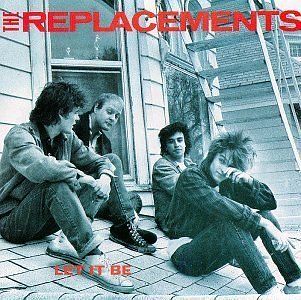
It also begs the question: Do you ever find it helpful to put together a playlist or "soundtrack" for your project? I've had an iTunes playlist going for SILENT CITY, but have yet to really pare it down enough where I'm comfortable even calling it a soundtrack. It's got a lot of the stuff I mentioned in my previous post, because that's what I like to listen to while writing, period. But, it also has some more story-specific songs that tie into or reflect the overall plot of the book. Lots of Cuban music, some grittier rock numbers (Velvet Underground, Steve Earle, The Replacements), and, in many ways, these tracks serve as the soundtrack for the book and appear in the text itself.

For example, when Pete is talking about listening to the 'Mats at work -- that's what was playing while I was writing. It's kind of fun. At least for me.

Friday, September 19, 2008

An author's view of the Internet as a distraction


Coincidentally hitting the same topic I brought up earlier this week, The New York Times Paper Cuts book blog interviews writer Charles D'Ambrosio, asking him about the evil, evil Internets as part of their "Stray Questions" series. His answer's pretty interesting:

How much time — if any — do you spend on the Web? Is it a distraction or a blessing?

I’m coming to the conclusion that any time is too much time. My life hasn’t improved at all with the advent of the Internet; if anything, I’ve turned into a worse misfit. And change isn’t ipso facto good. I’m away from Portland for the year, but prior to leaving I’d been preparing to build a writing shed out in my backyard, with no electricity. Just a kerosene lantern and a tiny wood stove of the sort you see in ice-fishing huts with a crooked hobo stove-pipe coming out the roof. The world is too much with us. Wordsworth published that 200 years ago. Now I need a hideaway in back of my house just to feel at home. The Internet makes me feel desperate. The spiritual toll isn’t worth the few conveniences. It’s a sordid boon, like that Xmas when you didn’t get what you really wanted, and now that special experience of disappointment is upon us around the clock.

Tuesday, September 16, 2008

How do you avoid distractions while writing?


Jacket Copy, the book blog of The L.A. Times, has an interesting post up today discussing how writers deal with electronic distractions -- the Internet, cell phones, iPods, etc. -- when trying to get some writing done.

Here's a quote within a quote. Very meta:

Author and editor Jeff Vandermeer explains the drastic measures he's taken (via Shaken & Stirred) to keep himself from being distracted by the big wide Internet that hides behind his computer screen:

Okay, I’ll admit it: work on my new novel, Finch, is going well because every morning my long-suffering yet often amused wife Ann hides the router box and my cellphone. I get up around 7 a.m., I have my breakfast and watch something innocuous like BBC News or Frasier for about half an hour, and then get down to work. Around noon I take a break to get some lunch, then go back to it, usually at that point editing or organizing notes. Around 2:30 I call Ann on our landline and she tells me where the router box and the cellphone are (it has Internet access on it) so I can finish up the afternoon with necessary emails and other work, before going to the gym.

Seems like a pretty hardcore way to avoid distraction -- but if it works, it works. This post kind of ties into my last entry, which dealt with what music people listen to while writing. Music walks a thin line -- it's either a great help or a giant distraction. I think the same can be said for the Internet. I can't count the number of times it's proven to be an excellent research tool. On the flipside, I also can't count the times it's provided a nice escape from having to actually write, allowing me instead to cruise my Google Reader or waste time watching YouTube videos or reading KissingSuzyKolber.

What do you think? How do you deal with electronic distractions when you're trying to write?