Saturday, September 20, 2008

Trailer Trash XII: Invasion of the Bee Girls (1973)


"This is the stupidest damn thing I ever heard!"

Wikipedia's one-sentence summary of this Stepford Wives rip-off is pretty funny:
...the premise of the movie is that a mad scientist (played by Anitra Ford) has created an army of beauties who seduce men to death.

Seduced... to DEATH. What a way to go!

The men of the town are quickly dropping off like flies, and the local law enforcement just can't figure out why. Each of the men are found having suffered heart failure caused by sexual exhaustion. It turns out they've been meeting up with these super-beauties created by a mad lady scientist. It's maybe a rather over-elaborate set-up to just show women in their underwear, don't ya think? It's like in the Fringe pilot, when the main character had to strip down to her bra and panties to be able to communicate psychically with her dead partner. (Thanks, 70s exploitation movies! Thanks, Fox!)


At O:06 - The strange force... of vanilla frosting? That's my guess.
At 0:12 - BEES??
At 0:22 - Mmm, ravishingly beautiful women.
At 0:30 - Ahhhh, the "waka-chika-waka-chika-waka-chika" soundtrack. This movie is from the seventies, folks. In case you didn't believe me, there's your proof.
At 0:53 - Wait, *why* try to stop it?
At 1:25 - Hillbilly freakout alert!
At 1:33 - Loooooooser.


An interesting bit of trivia: Invasion of the Bee Girls was the first produced screenplay by Nicholas Meyer, who went on to work on the screenplays for Star Trek II, IV, and VI. Right, the even-numbered ones. The good ones.

"Abstinence isn't going to be anything new around here!"

Do you create a soundtrack for your screenplay/novel?


On Monday, I asked what kind of music you listened to while writing or to get into the writing mindset. Today, I stumble across this post, from music/book blog Largehearted Boy, in which authors discuss music or a specific playlist and how the songs are relevant to their recently published book or short story. It's an interesting series of interviews done with a variety of writers. Definitely worth checking out.

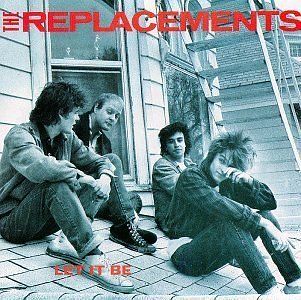
It also begs the question: Do you ever find it helpful to put together a playlist or "soundtrack" for your project? I've had an iTunes playlist going for SILENT CITY, but have yet to really pare it down enough where I'm comfortable even calling it a soundtrack. It's got a lot of the stuff I mentioned in my previous post, because that's what I like to listen to while writing, period. But, it also has some more story-specific songs that tie into or reflect the overall plot of the book. Lots of Cuban music, some grittier rock numbers (Velvet Underground, Steve Earle, The Replacements), and, in many ways, these tracks serve as the soundtrack for the book and appear in the text itself.

For example, when Pete is talking about listening to the 'Mats at work -- that's what was playing while I was writing. It's kind of fun. At least for me.

Friday, September 19, 2008

An author's view of the Internet as a distraction


Coincidentally hitting the same topic I brought up earlier this week, The New York Times Paper Cuts book blog interviews writer Charles D'Ambrosio, asking him about the evil, evil Internets as part of their "Stray Questions" series. His answer's pretty interesting:

How much time — if any — do you spend on the Web? Is it a distraction or a blessing?

I’m coming to the conclusion that any time is too much time. My life hasn’t improved at all with the advent of the Internet; if anything, I’ve turned into a worse misfit. And change isn’t ipso facto good. I’m away from Portland for the year, but prior to leaving I’d been preparing to build a writing shed out in my backyard, with no electricity. Just a kerosene lantern and a tiny wood stove of the sort you see in ice-fishing huts with a crooked hobo stove-pipe coming out the roof. The world is too much with us. Wordsworth published that 200 years ago. Now I need a hideaway in back of my house just to feel at home. The Internet makes me feel desperate. The spiritual toll isn’t worth the few conveniences. It’s a sordid boon, like that Xmas when you didn’t get what you really wanted, and now that special experience of disappointment is upon us around the clock.

The Three Stages of Feedback

Just want to give you a heads-up to a fun post on Danny Stack's blog where he defines the three stages of feedback:

You worked hard on your script and handed it in on time, feeling good that it was a smoking first draft. But you haven’t heard anything in weeks. You begin to worry. An email arrives, finally, and it’s notes from the script editor. You click on the attachment and open the file. Your stomach churns, hoping to see only minor comments but you scroll down the screen to see pages of notes, all critical of what you’ve done. You fail to see the sugar coated or positive remarks, while the negative and critical notes stand out in bold and in capitals, or so it seems. You panic! They hate it. They think you’re rubbish. You are rubbish! You’re never going to work again!

I know I've felt that stage before just from fellow Leaguers' feedback alone. There's always that horrible, sinking feeling in your stomach when your beloved baby gets ripped apart by the wolves.

Check it out, if at least for the great photo illustrations.

Thursday, September 18, 2008

Death Neglected III: ghost stories


Of the three movies I saw from the 2008 NY Korean FF, Epitaph (2007) really stuck with me. Originally, I dragged poor AxelA to this movie because I read good reviews claiming it was as much horror as it was romance. So I figured, oh, well so it must be like The Six Sense, where it was both thriller/horror and a…heart warming story. That can’t be bad. Right? Both AxelA and I watched the trailer decided that, on a scale of 1 to 10 scary, it was probably a 7. We can handle that.

Oh, how wrong were we.

Epitaph’s original name is “Gidam”, which literally mean “peculiar tales”. The movie is a three part ghost stories, linked only by the fact that the main characters all work at the same hospital (year 1941), and the stories happen within days of each other. It is, in essence, a series of traditional campfire ghost stories, rather than plots.

The first is about a dreamy young med student who is engaged to the hospital director’s daughter. However, days before his marriage, the corpus of a beautiful young woman arrives, and the student falls in love with her instead. This one, for me, was spoiled by watching the trailers and reading the synopsis (which I really don’t suggest doing. I haven’t found too many good synopsis, and they are either misleading or spoil the stories). The twist, however, came as a surprise for AxelA, who really enjoyed it. It was also suitably scary, kind of like the first hills on a roller coaster ride, before the big spins and drops come.

The second one is about a young girl who is the sole survivor of a car accident that killed her mother and step-father. Despite not having a scratch on her, the girl is haunted every night by her mother. Doesn’t sound like much, but to say “the mother haunting the girl was scary” is like saying “sticking nails in someone’s eyes is not nice”. 1/3 through this story, AxelA curled up into a ball in her seat, and I was staring very intently at the seat back before me rather than the screen. Later we described it as “UN-FUCKING-NECESSARILY terrifying”. Scenes from this story still haunt me.

Here I have to clarify, I’m not a horror movie buff. Maybe Zombie would have just laughed in the face of this movie. On the other hand, my response to The Ring was that it was just suitably scary. I had my mandatory night of bad dreams, and then got over it. This was so much worse.

The third story made the entire movie all worth it. The wonderful opening line was “Back then, I didn’t realize my wife had no shadows.” The story is about a professor who not only finds that his beloved wife might be dead, but might also the one behind the series of brutal Japanese soldiers murders. While both the first and second stories had their own twists, this one has several, and none of them you see coming. I haven’t actually enjoyed twists like these since Rosemary’s Baby, Usual Suspect, Six Sense, etc. AND it was able to complete so much in the time of 1/3 movie. It uses great conflicting emotions, and even more complex psychology. It’s hard to say anything about the story without spoiling it.


My only problem with Epitaph is the over-the-top, old school sound effects (it even uses the Psycho stabbing sound). But the rest is quite beautifully done (and is actually only the Jeong Brothers' debut movie). So far I have not been able to find region 1 versions of this movie, but at least there are a few versions that have English sub.

What I find interesting is that the English tag line is “Love conquers all…even death”, but when I read the Chinese review, it seems the tag line there is “Death, the only cure for love.” Having seen the movie, I feel that those two, combine, represent the stories best.


What are you reading? Week 2: Continuing Connelly

Last week, I touched upon how Michael Connelly's standalone (non-Harry Bosch) novel Chasing the Dime was a helpful guide in the writing of SILENT CITY. Mainly because the protagonist, like my own, starts off not as a detective, but a regular member of society who becomes embroiled in some criminal craziness.

Since then, I've finished Dime and another Connelly book, Lost Light, and am halfway through the next one, The Narrows. Light, like most of the Connelly stuff I've read, stars Harry Bosch, a grizzled (now former) LAPD detective who will do anything in his power to solve his cases and speak for the victims, or, as he says many times, "speaks for the unspoken."

Lost Light is interesting for a number of reasons. Unlike the previous eight Bosch novels, Light is told from Bosch's perspective, as opposed to third person narration. The storytelling reason for this is simple -- Bosch has retired from the LAPD and is now a private investigator. Connelly, an unabashed fan of the work of Raymond Chandler, really infuses the book with the same energy of the Marlowe books while still retaining Bosch's clear and recognizable voice and characteristics. Unlike some other crime writers, most notably George Pelecanos, Connelly isn't really prone to switching around his viewpoints characters, instead choosing to stick with Bosch for the most part. So, the switch to first-person narration isn't really all that jarring to a long-time reader of his books. Still, the switch provides some interesting insight into the character and also echoes Chandler's work.

Lost Light follows Bosch as he investigates one of his old, unsolved or "cold" cases -- the murder of a woman about four years earlier. As the story progresses, the original crime is linked up to Hollywood mayhem, a bank heist and Homeland Security. Sounds implausible, but Connelly makes it work, and the author also manages to bring back a number of supporting characters from past novels without making the introductions or background bumpy. The big reveal at the end also comes out of left field, as any good reveal should.
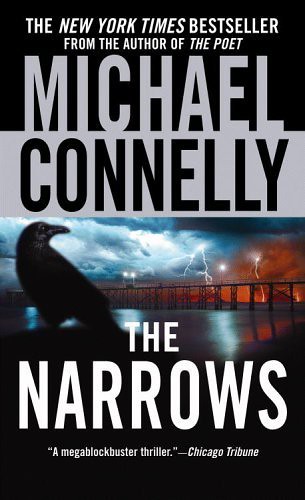


The Narrows picks up a few months after Lost Light but is interesting because it brings together Bosch and a few other characters from Connelly's earlier, standalone books like The Poet and Blood Work. (The latter was adapted into a mediocre Clint Eastwood film.)

Bosch's story is again told in first person, but Connelly switches back to third-person narration whenever Bosch is off-camera, which seems to work fairly well, but would probably be more jarring in the hands of a less experienced novelist. The Narrows serves as a direct sequel to The Poet, with the killer from that book returning to plague both Bosch (who is not in the first book) and FBI Agent Rachel Walling, who was the viewpoint character in The Poet. The book, as a standalone read is interesting and moves at a brisk pace -- I have to admit, though, that it helps to have read the previous Bosch novels. I'm at a slight disadvantage having not read The Poet, but Connelly is good (so far) at filling in any relevant backstory without slowing the overall plot.

Of most interest to me, since I'd ideally like to see SILENT CITY's Pete continue on in other novels, is seeing how Connelly slightly tweaks Bosch from book to book. The changes, of course, seem natural and organic, which is the goal, and a helpful guide when I reach the point where I'm mapping out a second or third novel. Fingers crossed.

Enough about me, though. What are you reading?

Literary grave digging


This post, over at Crime Fiction Dossier, touches upon one of my biggest pet peeves when it comes to the book industry -- the continuation of a writer's work posthumously. It happens more often than you think, and the one person who should be able to decide -- the author -- is obviously not part of the game.

Here's the latest example:

BBC News has announced that author Eoin Colfer (the Artemis Fowl series) has been hired to continue the uber-popular Hitchhiker series created by the late Douglas Adams. According to the article, Adams' widow has given approval for the project. And Another Thing will be published next October.

Adams died seven years ago at the much-too-young age of 49. His early death meant that there were many books he couldn't write -- and that's a damn shame. He was one of the most inventive and entertaining writers around. He even wrote two excellent pseudo-mystery novels (Dirk Gently's Holistic Detective Agency and Long Dark Tea Time of the Soul). And the idea of someone trying to continue writing in the world he created saddens me.

In the BBC article, Colfer is quoted as saying, "My first reaction was semi-outrage that anyone should be allowed to tamper with this incredible series." And he should have stopped right there. Because his instinct was right. It is an outrage and nobody should tamper with this incredible series.

Authors die, and their books and their series die with them. Sometimes this is a crushing blow -- when Ross Thomas died, I felt like I'd lost a friend, even though I knew him only slightly. But I knew his books intimately, and it hurt to know that there would be no more. But you can't change the past.

The post continues:

The most egregious example of this type of literary grave robbing in recent years was the offense done to the works of Roger Zelazny. One of the finest fantasy writers ever, Zelazny created the beloved Amber series, a ten-book magnum opus that represented some of the most inventive and engrossing storytelling ever created. (Yes, I really mean those superlatives.)

Zelazny also died at too early an age -- only 58. During his lifetime, Zelazny made it abundantly clear that he wanted no other authors to write in the Amber world. Author Neil Gaiman once approached Zelazny with the idea of publishing a book of Amber stories written by other authors -- and Zelazny put the kibosh on the idea.

Even so, in 2002 John Gregory Betancourt -- with the permission of Zelazny's literary estate, allegedly administered by a family member from whom the author was estranged -- began a series of Amber prequels. Apparently the books were garbage, but that's hearsay, as I refused to read them.

I can understand fans wanting to read just one more book featuring the characters and worlds that they loved so much. But it's not possible. Even if a talented writer creates something worthwhile in that existing universe, it will never be the same. This is especially true when the original creator was someone as uniquely talented and innovative as Adams or Zelazny.

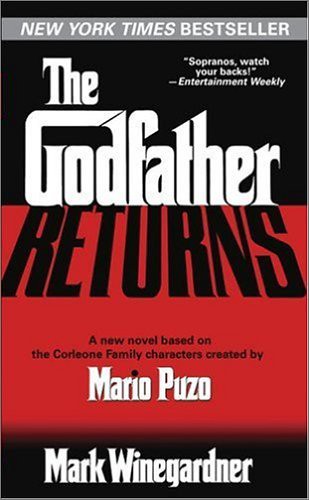
This has happened to a number of authors -- Robert Ludlum, Frank Herbert, Raymond Chandler and Mario Puzo come to mind -- over the years, and I have to say I groan a little each time I discover a new example. Uniformly, the books that follow the original source material are painfully bad or mediocre. Never really coming close to the quality of the original. I've read both of Mark Winegardner's sequels to Mario Puzo's The Godfather, and while they were tightly written and at times engaging, you could never really shake the feeling that the characters were a little off (Guess what? Fredo was gay!) or that the story you were reading wasn't really canon. Doubly annoying in this instance was that the book sequels ignored some of the plot points laid out in the movies -- which, as any self-respecting Godfather fan knows -- are as canon as you can get, especially considering Puzo wrote both sequels to the original, and The Godfather II was based on the flashback scenes in the original novel. But, I digress.

I can understand that it's really about money -- the families of these authors want to see profits continue even after the creative force is gone. But that doesn't change the fact that sometimes things are best left as is. You could get a very talented writer to pick up the story, but it doesn't matter, because it's impossible to shake the idea that this isn't what it was meant to be. Things end. Every good writer knows that.