
This post, over at Crime Fiction Dossier, touches upon one of my biggest pet peeves when it comes to the book industry -- the continuation of a writer's work posthumously. It happens more often than you think, and the one person who should be able to decide -- the author -- is obviously not part of the game.
Here's the latest example:
BBC News has announced that author Eoin Colfer (the Artemis Fowl series) has been hired to continue the uber-popular Hitchhiker series created by the late Douglas Adams. According to the article, Adams' widow has given approval for the project. And Another Thing will be published next October.
Adams died seven years ago at the much-too-young age of 49. His early death meant that there were many books he couldn't write -- and that's a damn shame. He was one of the most inventive and entertaining writers around. He even wrote two excellent pseudo-mystery novels (Dirk Gently's Holistic Detective Agency and Long Dark Tea Time of the Soul). And the idea of someone trying to continue writing in the world he created saddens me.
In the BBC article, Colfer is quoted as saying, "My first reaction was semi-outrage that anyone should be allowed to tamper with this incredible series." And he should have stopped right there. Because his instinct was right. It is an outrage and nobody should tamper with this incredible series.
Authors die, and their books and their series die with them. Sometimes this is a crushing blow -- when Ross Thomas died, I felt like I'd lost a friend, even though I knew him only slightly. But I knew his books intimately, and it hurt to know that there would be no more. But you can't change the past.
The post continues:
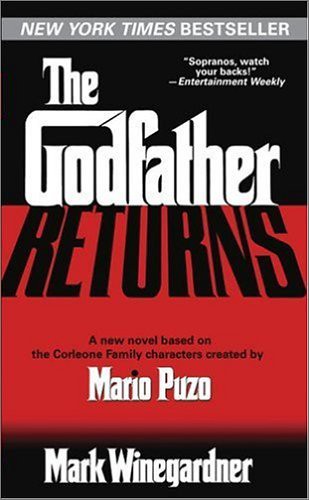
This has happened to a number of authors -- Robert Ludlum, Frank Herbert, Raymond Chandler and Mario Puzo come to mind -- over the years, and I have to say I groan a little each time I discover a new example. Uniformly, the books that follow the original source material are painfully bad or mediocre. Never really coming close to the quality of the original. I've read both of Mark Winegardner's sequels to Mario Puzo's The Godfather, and while they were tightly written and at times engaging, you could never really shake the feeling that the characters were a little off (Guess what? Fredo was gay!) or that the story you were reading wasn't really canon. Doubly annoying in this instance was that the book sequels ignored some of the plot points laid out in the movies -- which, as any self-respecting Godfather fan knows -- are as canon as you can get, especially considering Puzo wrote both sequels to the original, and The Godfather II was based on the flashback scenes in the original novel. But, I digress.The most egregious example of this type of literary grave robbing in recent years was the offense done to the works of Roger Zelazny. One of the finest fantasy writers ever, Zelazny created the beloved Amber series, a ten-book magnum opus that represented some of the most inventive and engrossing storytelling ever created. (Yes, I really mean those superlatives.)
Zelazny also died at too early an age -- only 58. During his lifetime, Zelazny made it abundantly clear that he wanted no other authors to write in the Amber world. Author Neil Gaiman once approached Zelazny with the idea of publishing a book of Amber stories written by other authors -- and Zelazny put the kibosh on the idea.
Even so, in 2002 John Gregory Betancourt -- with the permission of Zelazny's literary estate, allegedly administered by a family member from whom the author was estranged -- began a series of Amber prequels. Apparently the books were garbage, but that's hearsay, as I refused to read them.
I can understand fans wanting to read just one more book featuring the characters and worlds that they loved so much. But it's not possible. Even if a talented writer creates something worthwhile in that existing universe, it will never be the same. This is especially true when the original creator was someone as uniquely talented and innovative as Adams or Zelazny.
I can understand that it's really about money -- the families of these authors want to see profits continue even after the creative force is gone. But that doesn't change the fact that sometimes things are best left as is. You could get a very talented writer to pick up the story, but it doesn't matter, because it's impossible to shake the idea that this isn't what it was meant to be. Things end. Every good writer knows that.


