Monday, September 08, 2008

Literary agent opens up blog to authors to share their experience


Pretty interesting post, from MediaBistro's GalleyCat book blog:

Earlier this year, GalleyCat explained how science-fiction author John Scalzi was opening up his blog to guest essayists for a series of posts called "The Big Idea." Here's another iteration of that basic concept: Literary agent Jenny Rappaport is devoting a portion of her blog, Lit Soup, to "Book Blocks," which she describes as short pieces in which authors can discuss one of the "building blocks" of their upcoming book: "the characters, the plot, the theme, the actual writing structure, the idea behind the novel (or non-fiction work), the worldbuilding, etc."

Worth keeping an eye on, no matter how creepy that photo is.

Saturday, September 06, 2008

Dean Wesley Smith on Heinlein's Rules

Pretty interesting post over at novelist Dean Wesley Smith's blog, where the novelist -- who has written a number of movie adaptations and tie-in books in addition to his own work -- expands on author Robert Heinlein's famous rules for writers.
Follow Heinlein’s Rules every week. His rules are simple.

1) You must write.

2) You must finish what you write.

3) You must not rewrite unless to editorial demand.

4) You must mail your story to an editor who will pay you money.

5) You must keep it in the mail until someone buys it.

Simple rules, very simple rules. Yet I get a ton of comments about how the writer making the comment knows more than Heinlein about writing and needs to change these rules for themselves. And these comments always come from newer writers, mostly unsold writers.

What these writers are saying to me simply is this: My belief system does not allow me to follow Heinlein’s Rules.

Belief Systems. I call them “Myths.” They are very, very powerful things in all of us, especially when it comes to writing and the process around writing and even more the mailing and marketing of stories to editors.

Some of these simple, but wrong belief systems are:

“I need more practice. My work isn’t good enough yet to send to editors.”

“I need to polish my work before I dare send it out.”

“An editor will hate me if I write a bad story.”

Worth checking out the full blog post.

Trailer Trash X: Hell Night (1981)


"Why is this night so special?"
"Because 12 years ago Raymond Garth killed his family here and then committed suicide!"

Very, very by-the-books '80s slasher. Nothing exceptionally new or exciting in this one, but I must have watched it a few dozen times in my early teens. Why? It starred Linda Blair - the little girl from the Exorcist. The little girl from the Exorcist who grew up really hot.

Oh, Linda Blair. However did you go from spitting pea soup to getting arrested for dealing cocaine at the age of 18? Moving in with much-older boyfriend Rick Springfield at the age of 15? All the nude photo shoots? And didn't you date Rick James through the 1980s? And let's not forget Chained Heat, the women-in-prison genre classic. (Note to self: Chained Heat deserves its own post very soon.)

If there were a Perez Hilton three decades ago, Linda Blair would have been his darling. Linda Blair: the Lindsay Lohan before there was Lindsay Lohan.


The plot is pretty much given away 100% in the trailer - bunch of coeds go to a haunted house as part of a fraternity hazing. Note the ridiculous costumes - that's part of the hazing process. So, yeah, they're dressed like Robin Hood and ren faire rejects through the entire movie, except for when they're undressed.

At 1:00 - Wait. I know horror movies LIVE off these cliches, but the killer is still in the house. WTF do they think will happen if they stay the night there?
At 1:10 - "Hey, let's - potty?"
At 1:15 - Yeah, that guy is that much of a tool through the entire movie.
At 1:20 - And yes, you see him in a ridiculous sex scene.

Poster via Wrong Side of the Art.


"Oh, my gosh. This is one radical chick. Alright!"

Friday, September 05, 2008

Crime Fiction 101

Hey all, king suckerman here. Newest addition to the very snazzy Screenwriters League blog. Many thanks to Cake Man, Zombie and the rest of the gang for the warm welcome, etc.

OK, now that the pleasantries are out of the way, let me chatter a bit about what really drives me to write: Crime. Crime fiction, mysteries, thrillers, police procedural novels, private eyes -- whatever you want to classify it as -- is the kind of fiction that gets me going, and, the kind of fiction I aspire to write revolves around crime.

Now, before you jump to conclusions and assume I just haven't read other stuff, let me assure you that I've been a fan of a bunch of different kinds of genres over time. Sci Fi, historical fiction, straight up literature (vague, I know, but there you have it) and so on. But crime, or at least crime fiction done well, is not just about the good guys winning and the bad guys being punished. Often, it's quite the opposite. No, good crime fiction paints a picture of the world we live in, and shows us not only the crimes happening, but why they happen, and how the build-up and aftershocks of the criminal act affect the doer and the victim, and those around them.

I'm in the early stages of a first draft for a crime novel -- which you can read here. I actually write directly into the blog, then paste it into a document on my computer. I find it more liberating than staring at a blank document. The blog format allows me to scroll down and see what I've worked on before, leave myself little plot reminders or character notes ("Maybe the character should DIE?") and generally works better for me. Probably different for everyone else, but here we are.

Anyway, when I decided I was going to dive into this, I knew two things: 1) Obviously, I had to finish the damn book, and later, make an effort to see it in print. Otherwise, what's the point? 2) That it would be something I'd want to read. That's the hardest part, but also the most fulfilling. If you write something you enjoy reading, chances are, at least one other person will, too.

Now, I can't speak for all fans of mystery novels or crime in general, but just because something has a private detective in it, features lots of blood and has a surprise ending does not mean I'll love it. In fact, I'm usually put off by that kind of paint-by-numbers storytelling. Surprisingly, there's a huge and hungry audience for that kind of writing. It's just not for me. The stuff that really gets me going is really less about the crime and the Oh-shit-I-can't-believe-Tito's-face-got-blasted-off moment and more about the characters and society being spotlighted in the book. I'm less inclined to wallow in the cliches of the genre ("Oh, he's a bitter ex-cop with a drinking problem and mommy issues? Sold!"). The stuff I want to read should tell me something. About location. About the people that live there. What music do they listen to? What made Character X rob that store? Why did Character Y die in a pool of her own blood just outside her apartment?

Crime is about cause and effect, less about good vs. evil. And unlike the trite saying, crime does pay -- sometimes. But never fully, and never without consequence. Sometimes the good guys don't win. Hell, they rarely win outright. Crime fiction is a way to show the unfairness of life in a clear and unfiltered way, through the extreme actions and reactions of everyday people caught up in random or calculated acts of violence and malice. A good crime book is more than just a cool car chase, sexy femme fatale or an interesting CSI trick that leads to the bad guy's apprehension -- it's about conflicted characters muddling through the gray areas of their internal worlds and the city they live in and slowly realizing that life, like any good work of fiction, isn't compact or nicely tied together. Instead, it's got loose ends, nebulous characters, frightening choices and no tidy solutions.

So, yeah. I like crime books. But enough about why I like them. Let's get into the nitty gritty. Here are, in my estimation, the five crime books that most influence my own work (sometimes too much):
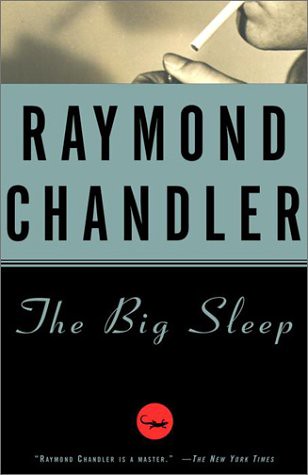


Raymond Chandler, The Big Sleep: The gold standard of P.I. fiction. Chandler's first -- and arguably best -- Philip Marlowe novel isn't so much about story -- you'll realize you have no idea what's going on at various points in the book -- as it is about style. Chandler's gritty, drunken and stumbling prose was probably cool then and even cooler now. Set the tone and many of the trappings of P.I. fiction for decades. A must-read.


George Pelecanos, A Firing Offense: If I was a more self-aware writer, I'd probably admit that I draw a lot of inspiration from this book. A lot. Moreso than the other four on the list. Nick Stefanos is a thirtysomething ad salesman for a chain of appliance stores. Nick is also a slacker, a smart-ass and a divorced drunk and social drug user. He's also a big music fan. A Firing Offense is the story of how someone trips and falls into another, more dangerous life, but a life they were always meant to lead. Riddled with musical references, wonderfully descriptive settings, akward encounters and frighteningly real action, this book is a perfect introduction to the world of Pelecanos.
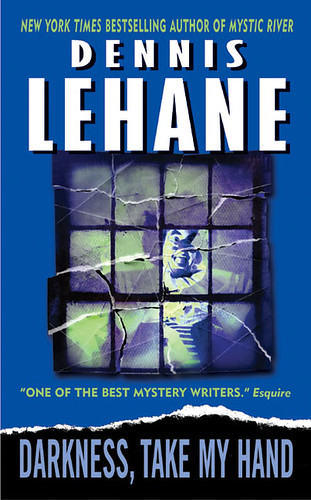


Dennis Lehane, Darkness, Take My Hand: Killer clowns by the writer of Mystic River. Need I say more? OK, I will. This is the second novel to feature Lehane's detective team of Patrick Kenzie and Angie Gennaro, two young private investigators dealing with not only their own personal demons and relationships, but the raw violence and evil lurking behind the shadows of Boston's poorest corners. If you're a quick reader, I'd say start with the first Kenzie/Gennaro book, A Drink Before The War. If you want to read the best in the series, start right here. Either way, you won't be disappointed.
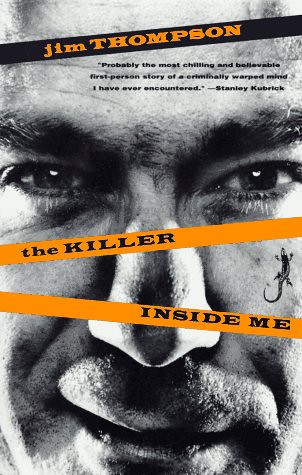


Jim Thompson, The Killer Inside Me: Lou Ford is a bore. He's the sheriff of a podunk town full of bland, cookie cutter citizens. At least, that's what it looks like to everyone else. But in reality, Lou Ford is a sociopathic killer. The slow and creepy unraveling of Lou's true persona is doubly disturbing because the book is told in the first person, and the unreliable narrator is certainly that. As the story progresses, the reader discovers the true Lou: cunning, murderous and morally vacant. One of the most disquieting books I've ever read.


Michael Connelly, The Concrete Blonde: Four years ago, Hollywood Detective Harry Bosch came across the serial killer known as the Dollmaker. In what was later deemed a righteous kill by his department, Bosch took down the killer as the suspect reached for what appeared to be his weapon. Bosch, always a police maverick, was demoted but also seen as a hero by many. Now, Bosch is facing a civil trial -- the Dollmaker's family is charging that the detective acted out of poor judgement and should be held responsible for the accused Dollmaker's death. If that wasn't enough, it looks like another Dollmaker victim has popped up -- except, this murder happened after Bosch killed the guy he thought was the killer. Connelly's third Harry Bosch book elevates the series from good to great, as the former crime reporter explores not only Bosch's fractured and conflicted psyche, but litters the stage with a number of potential killers and avenues of explanation. Definitely a puzzle in prose form, but with more heart than you'd expect.

Anyway, I'm happy to be here. Hope you guys enjoy SILENT CITY as it moves along, and my contributions to this space.

Thursday, September 04, 2008

Back into the game


My writing has been in a bit of a mess lately. After finishing a (rough, rough, rough) draft of a screenplay earlier this summer and a particularly busy late summer on the work front, I've been bouncing around between miscellaneous screenwriting and prose projects, unable to commit myself to any one of them. It's been frustrating, to say the least. I'm writing, but I'm not getting anywhere.

I had a very relaxing Labor Day weekend, sitting around bonfires and walking on the sand on Lake Erie. I started thinking about my recent draft for the first time in a while. Unlike Cake-o, Onyx and DOA, who've been pouring sweat in re-writes all summer, I've avoided rewriting altogether, choosing to start new projects and exercises instead.

I think I'm ready to dive back in with a big overhaul. Taking a bit of time off was probably the best thing I could've done for this one - the distance has allowed me to get over my initial feelings that the piece was a masterpiece borne from a genius and see it as it really is: a genius-borne masterpiece that needs a lot of work.

I see a lot of things I want to change. Big things. I feel like scrapping 50 pages and trying another route with it. (Is it possible to misunderstand the meaning of your own idea? I think I might have with this one... It's weird wishing you could see what the writer was really trying to get at when you're the writer.) So, I don't know if such a huge rewrite is a good idea, but I'm eager to try, and at the very least maybe it will help Onyx forgive me for my last draft. (Yes, Onyx, I'm doing this one for you!)

So, re-write time now. That is, after FOOTBALL tonight.


Mmm. Goodbye, productive Sundays!

Monday, September 01, 2008

The Writing Week part 35


Where does the time go? We're (all) 35 weeks into 2008, and 2009 is quickly approaching. I've recently felt myself racing toward anonymity faster than I have been in the past. There's a certain drive people need to have to succeed in this field, and while I feel it often, it just hasn't been there recently. Months ago, I vowed to actually make something happen in 2008 - to do as much as I could toward getting my screenwriting career off the ground.

I intend to devote myself to that for the remaining 17 weeks.

This weekend, I reread my post-Apocalyptic spec. I was pretty pleased with what I read, to be honest. I was uncomfortable last time I sent it out to someone, but out of the entire draft, there were only two scenes that I considered re-working, and they're not even necessary re-writes I considered. This week, I'll be sending the latest draft to a former board member of the company I work for. He (the board member) used to do a lot of television writing, still writes occasionally, and has an agent. I'm not hoping to get in through his agent (though of course if things go that way, that'd be nice), but I am hoping to get some feedback from a working writer who is not my professor. Since getting out of school, I've had little contact with working writers, and I'm curious to see what he says about my script.

Ideally, obviously, I hope he likes it, as the next step for me is to send out query letters. However, if he doesn't like the script, hopefully he'll provide insight into what he feels isn't working, and I'll save face by not sending an incomplete script out to agents and whatnot. Bottom line is this: September, I'm taking the reigns. You will work for me. In exchange, I'll find my motivation once again. I'll work for me, too.

Friday, August 29, 2008

Trailer Trash IX: Color Me Blood Red (1965)


"This is Adam, and this is a story of Adam and EVIL."

Before you check out this delightful little Herschell Gordon Lewis trailer, pour yourself a drink. Take a gulp whenever the narrator reminds you that this is just a movie, or repeats the title of the film:


Drunk? Can you even still stand?

This is just a movie.
THIS IS JUST A MOVIE.
FOR THE LOVE OF GOD
THIS IS JUST A MOVIEEEEE
THIS ISSSSSS JUST A MOVIE
I GET IT ALREADY
Color Me Blood Red.
Color Me Blood Red.
Color Me oh good god...

The plot for this one is standard Gordon Lewis fare: a psycho killer uses blood as paint in his art. Shot on little to no budget, gory as all get-out... you know the deal.

Favorite moments, outside of the non-stop repetition:

0:01 - The first ten seconds of the trailer are a guy's twitchy eyes. Real selling point.
0:22 - And here come 12 seconds of a close-up of fire. Does anything happen in this movie?
0:45 - "A blood-spattered study in the mawcarb"... has anyone heard it pronounced that way before?
0:56 - And another 25 seconds of that same fire-closeup. I'm convinced that this movie is mostly shots of things burning gently.


Movie poster via (the AMAZING) Wrong Side of the Art.

Color. Me. Blood. Red. Color. Me. Blood. Red. Color. Me. Blood. Red. Color. Me. Blood. Red.

Remember, guys. It's just a movie.