
I'm instantly wary of anything that claims to be any kind of all-purpose guide to, well, anything, but The Guardian newspaper across the pond has a fairly impressive list of articles on various aspects of the craft of writing, all well worth checking out.
The best part is the people writing their respective articles are actual practitioners, as opposed to some guy who's writing a how-to book on creating a novel but has never written a novel.
Definitely worth a read, or multiple.
[Via Bookninja]
Thursday, September 25, 2008


New York Film Festival opens Friday
The 46th Annual New York Film Festival opens this Friday. Their slate is full of great stuff, but here are a few I'd really like to see:
WENDY AND LUCY, written and directed by Kelly Reichardt. A young woman loses her dog on a road trip through Oregon. It looks like the plot really is that simple, but the movie has gotten great reviews and I really enjoyed Reichardt's Old Joy.

PANDORA AND THE FLYING DUTCHMAN, written and directed by Albert Lewin, 1951. This beautiful Jack Cardiff-shot mystery is being screened with a newly restored Technicolor print. The film will be introduced on October 10th by Martin Scorsese.

WALTZ WITH BASHIR, written and directed by Ari Folman. An "animated documentary" about the Sabra and Shatila Massacre that received amazing acclaim at Cannes and nearly won the Palme d'Or. The animation looks absolutely sick - check out the trailer if you don't trust me.

Check out the NYFF's full slate of films here. Those of our readers who aren't in New York can follow full coverage of the festival at the FilmLinc blog.
WENDY AND LUCY, written and directed by Kelly Reichardt. A young woman loses her dog on a road trip through Oregon. It looks like the plot really is that simple, but the movie has gotten great reviews and I really enjoyed Reichardt's Old Joy.

PANDORA AND THE FLYING DUTCHMAN, written and directed by Albert Lewin, 1951. This beautiful Jack Cardiff-shot mystery is being screened with a newly restored Technicolor print. The film will be introduced on October 10th by Martin Scorsese.

WALTZ WITH BASHIR, written and directed by Ari Folman. An "animated documentary" about the Sabra and Shatila Massacre that received amazing acclaim at Cannes and nearly won the Palme d'Or. The animation looks absolutely sick - check out the trailer if you don't trust me.

Check out the NYFF's full slate of films here. Those of our readers who aren't in New York can follow full coverage of the festival at the FilmLinc blog.
Wednesday, September 24, 2008
Want to chat with an agent?
Well, I'd assume you do. Especially if you read this blog.
MediaBistro's GalleyCat blog has a must-read post about the "overlooked art of agent research":
MediaBistro's GalleyCat blog has a must-read post about the "overlooked art of agent research":
Click here to see the video.Hundreds of aspiring writers would sell their left arm for a chance to chat with an agent. Unfortunately, most writers end up telling the wrong agent the wrong things. Without some crucial research, these writers will always end up in the rejection pile.
Earlier this week, author David Henry Sterry taught a room full of writers how to research agents at the Strand Bookstore. GalleyCat boiled down his agent intelligence into this short and practical primer on the fine art of agent research.
How Long Do You Write For?

In theory, writing every day is the best possible way to consistently improve and produce pages. I disagreed with this until I actually began doing it, and with the exception of a few weeks off in between projects, I now try to write for at least one hour every day. (I believe it was Stephen King who says that most writers only have one good hour in them a day.)
I spent the weekend in Boston visiting a friend and knew that I was going to be less than productive. So, I took yesterday off from work and dedicated the whole day to re-writes. I wrote solidly for more than my usual hour before taking a break. When I returned to my computer, I figure I probably put in another good hour and a half before that dastardly writing villain The Internet (a subject of much debate here recently) landed a debilitating blow. After some down time that involved dinner and the premier of How I Met Your Mother, it was back to the computer.
I was weaker than I thought from The Internet's earlier assault, and after about 20 minutes, I lost Round 3 for good. I couldn't help but feel as though I'd come up short - not everything I wanted to accomplish had been done. Yet, I had to remind myself that I'd written for nearly 3 and a half hours all told by the end of the night. Not too shabby.
So, I got to thinking. I usually write for an hour a day. Some people write from sun-up to sun-down. Some people have a page goal. How long do you write for each day?
Tuesday, September 23, 2008
Tuesday sick-blogging: Rock 'n Roll Reading
I'm home sick today, laying in bed with my laptop at my side. Not fun.
Last week, I asked if, while writing, you created a playlist or soundtrack to not only accompany you while writing, but to serve as an official anthem for the work. Not everyone does it, I'm sure. I find it to be helpful and an entertaining facet of the writing process. Or maybe it's just a distraction. No matter.
Also mentioned last week was music/book blog Largehearted Boy's Book Notes series of interviews, which allows authors to talk about the music that inspired them while writing their most recently released book/novel/whatever.
Today, as I drowsily scrolled through my blogs, I discovered that indie siren Juliana Hatfield was being spotlighted, talking about her new autobiography/memoir When I Grow Up.
Here's a sampling:
Now, reading this reminded me of another genre of books I read voraciously (well, when I'm not 10 books into a detective series, that is): Music history or musical bios. And, oddly enough, I find that the best autobiographies in the rock genre are often written not by the big name stars, but lesser-known "almost stars." Which is why I have high hopes for Hatfield's book. I was never much of a fan of her music, but from what little I've read (Rolling Stone had an excerpt), I think it'll be an entertaining and memorable read.
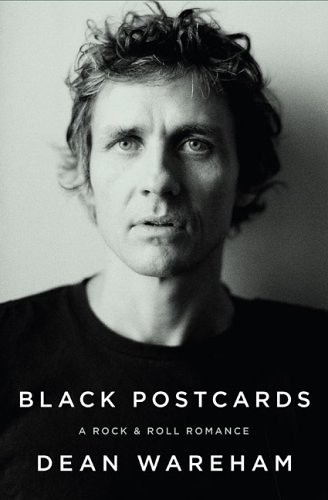
Another example that falls into the category of lesser-known music personality with a good book is Dean Wareham, formerly of bands Luna and Galaxie 500. Wareham's tales -- aptly titled Black Postcards -- of touring, band tension and drug abuse are engaging and brutally honest, making for a great peek into the industry a lot of us only see through the filter of television, radio or iTunes.

I guess the point of this note is to remind you all -- and myself, to a degree -- that while it's great to read stuff in the genre you are writing in, and want to work in, it's doubly helpful to branch out and find other kinds of writing you enjoy. It'll only help your writing get better, and ideally, more diverse.
What are some of the genres you enjoy reading?
Last week, I asked if, while writing, you created a playlist or soundtrack to not only accompany you while writing, but to serve as an official anthem for the work. Not everyone does it, I'm sure. I find it to be helpful and an entertaining facet of the writing process. Or maybe it's just a distraction. No matter.
Also mentioned last week was music/book blog Largehearted Boy's Book Notes series of interviews, which allows authors to talk about the music that inspired them while writing their most recently released book/novel/whatever.
Today, as I drowsily scrolled through my blogs, I discovered that indie siren Juliana Hatfield was being spotlighted, talking about her new autobiography/memoir When I Grow Up.
Here's a sampling:
"Don't" by Dinosaur Jr.
The Blake Babies (my first band) were recording during the overnight shift at Fort Apache studios in Cambridge, MA, and Dinosaur Jr. were making their album "Bug" in the daytime. I arrived early one evening and happened to catch Lou Barlow, bassist and occasional song-contributor of Dinosaur, doing a vocal take of this song in which he scream-sings "WHY DON'T YOU LIKE ME???!!!" repeatedly. It hurt my throat just to listen; Lou was throwing his whole body and soul into it. He seemed to be trying to destroy something with his voice, or to exorcise some evil demon.
It was maybe the most authentically tortured and anguished vocal performance I'd ever had the pleasure (or horror) to witness. Lou really meant it.
He came out of the recording booth and went into the bathroom and spat up blood. That's how hard he had sung. Scary, but righteous, I thought. Maybe rock and roll should hurt. If it doesn't, maybe you're not doing it right.
Now, reading this reminded me of another genre of books I read voraciously (well, when I'm not 10 books into a detective series, that is): Music history or musical bios. And, oddly enough, I find that the best autobiographies in the rock genre are often written not by the big name stars, but lesser-known "almost stars." Which is why I have high hopes for Hatfield's book. I was never much of a fan of her music, but from what little I've read (Rolling Stone had an excerpt), I think it'll be an entertaining and memorable read.
Another example that falls into the category of lesser-known music personality with a good book is Dean Wareham, formerly of bands Luna and Galaxie 500. Wareham's tales -- aptly titled Black Postcards -- of touring, band tension and drug abuse are engaging and brutally honest, making for a great peek into the industry a lot of us only see through the filter of television, radio or iTunes.
I guess the point of this note is to remind you all -- and myself, to a degree -- that while it's great to read stuff in the genre you are writing in, and want to work in, it's doubly helpful to branch out and find other kinds of writing you enjoy. It'll only help your writing get better, and ideally, more diverse.
What are some of the genres you enjoy reading?
Writers' Warning - Consulting Service
WRITERS' WARNING
(Writers' Warning is a new section we're debuting here on ScreenwritersLeague.com where we post about suspicious and potentially risky services and companies. Not all practices mentioned are necessarily dangerous for writers - some might be completely legit and just sound fishy at first. We only report the facts and encourage comments from people who know better and can speak on behalf of the situations/companies.)
(Writers' Warning is a new section we're debuting here on ScreenwritersLeague.com where we post about suspicious and potentially risky services and companies. Not all practices mentioned are necessarily dangerous for writers - some might be completely legit and just sound fishy at first. We only report the facts and encourage comments from people who know better and can speak on behalf of the situations/companies.)
I recently heard back from one company regarding a query letter I sent out. The response I got sent up a red flag. The company, let's call it X Management, since I'd rather keep this to the event and not name names, is a respectable company by everything I've read. I called X Management to see if there was a specific person I should address my query email to (a good practice if you have the time) and sent my personally addressed email. A few days later, I received a message that X Management has a new service to "weed out" writers who aren't serious about breaking into the industry.
Because they receive hundreds of submissions, X Management offers a consulting service that guarantees they'll read your script. For $125, they'll give you one page of notes on your query letter. For $500, they'll read your script. The WHOLE thing (!). People who don't participate will not be considered. The reasons that the email cited for this were: it's become too much of a financial burden for the company to read everything and this is the only way it can continue to accept unsolicited material, writers who aren't "interested and motivated" won't participate, and rather than just a rejection letter, writers will receive personalized notes. I kid you not, those are the three reasons.
This is obviously not something I plan to do. As I said, everything I've read about X Management makes it sound like a great company - indeed, there's a reason I submitted to it. And consulting services are not uncommon. I can understand offering them and know a lot of companies specialize in providing feedback for a fee. I just can't get on board with a management company that claims only serious writers will pay for their consulting services, and that only those "serious" writers will be considered for potential representation. The word 'management' in the company's name seems misleading to me now.
Anyone with any sort of positive experience with "consulting services" like this should feel free to post. I might be making mountains out of molehills, but I have never once heard something like this talked about as anything other than a less than legitimate practice.
Monday, September 22, 2008
The Writing Week part 38 - Great (Negative) Feedback

Years ago, when I was still a fresh-faced writing student, getting negative feedback on a script I was proud of would ruin my day. I could have sworn that everyone should and would have liked my dialogue and my scene structure as much as I did. It was a killing blow when my classmates or professor said otherwise. The more people agreed I'd missed the mark, the worse I felt, too. It was like I was a character in Mortal Combat, rooted to the floor, and someone was shouting "FINISH HIM." Down I went.
How far I've come. A few weeks ago, I sent my post-Apocalyptic spec - the very one I'm writing my query letters for - to one of my company's former board members, an agented writer. I got his notes mid-last week. He highlighted what he felt to be BIG problems. The funny thing was, though, that pretty much everything he pointed out were things that Leaguers brought up in past meetings. (I guess that begins to answer the debate I've been having with myself and the group as to the level of feedback we provide. I've often wondered if our critiquing abilities have increased, or if we're still fairly amateurish in what we find needs work in a script. The fact that a seasoned writer said almost the exact same things that my peers did is beyond encouraging; it's one more indicator that we're heading in the right direction.)
I thanked him for his comments quickly, after reading them once, and told him that I'd need time to digest them before being able to fully communicate about them. I was surprised when he called my grateful response "classy" and said that he was impressed by my ability to receive feedback. Having gone to school for screenwriting and being in the League, receiving feedback has become second nature to me. It's like breathing. I do it to live. I guess some people don't, though. So, for any new/emerging writers out there, the lesson (so you don't even have to read between the lines or interpret on your own) is learn how to take criticism. If you can't take it from friends or peers, you won't be able to take it from a producer or manager, who will likely be much more brutal in their delivery of it.
The feedback also came at a great time. With a number of query letters already sent out, I figure I have a solid two weeks, at the very least, to make the necessary improvements to my script. (I say two weeks because a couple of the companies vowed to reply within three weeks, and this was a week ago. For the most part, I figure I have months before I'll hear anything, if I hear anything.) In fact, this is the best I've ever felt about receiving negative feedback (and perhaps positive, too). I feel like something good is going to come out of this, and my script, which I wanted to be done but wasn't sure was, will be much stronger for it.
A great week, for sure.
Subscribe to:
Posts (Atom)


