Tuesday, December 16, 2008

Writers' Warning - WGA Script Registration


WRITERS' WARNING

(Writers' Warning is a new section we're debuting here on ScreenwritersLeague.com where we post about suspicious and potentially risky services and companies. Not all practices mentioned are necessarily dangerous for writers - some might be completely legit and just sound fishy at first. We only report the facts and encourage comments from people who know better and can speak on behalf of the situations/companies.)


I recently had cause to call a number of entertainment lawyers, soliciting advice on something where I could. One of the things I spoke about with one of them was WGA script registration versus U.S. Copyright. (You'll remember we discussed this a bit before.) Well, the discussion, at least if you speak with this particular lawyer, is over.

When the lawyer asked if I had gotten my script copyrighted, I told him that I had done the WGA registration. He literally laughed. "That's absolutely worthless," he said. "I don't know why people even bother doing it."

I asked for clarification, and he explained that it offered zero legal protection on the material or, more importantly, the idea. Obtaining a copyright alone will potentially save a writer loads of headache (and heartache), according to him. for just $35 (compared to $22 for the WGA registration), a writer can apply for a U.S. Copyright. The whole thing can be done online, as it is with the WGA. It takes about 45 minutes - I did this yesterday - and is really pretty simple. There's a lot of filling in easy blanks (i.e. name, title of material, type of work, etc.). I've heard that it can take up to 6 months to receive the certificate of copyright, but the lawyer informed me that doesn't matter. "The date is retroactive form the day you register," he said, so though it might be June 2009 before I receive that certificate, to the best of my knowledge, it will have been effective beginning December 15th, 2008.

I'm no legal expert. (Don't take this post as solid legal advice - always get a lawyer of your own to look anything over or get advice.) Nonetheless, from now on, I'm at least urging each League member to get that copyright. I'm not going to say abandon the WGA registration (couldn't hurt, right?), but I'm certainly not going to rely on it as my only crutch from here on out.

Verbum Sap Sat, y'all.

Monday, December 15, 2008

The Writing Week part 50 - Know Your Characters


Last week, I'd written a page of a brand new screenplay because of an idea I had. I knew how to kick it off, I knew the basic premise, and I knew I wanted to get the ball rolling on it. But I didn't know something very important; I didn't know who I was writing about.

When writing action specs, it's easy to throw in a lot of shooting, a lot of explosions, a lot of naked women (sometimes for no reason), and a lot of tough guys. At the end of the day, though, we writers have to remember something very fundamental: every character (OK, at least every protagonist) must have a goal. Even if it's a Bruce Willis type goal - i.e. keeping your crumbling family together while you kill 300 people - there has to be something the character is working toward. (Don't get me wrong, I dig a lot of Bruce's work. However, if you look at 95% of his movies, I can guarantee you that not only will he be a rogue or former cop, but his marriage or relationship with his children (usually a daughter) will be on the rocks. Somehow, his family life ties into his need to shoot a dozen terrorists every five minutes.) Even the most basic of action movies has a character with some story line, however crappy it may be, and some need, however ridiculous it might seem in context.

My mistake with the script is that I hadn't bothered to think that through clearly enough. I was so eager to write that first scene, to lay everything out, that I wasn't prepared to follow up with what had to come next, namely the introduction of my pro- and antagonists. Rookie mistake? Probably. One I won't make again? Probably not. The thing is, sometimes as writers, we also need that jolt, that first spark of creativity to get us working steadily again. I might not be set to work on the pages to this spec yet, but it allowed me to do something else entirely, something just as important, if not more so. It allowed me to see what I really wanted to write.

After that night of page-length success followed by realization of 99 page impotence, I knew that I wasn't yet ready to work on that project. I popped open Word and set to work on another outline for another script (got a first page for that one, too). The difference? I knew my characters. They weren't running around blowing crap up or racking up body counts that Braveheart would be jealous of. They were just being themselves. And I knew them well. I was ready to write.

Sometimes if you run into a wall in your writing, the best thing isn't actually to bust your fists knocking it down, but to turn around and find another road around it.

40 Inspirational Speeches in two minutes

This has been bouncing around the internet lately, and it 100% rules.

40 inspirational speeches in two minutes:


Thanks for sending this, Joe!

Saturday, December 13, 2008

Trailer Trash XXIV: Old Dracula (1975)


"Count Dracula is having a bloody good time with the year's juiciest playmates!"

I've got a joke for you, kids! Alrighty, y'all! Gather 'round!

Q: What do you get... when you cross a vampire... with a pimp??

::snicker, giggle::

A: This lump of shit!


Old Dracula is a comedy from 1975 that seems to be trying to play to both the horror and blaxploitation audiences and gets both of them terribly, terribly wrong. Dracula is kinda like a pimp, but he's white. How does this movie fall into the blaxploitation realm of cinema? Regardez le plot: Dracula's (white) wife gets a blood transfusion from one of Drac's Playboy Playmate friends, and that turns her into a sassy black woman! Let the wacky, racist hijinks ensue!

Seriously. If it weren't for movies like Soul Plane, I'd say that movies like this couldn't be made anymore. Most of the plot involves Dracula trying to turn his wife white again. I'm not kidding! Even Al Jolson had to have cringed a little in his grave when this movie came out.

But, according to the poster, if you loved Young Frankenstein, you'll love Old Dracula!

Okay, enough chit-chat. Trailer time.


At 0:14 - Who is doing this narration?
At 0:25 - Back when David Niven was a household name.
At 0:36 - Oh, no. Are they rapping?
At 0:40 - I used to rap like that, but I was a seven year-old white kid from Ohio that only knew what rap was from Fresh Prince of Bel Air.
At 0:42 - Burrrrp!

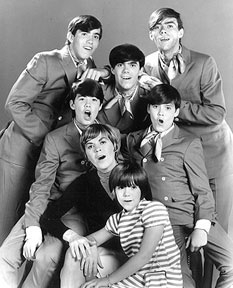
Seriously, who asked the Cowsills to record a rap song?


"Save some for the kiddies, ol' Drac-baby!"

Trailer Trash is a weekly tribute to oddball, cheesy and often just plain terrible movie trailers. Writers: These movies got made... so can yours! You can read through our archive by clicking here.

Friday, December 12, 2008

The Writing Wire for 12/12: Zombie icons, Ellroy on HBO and 'Che' potty breaks


Happy Friday, all. Let's roll.

• IO9 asks: Is sci fi getting too mainstream? Also -- and Zombie will appreciate this -- how would major cultural icons look if they were zombie-fied? Check out Ronnie Reagan above.

• Have you lied about reading a good book lately? It's OK if you have.

• The Underwire has the verdict on The Day The Earth Stood Still remake: Not so good.

• More importantly, when should you take a pee break during Steve Soderbergh's four-hour Che biopic?

• Topless Robot thinks Heroes might stop sucking soon. Did it ever not suck?

• Measure for Measure, the great songwriting blog from The New York Times discusses writing confessional songs.

Could Gran Torino be Clint's best work in years?

• And, in the "Only King Suckerman Cares/Delay of Game" category, I just realized that HBO is working on a series adapting James Ellroy's "American Underworld" novels, American Tabloid and The Cold Six Thousand. Extra cool? It's by the team that did the critically-acclaimed John Adams mini.

What Are You Reading Week 8: Finishing up the "L.A. Quartet"


I know, I know. Where the hell have I been? No concrete excuses here, faithful reader. One thing I can say about my time away, though, I have been reading. Reading Ellroy. Can't you tell, from my stop-start sentence structure and use of words like "shitbird" and "feature this"? No? Fine.

Last time we chatted, I was midway through James Ellroy's "L.A. Quartet," a loosely-connected series of novels set in -- you guessed it! -- Los Angeles, starting around the time of WWII and ending at the dawn of the 1960s.

Specifically, I was about a third of the way through L.A. Confidential, which tells the tale of three cops: up-and-coming brown-noser Ed Exley, lovable bruiser Wendell "Bud" White and smooth operator Jack Vincennes. Most of you, I'm sure, are familiar with the film version, starring Russell Crowe and Guy Pearce. While the movie is fairly faithful to the source material, if we've learned anything about Ellroy thusfar, it's that he packs his novels with so much information and so many characters, that oftentimes, you find yourself flipping backwards just to re-learn who some of these people are. Confidential, seemingly the longest of the four novels, is honestly, sometimes pretty hard to follow. Ellroy mixes in a slew of characters, newspaper-style vignettes and three different viewpoints. While it takes at least half the novel (or, it did for me, at least) to get into the groove Ellroy is belting out, once you start to feel it, you really become immersed in the world the author's created. Meticulously researched, from the historical facts surrounding the story (The "Bloody Christmas" and veiled Walt Disney parody) to the word choice and lingo of the characters from that time period, you close the book feeling like you just spent a month or two in Los Angeles, circa 1954.


Unlike The Big Nowhere, which seemed to be more of a mish-mash of viewpoints and facts swirling together with a Communist witch hunt and a serial killer backdrop, L.A. Confidential takes the three-character formula and synthesizes it into something more cohesive. Whereas Nowhere started with three characters, seemingly unrelated, working on their own cases/problems and then eventually gravitating toward each other, L.A. Confidential starts with the three main characters already close together and slightly overlapping and with a much stronger conflict -- specifically with the straight arrow Exley and the devil-with-a-heart White.

There were points while reading Nowhere that I pondered giving up, before hitting the final act which kicked the entire book into high gear. L.A. Confidential is smooth from the get-go, with a few slower chapters but overall a consistent and engaging pace. You begin to sympathize with all three of Ellroy's stars -- the duty-bound Exley, the brutish but loyal White and the slimeball with a soul, Vincennes. Whereas with Nowhere, you could argue that Mal Considine was really the only relatable character. The closeted Detective Upshaw and scurrilous Meeks were a little too far gone for this reader to really root for or appreciate. But I'll get to that a bit more later on, when we enter the final chapter of the Quartet, in Ellroy's White Jazz.

Plot-wise, like most of Ellroy's latter-day work, L.A. Confidential is ultra-detailed and at times confusing. But the style raises the substance more often than not, making the book an experience not to be missed, even if you're not really sure what just happened, exactly. Still, it's a literary work, and it elevates the crime genre beyond the staid trappings of private eye stories and serial killer adventures. While I have a soft-spot for the more linear and emotional stuff produced by Pelecanos and once produced by Lehane, Ellroy's a totally different -- and disturbing -- flavor that's worth trying.


White Jazz, which closes out the four-piece masterwork, goes back to Ellroy's roots. Specifically, the first-person narration of The Black Dahlia. This time, though, the viewpoint character is not nearly as likeable as young Bucky Bleichert was. Instead, we're handed Dave Klein, a corrupt cop who's part slumlord, part bagman and all rotten. Set a few months after the end of L.A. Confidential, we find Klein heading up the LA Administrative Vice division -- well, when he's not killing people for the mob or having strange, incestuous fantasies involving his younger sister. Yeah. Klein is not your typical lead.

Just as Klein takes on a side job trailing a wannabe movie starlet for mogul Howard Hughes, his world begins to crumble. The State's Attorney has begun a deep probe into corruption in the LAPD, former mob head honcho Mickey Cohen is becoming a parody of himself and Kein's been assigned to solve a home invasion that seems admittedly creepy but irrelevant, on the surface. I won't spoil the specifics here, but Jazz does resolve plot threads and character arcs from the last novel, in a much clearer and effective way than Confidential did for Nowhere (strangely enough, the movie version of L.A. Confidential finds a way to integrate Buzz Meeks into the main plot much more cohesively than Ellroy did, with a slapshod prologue). If you closed the book on L.A. Confidential wondering what happened to X and Y, White Jazz answers those questions for you.

But beyond just closing down plot threads and concluding stories for previously introduced characters, Jazz is a riveting and disturbing look at a totally corrupt and despicable individual. I found it hard to get few the first chapters of the book because I found Klein impossible to like. He was a liar, a cheat, a scumbag and a murderer. But once you keep reading you realize he's one of many, and, as was pointed out to me earlier today, why do you have to like the main character to like a book anyway? Maybe I just grew into the habit. After a while, I figured out what Ellroy was striving for, or, what I thought he was going for. He wants you to hate Klein. He wants you to find him to be a disturbing creature you'd never want to cross in real life. That's what makes his story so interesting -- this is a cop tale from the other side of the coin, where the "hero" isn't a stalwart white knight but a black knight in sheep's clothing. That's the crux of White Jazz, and everything else that injects Ellroy's fiction starting with his literary rebirth in the pages of The Black Dahlia. Even the way the sentences and thoughts are structured give the reader a glimpse into the frenzied, fractured mind of Klein.


There's an unconfirmed rumor that Ellroy turned in a 900-page first draft for Jazz. When his publisher balked, Ellroy cut the book down to size by excising most of the verbs, articles, adjectives and unnecessary words, pruning it down to a more manageable 350-or-so pages. Crazy, huh?

The final product is a benzadrine fueled sprint through the creepy underbelly of Los Angeles in the late 50s, before the dawn of Camelot, doused in piles of murder, greed, corruption, double-crosses and lies. And there's more.

"Well, fine. But do I have to read the entire four-novel series to enjoy the experience?"

Not really. I think each novel stands (and falls) on its own merits and failures. Do you get a better, more organic and overall complete story by reading all four? Yes. The perfect example is when you read L.A. Confidential and realize two of the most important characters in the book are left dangling after the main plot is resolved. Or, when you finish The Big Nowhere and you're not really sure what's going to happen to Buzz Meeks. If, like myself, you're already inherently inclined to enjoy serialized fiction, you'll want to read all four. There's also the geeky payoff, which Ellroy uses carefully, that comes when you see a character from an earlier book showing up later in the series, like The Black Dahlia's Russ Millard taking a more central role in L.A. Confidential.

While not perfect by any means, Ellroy's "L.A. Quartet" offers up a layered, organic and exhilarating picture of a city in different stages of evolution with real history as a backdrop you can sense and see, instead of just having it inserted to suit the needs of story. These characters could have easily existed in the times they've been placed, and the ones that did sound perfectly in tune with their real life doppelgangers. Highly reccommended.

What's next for me? More Ellroy. Specifically, part one of Ellroy's "American Underworld" trilogy, American Tabloid.

But enough of that. What are you reading?

Thursday, December 11, 2008

What, When, Where this Weekend - Wendy and Lucy, Gran Torino, Doubt, The Day the Earth Stood Still

What, When, Where is a weekly guide to select screenings, discussions and events in the NYC-area of interest to screenwriters.

- Kelly Reichardt is at Film Forum talking about Wendy and Lucy tonight and Friday...

- Fellini's classic Amarcord is wrapping up its run at Film Forum...

- ...while Bergman's five-plus hour masterpiece Fanny and Alexander is opening for a limited time at the IFC Center. Each half requires a ticket, but it's well worth it just to see this on the big screen.

- Read the Black List yet?

Opening this week...

WENDY AND LUCY, written by Jonathan Raymond and Kelly Reichardt, dir. by Kelly Reichardt


Premise: A woman's life is derailed en route to a potentially lucrative summer job. When her car breaks down, and her dog is taken to the pound, the thin fabric of her financial situation comes apart, and she is led through a series of increasingly dire economic decisions.

Playing: Film Forum

I've been hyped about this one for months - still hyped. See me shaking with excitement here and here.

DOUBT, written and directed by John Patrick Shanley

Premise: Set in 1964, Doubt centers on a nun who confronts a priest after suspecting him abusing a black student. He denies the charges, and much of the play's quick-fire dialogue tackles themes of religion, morality and authority.


GRAN TORINO, written by Nick Schenk and Dave Johannson, dir. by Clint Eastwood

Premise: Disgruntled Korean War vet Walt Kowalski sets out to reform his neighbor, a young Hmong teenager, who tried to steal Kowalski's prized possession: his 1972 Gran Torino.

Playing: All over.

This could possibly be Eastwood's last film as an actor? That's hard to imagine. Either way, I'll stand by his directing work. Film School Rejects has their review over here.


THE DAY THE EARTH STOOD STILL, written by David Scarpa, dir. by Scott Derrickson

Premise: A remake of the 1951 classic sci-fi film about an alien visitor and his giant robot counterpart who visit Earth.

Playing: All over.