Saturday, December 13, 2008

Trailer Trash XXIV: Old Dracula (1975)


"Count Dracula is having a bloody good time with the year's juiciest playmates!"

I've got a joke for you, kids! Alrighty, y'all! Gather 'round!

Q: What do you get... when you cross a vampire... with a pimp??

::snicker, giggle::

A: This lump of shit!


Old Dracula is a comedy from 1975 that seems to be trying to play to both the horror and blaxploitation audiences and gets both of them terribly, terribly wrong. Dracula is kinda like a pimp, but he's white. How does this movie fall into the blaxploitation realm of cinema? Regardez le plot: Dracula's (white) wife gets a blood transfusion from one of Drac's Playboy Playmate friends, and that turns her into a sassy black woman! Let the wacky, racist hijinks ensue!

Seriously. If it weren't for movies like Soul Plane, I'd say that movies like this couldn't be made anymore. Most of the plot involves Dracula trying to turn his wife white again. I'm not kidding! Even Al Jolson had to have cringed a little in his grave when this movie came out.

But, according to the poster, if you loved Young Frankenstein, you'll love Old Dracula!

Okay, enough chit-chat. Trailer time.


At 0:14 - Who is doing this narration?
At 0:25 - Back when David Niven was a household name.
At 0:36 - Oh, no. Are they rapping?
At 0:40 - I used to rap like that, but I was a seven year-old white kid from Ohio that only knew what rap was from Fresh Prince of Bel Air.
At 0:42 - Burrrrp!

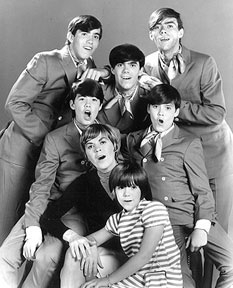
Seriously, who asked the Cowsills to record a rap song?


"Save some for the kiddies, ol' Drac-baby!"

Trailer Trash is a weekly tribute to oddball, cheesy and often just plain terrible movie trailers. Writers: These movies got made... so can yours! You can read through our archive by clicking here.

Friday, December 12, 2008

The Writing Wire for 12/12: Zombie icons, Ellroy on HBO and 'Che' potty breaks


Happy Friday, all. Let's roll.

• IO9 asks: Is sci fi getting too mainstream? Also -- and Zombie will appreciate this -- how would major cultural icons look if they were zombie-fied? Check out Ronnie Reagan above.

• Have you lied about reading a good book lately? It's OK if you have.

• The Underwire has the verdict on The Day The Earth Stood Still remake: Not so good.

• More importantly, when should you take a pee break during Steve Soderbergh's four-hour Che biopic?

• Topless Robot thinks Heroes might stop sucking soon. Did it ever not suck?

• Measure for Measure, the great songwriting blog from The New York Times discusses writing confessional songs.

Could Gran Torino be Clint's best work in years?

• And, in the "Only King Suckerman Cares/Delay of Game" category, I just realized that HBO is working on a series adapting James Ellroy's "American Underworld" novels, American Tabloid and The Cold Six Thousand. Extra cool? It's by the team that did the critically-acclaimed John Adams mini.

What Are You Reading Week 8: Finishing up the "L.A. Quartet"


I know, I know. Where the hell have I been? No concrete excuses here, faithful reader. One thing I can say about my time away, though, I have been reading. Reading Ellroy. Can't you tell, from my stop-start sentence structure and use of words like "shitbird" and "feature this"? No? Fine.

Last time we chatted, I was midway through James Ellroy's "L.A. Quartet," a loosely-connected series of novels set in -- you guessed it! -- Los Angeles, starting around the time of WWII and ending at the dawn of the 1960s.

Specifically, I was about a third of the way through L.A. Confidential, which tells the tale of three cops: up-and-coming brown-noser Ed Exley, lovable bruiser Wendell "Bud" White and smooth operator Jack Vincennes. Most of you, I'm sure, are familiar with the film version, starring Russell Crowe and Guy Pearce. While the movie is fairly faithful to the source material, if we've learned anything about Ellroy thusfar, it's that he packs his novels with so much information and so many characters, that oftentimes, you find yourself flipping backwards just to re-learn who some of these people are. Confidential, seemingly the longest of the four novels, is honestly, sometimes pretty hard to follow. Ellroy mixes in a slew of characters, newspaper-style vignettes and three different viewpoints. While it takes at least half the novel (or, it did for me, at least) to get into the groove Ellroy is belting out, once you start to feel it, you really become immersed in the world the author's created. Meticulously researched, from the historical facts surrounding the story (The "Bloody Christmas" and veiled Walt Disney parody) to the word choice and lingo of the characters from that time period, you close the book feeling like you just spent a month or two in Los Angeles, circa 1954.


Unlike The Big Nowhere, which seemed to be more of a mish-mash of viewpoints and facts swirling together with a Communist witch hunt and a serial killer backdrop, L.A. Confidential takes the three-character formula and synthesizes it into something more cohesive. Whereas Nowhere started with three characters, seemingly unrelated, working on their own cases/problems and then eventually gravitating toward each other, L.A. Confidential starts with the three main characters already close together and slightly overlapping and with a much stronger conflict -- specifically with the straight arrow Exley and the devil-with-a-heart White.

There were points while reading Nowhere that I pondered giving up, before hitting the final act which kicked the entire book into high gear. L.A. Confidential is smooth from the get-go, with a few slower chapters but overall a consistent and engaging pace. You begin to sympathize with all three of Ellroy's stars -- the duty-bound Exley, the brutish but loyal White and the slimeball with a soul, Vincennes. Whereas with Nowhere, you could argue that Mal Considine was really the only relatable character. The closeted Detective Upshaw and scurrilous Meeks were a little too far gone for this reader to really root for or appreciate. But I'll get to that a bit more later on, when we enter the final chapter of the Quartet, in Ellroy's White Jazz.

Plot-wise, like most of Ellroy's latter-day work, L.A. Confidential is ultra-detailed and at times confusing. But the style raises the substance more often than not, making the book an experience not to be missed, even if you're not really sure what just happened, exactly. Still, it's a literary work, and it elevates the crime genre beyond the staid trappings of private eye stories and serial killer adventures. While I have a soft-spot for the more linear and emotional stuff produced by Pelecanos and once produced by Lehane, Ellroy's a totally different -- and disturbing -- flavor that's worth trying.


White Jazz, which closes out the four-piece masterwork, goes back to Ellroy's roots. Specifically, the first-person narration of The Black Dahlia. This time, though, the viewpoint character is not nearly as likeable as young Bucky Bleichert was. Instead, we're handed Dave Klein, a corrupt cop who's part slumlord, part bagman and all rotten. Set a few months after the end of L.A. Confidential, we find Klein heading up the LA Administrative Vice division -- well, when he's not killing people for the mob or having strange, incestuous fantasies involving his younger sister. Yeah. Klein is not your typical lead.

Just as Klein takes on a side job trailing a wannabe movie starlet for mogul Howard Hughes, his world begins to crumble. The State's Attorney has begun a deep probe into corruption in the LAPD, former mob head honcho Mickey Cohen is becoming a parody of himself and Kein's been assigned to solve a home invasion that seems admittedly creepy but irrelevant, on the surface. I won't spoil the specifics here, but Jazz does resolve plot threads and character arcs from the last novel, in a much clearer and effective way than Confidential did for Nowhere (strangely enough, the movie version of L.A. Confidential finds a way to integrate Buzz Meeks into the main plot much more cohesively than Ellroy did, with a slapshod prologue). If you closed the book on L.A. Confidential wondering what happened to X and Y, White Jazz answers those questions for you.

But beyond just closing down plot threads and concluding stories for previously introduced characters, Jazz is a riveting and disturbing look at a totally corrupt and despicable individual. I found it hard to get few the first chapters of the book because I found Klein impossible to like. He was a liar, a cheat, a scumbag and a murderer. But once you keep reading you realize he's one of many, and, as was pointed out to me earlier today, why do you have to like the main character to like a book anyway? Maybe I just grew into the habit. After a while, I figured out what Ellroy was striving for, or, what I thought he was going for. He wants you to hate Klein. He wants you to find him to be a disturbing creature you'd never want to cross in real life. That's what makes his story so interesting -- this is a cop tale from the other side of the coin, where the "hero" isn't a stalwart white knight but a black knight in sheep's clothing. That's the crux of White Jazz, and everything else that injects Ellroy's fiction starting with his literary rebirth in the pages of The Black Dahlia. Even the way the sentences and thoughts are structured give the reader a glimpse into the frenzied, fractured mind of Klein.


There's an unconfirmed rumor that Ellroy turned in a 900-page first draft for Jazz. When his publisher balked, Ellroy cut the book down to size by excising most of the verbs, articles, adjectives and unnecessary words, pruning it down to a more manageable 350-or-so pages. Crazy, huh?

The final product is a benzadrine fueled sprint through the creepy underbelly of Los Angeles in the late 50s, before the dawn of Camelot, doused in piles of murder, greed, corruption, double-crosses and lies. And there's more.

"Well, fine. But do I have to read the entire four-novel series to enjoy the experience?"

Not really. I think each novel stands (and falls) on its own merits and failures. Do you get a better, more organic and overall complete story by reading all four? Yes. The perfect example is when you read L.A. Confidential and realize two of the most important characters in the book are left dangling after the main plot is resolved. Or, when you finish The Big Nowhere and you're not really sure what's going to happen to Buzz Meeks. If, like myself, you're already inherently inclined to enjoy serialized fiction, you'll want to read all four. There's also the geeky payoff, which Ellroy uses carefully, that comes when you see a character from an earlier book showing up later in the series, like The Black Dahlia's Russ Millard taking a more central role in L.A. Confidential.

While not perfect by any means, Ellroy's "L.A. Quartet" offers up a layered, organic and exhilarating picture of a city in different stages of evolution with real history as a backdrop you can sense and see, instead of just having it inserted to suit the needs of story. These characters could have easily existed in the times they've been placed, and the ones that did sound perfectly in tune with their real life doppelgangers. Highly reccommended.

What's next for me? More Ellroy. Specifically, part one of Ellroy's "American Underworld" trilogy, American Tabloid.

But enough of that. What are you reading?

Thursday, December 11, 2008

What, When, Where this Weekend - Wendy and Lucy, Gran Torino, Doubt, The Day the Earth Stood Still

What, When, Where is a weekly guide to select screenings, discussions and events in the NYC-area of interest to screenwriters.

- Kelly Reichardt is at Film Forum talking about Wendy and Lucy tonight and Friday...

- Fellini's classic Amarcord is wrapping up its run at Film Forum...

- ...while Bergman's five-plus hour masterpiece Fanny and Alexander is opening for a limited time at the IFC Center. Each half requires a ticket, but it's well worth it just to see this on the big screen.

- Read the Black List yet?

Opening this week...

WENDY AND LUCY, written by Jonathan Raymond and Kelly Reichardt, dir. by Kelly Reichardt


Premise: A woman's life is derailed en route to a potentially lucrative summer job. When her car breaks down, and her dog is taken to the pound, the thin fabric of her financial situation comes apart, and she is led through a series of increasingly dire economic decisions.

Playing: Film Forum

I've been hyped about this one for months - still hyped. See me shaking with excitement here and here.

DOUBT, written and directed by John Patrick Shanley

Premise: Set in 1964, Doubt centers on a nun who confronts a priest after suspecting him abusing a black student. He denies the charges, and much of the play's quick-fire dialogue tackles themes of religion, morality and authority.


GRAN TORINO, written by Nick Schenk and Dave Johannson, dir. by Clint Eastwood

Premise: Disgruntled Korean War vet Walt Kowalski sets out to reform his neighbor, a young Hmong teenager, who tried to steal Kowalski's prized possession: his 1972 Gran Torino.

Playing: All over.

This could possibly be Eastwood's last film as an actor? That's hard to imagine. Either way, I'll stand by his directing work. Film School Rejects has their review over here.


THE DAY THE EARTH STOOD STILL, written by David Scarpa, dir. by Scott Derrickson

Premise: A remake of the 1951 classic sci-fi film about an alien visitor and his giant robot counterpart who visit Earth.

Playing: All over.

The Writing Wire for 12/11: Writing habits, new Marquez and Tomei's inspiration


I'm awake, I'm awake. Let's hop to it, shall we?

• IO9 on fun, post-apocalyptic novels. The site also takes a peek at the writing habits of some noted sci fi novelists.

• About.com asks: Do you use a Thesaurus while writing?

• Marisa Tomei studied for her stripper role in The Wrestler by...watching Rock of Love? No matter. Our very own Cake Man reviews the film.

• Ugh. Is anyone else as sick of James Frey as I am?

L.A. Times' Jacket Copy blog has more on writing routines.

• According to MediaBistro, Gabriel Garcia Marquez is working on a new book. For realz.

• This may only interest me, but Wire's Underwire blog has an interview with authorized Star Trek historian/techie Michael Okuda. Yeah, we're Facebook friends. Jealous? In another Trek-tidbit, Gene Roddenberry's widow Majel Barrett-Roddenberry will reprise her role as the voice of the Enterprise computer in J.J. Abrams' new film.

• Oliver Stone is making a Hugo Chavez movie? So sayeth NY Mag's Vulture blog. Additionally, the blog reveals that the New York Film Critics' Awards tabbed Milk as 'Best Picture'. Hooray for happy Sean Penn movies.

• Weird shit of the moment: Um, Fran Drescher for U.S. Senate?

• Two upcoming Scorscese/DeNiro movies? Yes, please.

• You probably blinked and missed this, but Blur is reuniting.

• Gothamist is reporting that SoHo's OHIO Theatre is closing.

• Today's quote of the day, from writer Brian K. Vaughan, via IO9:

"I usually dream up a dozen or so profoundly stupid 'high concepts' for stories every day. When one is so bad that I can't seem to shake it after a few weeks, it usually means I have no choice but to write about it, often because that lame high concept is a way for me to explore something that makes me confused or furious about the world." — Brian K. Vaughan, writer for Lost and creator of Y The Last Man, interviewed in Esquire.

Wednesday, December 10, 2008

Film and the Economy

Relating to my previous post, I stumbled upon this interview with Don Starr, CEO of production company Grosvenor Park, who gives his take on how the unstable market will affect Hollywood. While it's pretty obvious studios will have to make cuts, he offers unique predictions about the future of big-budget and independent filmmaking.

It's a quick read. Check it out.

DVD Junkie #2: Metalocalypse

If you're in your twenties and have had access to either a television or a computer at some point in the past decade, there's a good chance you've watched adult swim, the late-night block of unusual television aimed at that golden 20-30 male demographic. Adult swim has gone through many changes through the years, and today I'll be reviewing one of the most highly-evolved adult swim shows - Brendan Small's bite-size hardcore sitcom, Metalocalypse.

Adult swim cornered the late-night stoner market back in the early 00's (I hear we're calling it "the Naught-ies" now, what will they come up with next) with offbeat original animations and dubbed episodes of Cowboy Bebop. The seed for the spinoff network was actually planted half a decade earlier - coming from that bizarre Hanna-Barbera bastardization cum bewildering talk show "Space Ghost Coast to Coast", which in turn came close on the heels of the trippy MTV animation block "Liquid Television". For those of you who remember, back in the early nineties Liquid Television launched Bevis and Butthead, Aeon Flux and has the distinction of being one of the first times TV specifically aimed their programming at chemically altered teenagers who needed something to do after they'd run down their cassette tapes of "Dark Side of the Moon". It was a winning formula - and even back in pre-TRL MTV (which when I think back on it now seems sort of lawless and free - Kurt Loder reported actual news, MTV showed actual music videos, and MTV was like an awesome older sibling instead of some squealing soulless preteen) Liquid Television stood out as something different, something weird, and as something that resonated with small town younguns with nothing better to do than sit in their wood-paneled basements and watch horrifically distended people jumping through bleak, dystopian landscapes.

then and now... aww, now I've gone and made myself sad :(

Space Ghost Coast to Coast latched onto that early market, and slowly that early pioneer of the bizarre Adult Swim format cultivated those stoner kids into a powerful niche of the market, right as they were being alienated from MTV by the channels increased focus on new, more impressionable pre-teen (or ... ugh ... "tween") viewers. The kids who so desperately wanted their MTV in the 80's and 90's had now been flatly dumped by it, and were ripe for the next big thing.

As Adult Swim's market share grew, Cartoon Network, and specifically Williams Street (the company that develops the lion's share of Adult Swim's original content) realized there was real money to be made tailoring shows to kids zonked out of their minds on weed and cough syrup, so they gave Adult Swim a great deal of autonomy (even officially breaking Adult Swim into its own channel so that it wouldn't skew the ratings for kid-friendly Cartoon Network). Williams Street in turn started developing more of their own shows, expanding the Space Ghost formula into an entire line of sometimes downright bizarre shows. That format morphed and grew, and has now found a profitable and influential place with the youth - where those disaffected high-as-balls teenagers have moved from their friend's basement to their dorms to their very own couches with their very own bongs, watching adult swim the entire time.

In any case, the Adult Swim format is hard to pin down and even harder to perfect. it's either brain-poisioningly stupid or absolutely brilliant, with very little in between. The good thing is, when they do it well, it's very entertaining and appears effortless, even to those of us not high as a kite. The bad thing is, for every Venture Brothers or Harvey Birdman out there, there are something like fourteen "Tim and Eric Awesome Shows". Usually they're short-lived, and universally seem like they're a hell of a lot more fun to be in than to watch. Which wouldn't be hard. Sometimes it seems like the execs just throw whatever they can at the wall and see what sticks. I mean, their target demographic would literally watch a test pattern and be heartily entertained for 15 minutes anyway, so why not experiment? And in the same way experiments sometimes create the epic failures that make up much of Adult Swim's original programming, they also, once in a great while, create something truly magical.


This is what the average Adult Swim viewer watches.
(Oh look, Zombie, it's your new best friend!)

Before Metalocalypse, Brendon Small was better known in the world of Adult Swim for his series "Home Movies", which was one of the first shows aired on Adult Swim and follows the trials and tribulations of Brendon, an elementary school student and budding filmmaker who dealt with his (actually quite depressing, when you think about it) life by grabbing his mom's vhs recorder and making movies with his friends. As much as I'd like to think that Home Movies was 100% biographical, my trusty friend wikipedia tells me that the real Brendon Small actually had a lot more to do with music - attending to the prestigious Berklee college of music. Taking that and the fact that he plays a good number of instruments on Dethklok's songs, the guy isn't too shabby of a musician, and the fact that he created a show so firmly based in music comes as no surprise.

Metalocalypse is one of the later Adult Swim shows, and is definitely one of the places where the disjointed narrative format and ludicrously mundane plots combine to create the unexpected magic that Adult Swim is famous for. The story of the show is roughly this: The most influential band in all of history, which just happens to be of the soul-rending black metal variety and covered in spikes, called Dethklok, has their every move watched by a secret tribunal of world leaders. And that's basically it. The tribunal watches, and Dethklok does a lot of navel gazing and texting. Oh sure, every once in a while they awaken a hellspawn troll or cause the death of thousands through their elaborate (and spiky) stage shows, but the very substance of Metalocalypse is that there is none. The Hollywood ideal of incite>conflict>resolution is left by the wayside. This is nothing new for Adult Swim's lineup, but the way in which Small executes the show is just about flawless.

*sigh* they grow up so fast...

Metalocalypse knows itself and its own potential in a way that not many Adult Swim shows can pull off - the characters are fully formed, the style is rock solid, and despite the apparent lack of forward motion, upon watching both seasons as whole works, there is a definite sense of trajectory. Side characters like Dr. Rockso, the rock 'n' roll clown (who, as you soon learn, does cocaine), have actual arcs through multiple episodes, and even though it is definitely a show meant to be watched out of order, without continuity, it shows a fundamental maturity that many adult swim shows lack. You care about the characters in a way that you're never even allowed to on a show such as Sealab 2021 or Aqua Teen Hunger Force. and also, unlike these shows, the watchability is not diminished by sobriety, which gives it a serious advantage over its more disjointed cousins.

But one of the best things about Metalocalypse is the fact that it has made metal accessible to just about anyone, regardless of personal music tastes. Personally, metal has never been my forte, honestly. I've always known as much about metal as I know about Mixed Martial Arts fighting and French New Wave: i.e., just enough to get me laid. But metal has never been that far from my heart either - from my brother's earnest garage-band practice sessions, to the long-haired, black-shirted metalheads that dotted much of my early love life, to the truly awesome music videos that come from the genre. While not a fan, I am a friend and sibling of fans, and have grown up with an interest in and understanding of the culture that goes along with it. I may have some predisposition to enjoy this show because of my anecdotal experiences with metal and its resulting culture, but still, I have seen people who think Metallica is too hardcore for their tastes become fans of the show, and not in spite of the music that is so close to the show's core.


Metalocalypse is metal taken to its distant yet logical conclusion, and paints a world that has been depicted in music videos for years - Metal is king, and all the world bows before it. As a complete universe, it has a smack of real fanboy glee about it, actually. One thing you can tell about the creators of this show is that they had a hell of a lot of fun creating this metal universe - the attention to detail, the inside jokes, the sly poking of fun at the stoic Scandinavians - not only did they know what they were talking about, they really enjoyed talking about it too.

Dethklok itself is a warped composite of many different bands in the metal and hardcore worlds - there are theatrics and all manner of musical styles that Dethklok touches on. And Metalocalypse is structured similarly to one of those "Hard Day's Night"-esque band vehicles - just about every episode has a song that is performed in a music video style and the song ties in with the plot. Just one aspect of that they poke fun at, which I'll take a minute to explain, is Scandinavian Black Metal - a genre that is not so much misunderstood as truly and abjectly pretty terrifying when you get right down to it and in real life has involved murder, burning down churches and all manner of crazy stuff. There are many different styles of black metal, of varying intensity, but for those of you who didn't have the experience of growing up with an older brother or the luck to be considered irresistible by every barrel-chested guy with an unruly goatee and a slayer t-shirt within a five block radius, here's an example which should give you a good introduction to Scandi black metal - Dimmu Borgir's "Progenies of the Great Apocalypse" (Slightly NSFW, if a brief glimpse or three of a topless woman on a chain or a guitar solo that rocks so hard it ends the goddamn world isn't kosher in your workplace):


Now mind you, ye uninitiated in this darker side of rock, this is the melodic end of black metal and is honestly on the lighter side of the genre. Metalocalypse takes these theatrics and turns them into something truly magical - the "videos" involved in each episode are clever pastiches of these styles - using popular metal video elements like 1-2 frame alternating cuts, meat lockers, bold colors, the undead, and buckets and buckets of bloody violence.

Metalocalypse is worth a watch, even if you don't have any stake in Adult Swim or the bizarre animations that have so marked growing up in the current generation. Actually, I'd go as far as saying Metalocalypse would be an excellent entry point for someone looking to start watching the Adult Swim animation lineup (the Venture Brothers is an excellent place to start as well), and as a parting gift, here's another awesome metal video: Lair of the Minotaur - "War Metal Battle Master" (NSFW if your boss has something against hot topless zombies or sepia gradient filters):


The second season of Metalocalypse was just released last week as a soul-crushing DVD, with a lot of extras and all sorts of hardcore stuff for $20.99 on Amazon. The perfect Christmas gift for grandparents, young children, or your local youth pastor. It can also be seen most nights on Adult Swim in a rotating lineup.

Also, for those interested, a huge 10th anniversary boxed set of Home Movies has been released for the holiday season on Amazon for $99.99.

DVD Junkie is a weekly review of TV Series on DVD. Kosmic has the most packed DVR you ever did see, and agrees that Bloodrucution makes an awesome song name.